
Now Reading: Rocket Lab Shatters Records with New Launch Contracts and Strategic Acquisitions
-
01
Rocket Lab Shatters Records with New Launch Contracts and Strategic Acquisitions

Rocket Lab Shatters Records with New Launch Contracts and Strategic Acquisitions

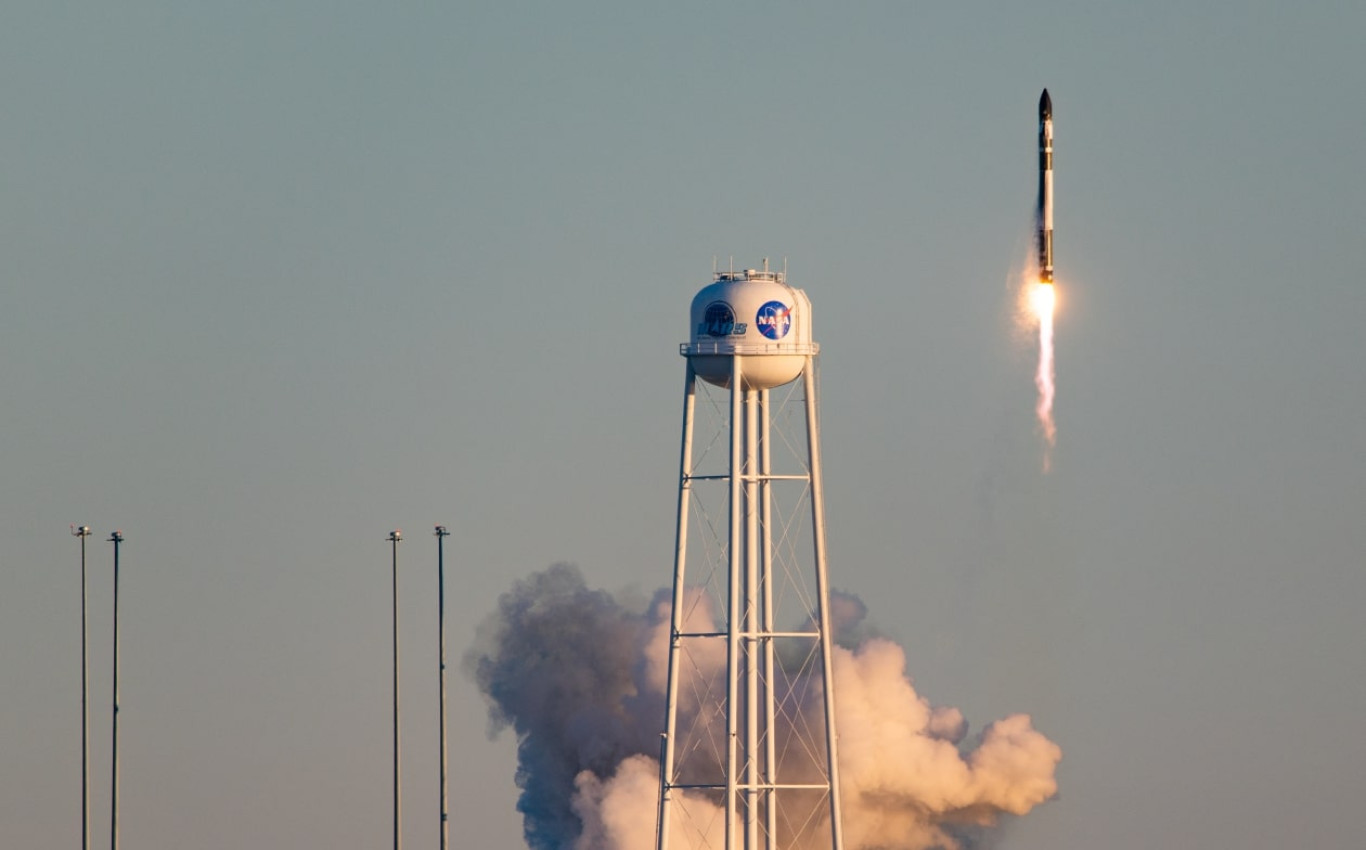

Rocket Lab commenced 2026 by surpassing all its previous records set in the prior year. The company achieved a remarkable milestone, securing more new launch contracts in just three months than the total missions flown throughout 2025. Additionally, Rocket Lab completed its acquisition of the laser communications company Mynaric AG, entered into a binding agreement to acquire Motiv Space Systems, a space robotics firm, launched a new electric satellite thruster, and was selected alongside Raytheon to showcase capabilities for the U.S. Space Force’s Space Based Interceptor program.
In a significant financial achievement, Rocket Lab reported a first-quarter revenue of $200.3 million, marking a 63.5% increase from the previous year, and surpassing analysts’ expectations of approximately $190 million. This revenue milestone represents the first time the company has exceeded $200 million in a single quarter, while its contracted backlog has now reached $2.2 billion. The anticipated debut for Rocket Lab’s Neutron rocket is set for the fourth quarter of 2026, with relevant launch permits already submitted to the FAA. The company also enters the second quarter boasting over $2 billion in liquidity.
The most notable achievement in the first quarter is the signing of 36 new launch contracts, which includes 31 agreements for the Electron rocket and five dedicated bookings for the Neutron rocket. This quarterly total greatly exceeds the 21 missions that Rocket Lab launched in all of 2025. The new contracts indicate a growing interest in the Neutron rocket, even before its inaugural flight.
Among the significant contracts is a $30 million deal with Anduril Industries, which entails three hypersonic test flights using the HASTE vehicle from Launch Complex 2 at Wallops Island, Virginia, with the first flight expected within a year. Once a specialized service, the HASTE program is now increasingly appealing to a national security customer base, driven by various Department of Defense initiatives requiring rapid hypersonic testing capabilities.
The financial results reflect a company that has evolved beyond its initial launch services, with strong performance in solar products and launch services contributing to its success. For the second quarter, Rocket Lab anticipates revenues between $225 million and $240 million, which would set another quarterly record. CFO Adam Spice mentioned that operational expenses are expected to rise as the company completes development of the Neutron rocket and begins producing initial flight units.
Rocket Lab indicated that Neutron’s development is on track for its debut later in 2026, with critical components being assembled at its facility in Virginia. The ongoing development of the Archimedes engine is progressing toward flight readiness, with important milestones achieved in the second stage and reusable fairing systems. A damaged propellant tank is being replaced with an improved production method intended to improve reliability.
The company has formalized its flight schedule through the submission of launch permits covering a window from July 1 to December 31, 2026. The Neutron rocket is designed to reach heights of 43 meters with a capacity to transport up to 13,000 kg to low-Earth orbit, using a combination of liquid oxygen and liquid methane.
In a strategically significant move, Rocket Lab, in partnership with Raytheon, was chosen to demonstrate capabilities for the Space Based Interceptor program, a vital component of the U.S. missile defense strategy. Rocket Lab’s involvement in this initiative, along with its existing contracts with the Space Development Agency, positions the company as a key player in national defense efforts.
Rocket Lab’s acquisition of Mynaric AG on April 14 further solidifies its presence in the European market, enhancing its capabilities in laser optical communication technologies. This acquisition positions Rocket Lab to actively engage with European government space programs that prefer local suppliers.
Additionally, the integration of Motiv Space Systems into Rocket Lab’s operations introduces advanced robotics and mechanisms, previously used in high-profile missions such as NASA’s Mars Perseverance rover. This acquisition not only expands Rocket Lab’s technological capabilities but also mitigates supply chain risks related to essential components.
The introduction of the new Gauss electric thruster during the first quarter strengthens the company’s position in the growing demand for propulsion systems among satellite operators, both commercial and governmental. Transitioning from a launch company to a comprehensive supplier of satellite systems, Rocket Lab now offers an array of products, including related hardware, laser terminals, thrusters, and robotic devices, building a robust foundation of credibility in the competitive aerospace market.










Related Posts

Stay Informed With the Latest & Most Important News
Previous Post
Next Post


Advertisement
-
 01Two Black Holes Observed Circling Each Other for the First Time
 -
 02From Polymerization-Enabled Folding and Assembly to Chemical Evolution: Key Processes for Emergence of Functional Polymers in the Origin of Life
 -
 03Astronomy 101: From the Sun and Moon to Wormholes and Warp Drive, Key Theories, Discoveries, and Facts about the Universe (The Adams 101 Series)
 -
 04True Anomaly hires former York Space executive as chief operating officer
 -
 05Φsat-2 begins science phase for AI Earth images
 -
 06Hurricane forecasters are losing 3 key satellites ahead of peak storm season − a meteorologist explains why it matters
 -
 07Binary star systems are complex astronomical objects − a new AI approach could pin down their properties quickly