
Now Reading: What It Takes To Solve The Origins Of Life: An Integrated Review. Part 2: Theoretical Methods And Emerging Trends
-
01
What It Takes To Solve The Origins Of Life: An Integrated Review. Part 2: Theoretical Methods And Emerging Trends

What It Takes To Solve The Origins Of Life: An Integrated Review. Part 2: Theoretical Methods And Emerging Trends

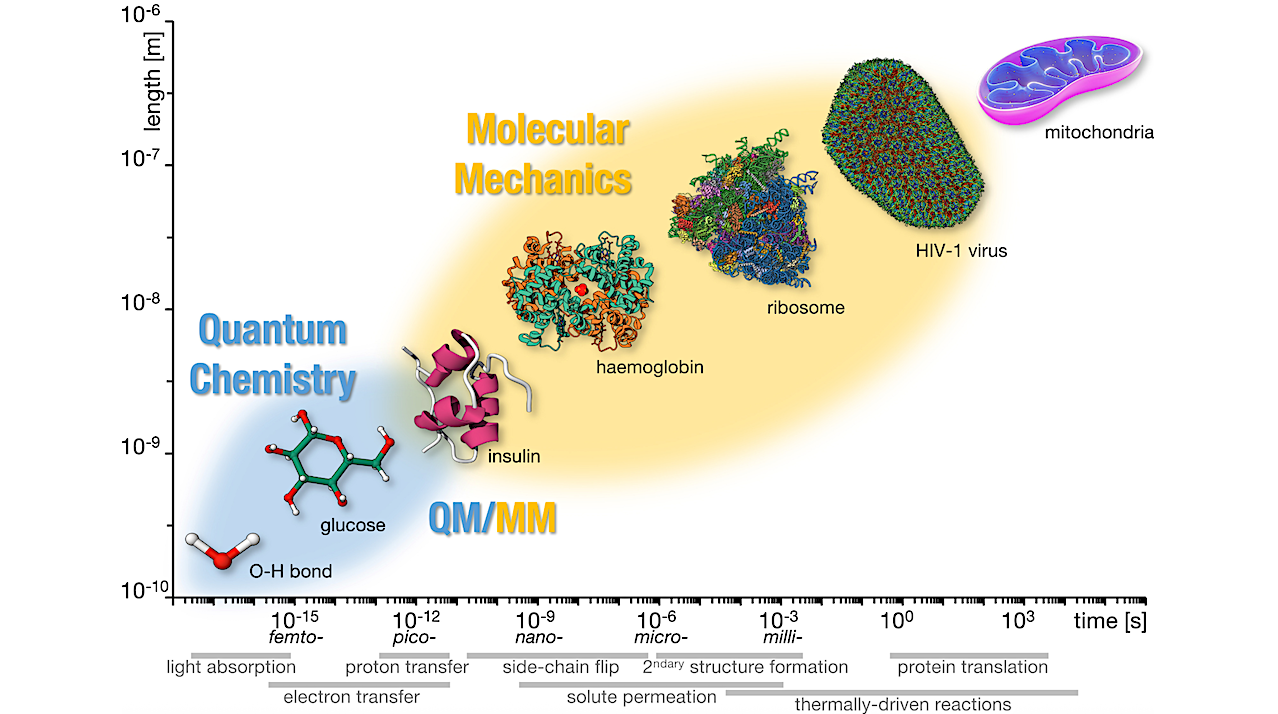
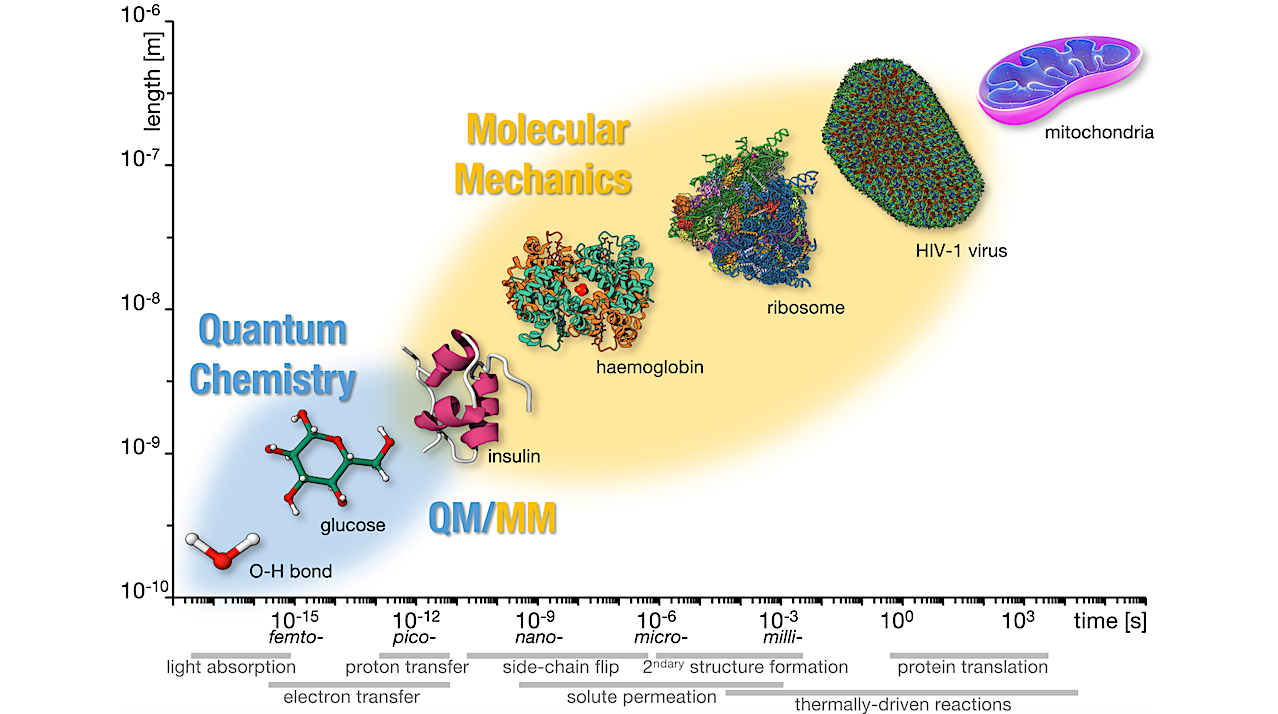
Relationship between timescale and system size in simulations, ranging from gas-phase quantum calculations (small molecules and bonds) to condensed-phase MM (large molecules) and biological systems and processes (viruses, cells) — Cell
The origin(s) of life (OoL), which has puzzled scientists for centuries, remains a major scientific challenge in the 21st century. Understanding the processes relevant to the OoL demands theoretical frameworks that can connect processes across scales, from microscopic dynamics to emergent levels of organization.
While experimental studies generate a wealth of data, theoretical and computational approaches provide the structure necessary to interpret and generalize these findings. In Part 1, we examined the most widely used experimental techniques in the field. Here, we focus on the mathematical, physical, and computational techniques used to model phenomena relevant to life’s origin(s).
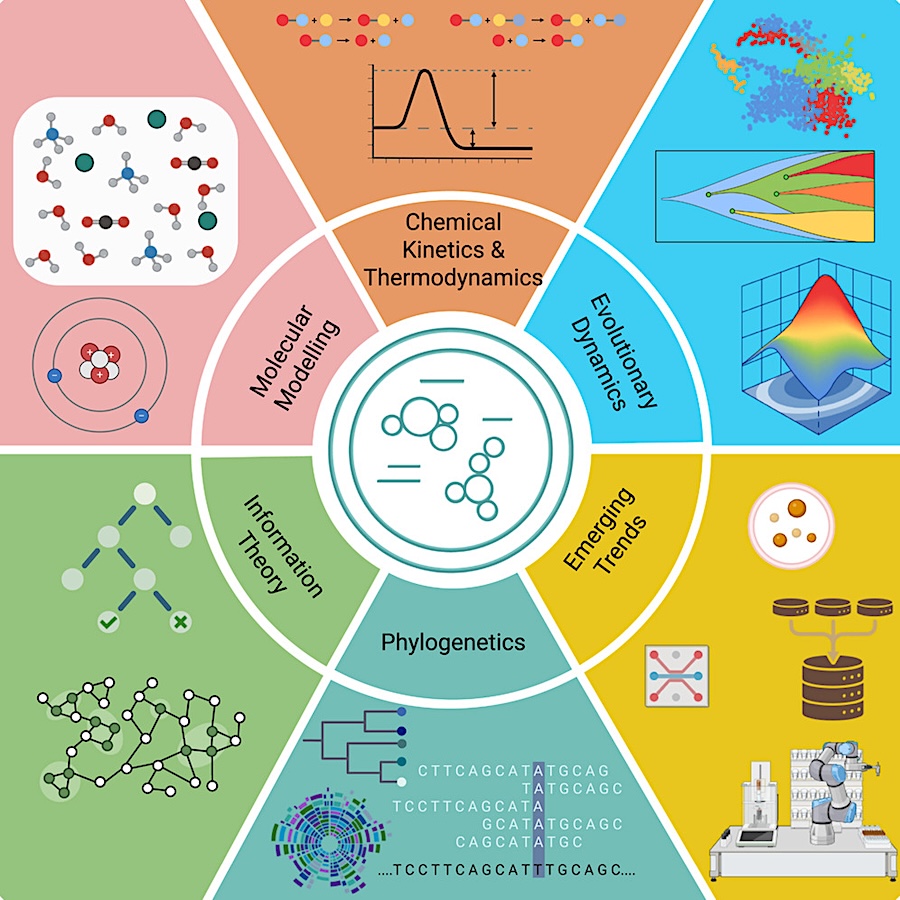
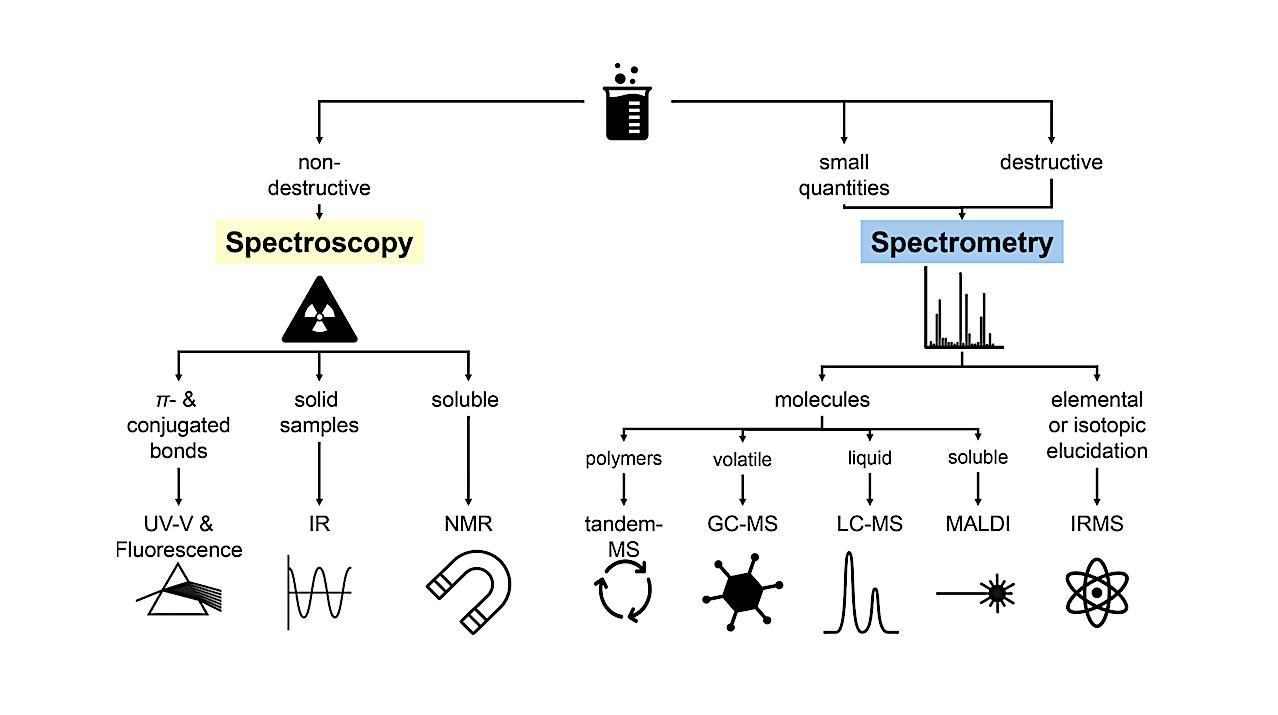
Graphical abstract — CELL
We discuss methods ranging from quantum chemistry and molecular dynamics to chemical reaction networks, autocatalysis, and evolutionary modeling, as well as information-theoretic and phylogenetic approaches that link chemical and biological organization.
We further highlight emerging trends such as synthetic biology, omics-based methods, and laboratory automation as novel points of contact for theory-experiment integration.
Ultimately, we aim to provide an educational tool that can facilitate more post-disciplinary collaborations in OoL research by helping scientists understand what they can do about the problem of life’s origins, rather than telling them how to think about it.
Astrobiology,











Related Posts

Stay Informed With the Latest & Most Important News



Advertisement
-
 01Two Black Holes Observed Circling Each Other for the First Time
 -
 02From Polymerization-Enabled Folding and Assembly to Chemical Evolution: Key Processes for Emergence of Functional Polymers in the Origin of Life
 -
 03Astronomy 101: From the Sun and Moon to Wormholes and Warp Drive, Key Theories, Discoveries, and Facts about the Universe (The Adams 101 Series)
 -
 04True Anomaly hires former York Space executive as chief operating officer
 -
 05Φsat-2 begins science phase for AI Earth images
 -
 06Hurricane forecasters are losing 3 key satellites ahead of peak storm season − a meteorologist explains why it matters
 -
 07Binary star systems are complex astronomical objects − a new AI approach could pin down their properties quickly