
Now Reading: Orbital Data Centers: Power and Thermal Management for Scalable Architectures
-
01
Orbital Data Centers: Power and Thermal Management for Scalable Architectures


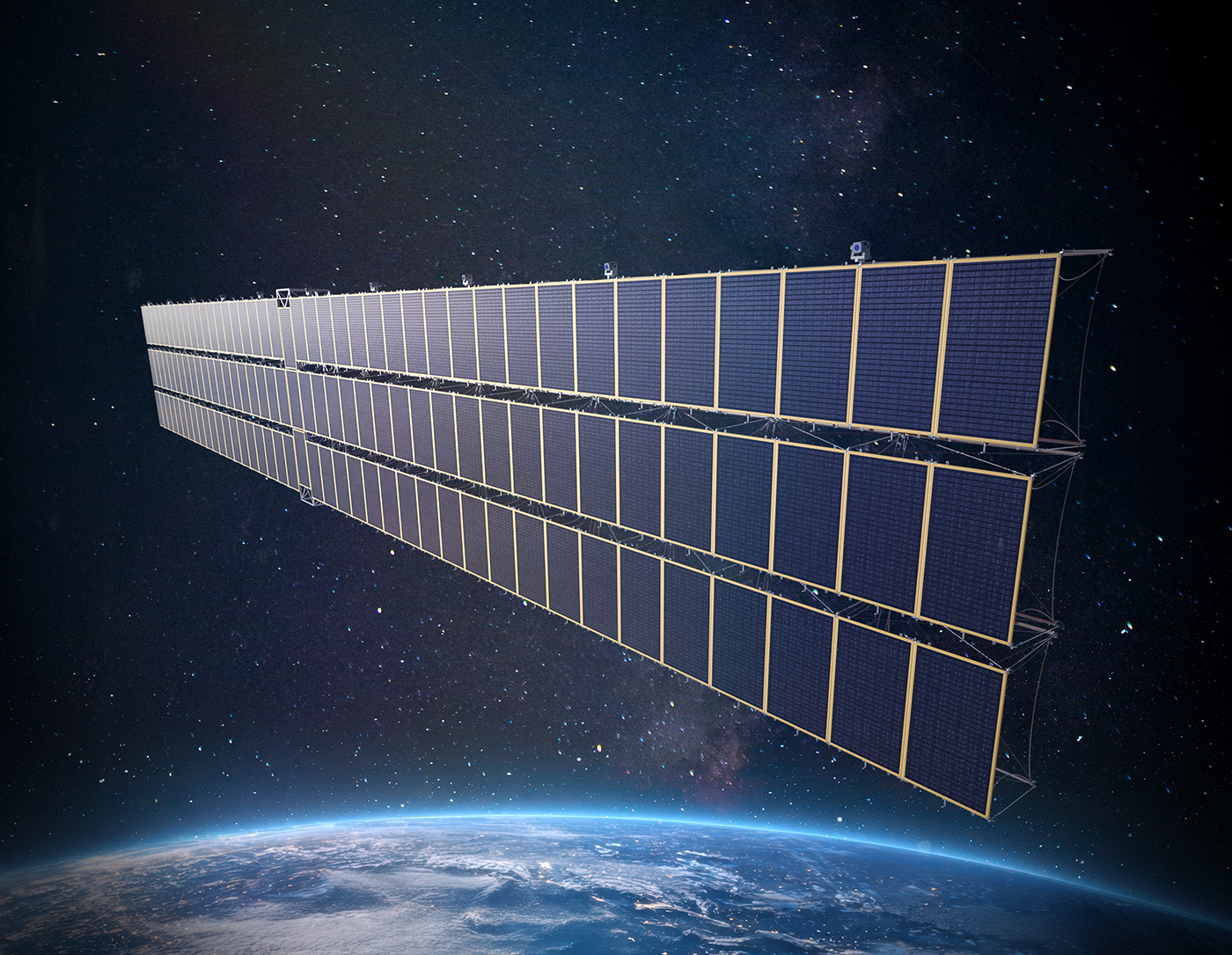

As orbital data centers move from concept to reality, scalable power generation and efficient thermal management are emerging as critical enabling technologies.
A new whitepaper from Redwire examines how power generation and distribution, along with thermal rejection, will fundamentally shape the future of large-scale orbital compute infrastructure.
Drawing on decades of Redwire spaceflight heritage in deployable structures, high-power solar arrays, and thermal management systems, the whitepaper highlights how existing flight-proven technologies can support practical and scalable orbital compute architectures.
Redwire frames orbital data centers as integrated systems, where power generation, electrical distribution, compute performance, and thermal management must be designed together from the start. Redwire also explores how system-level constraints become key architectural drivers as orbital compute platforms grow in scale. Rather than treating these challenges as barriers, the whitepaper demonstrates how modular architectures and deployable thermal systems can enable scalable orbital computing using technologies already in development or flight today.
In addition, Redwire presents a representative near-term orbital compute node concept built around the company’s flight-proven Roll-Out Solar Array (ROSA) architecture and deployable radiator technologies, illustrating how current-generation space systems can support data center-class compute capabilities in orbit.










Related Posts
Stay Informed With the Latest & Most Important News
Previous Post
Next Post



Advertisement
-
 01Two Black Holes Observed Circling Each Other for the First Time
 -
 02From Polymerization-Enabled Folding and Assembly to Chemical Evolution: Key Processes for Emergence of Functional Polymers in the Origin of Life
 -
 03Astronomy 101: From the Sun and Moon to Wormholes and Warp Drive, Key Theories, Discoveries, and Facts about the Universe (The Adams 101 Series)
 -
 04True Anomaly hires former York Space executive as chief operating officer
 -
 05Φsat-2 begins science phase for AI Earth images
 -
 06Hurricane forecasters are losing 3 key satellites ahead of peak storm season − a meteorologist explains why it matters
 -
 07Binary star systems are complex astronomical objects − a new AI approach could pin down their properties quickly