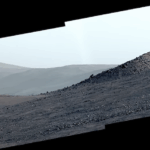
Kaiser Crater hosts a large field of sand dunes. Every winter the dunes are covered with a layer of seasonal carbon dioxide ice (dry ice). In early spring the ice

Kaiser Crater hosts a large field of sand dunes. Every winter the dunes are covered with a layer of seasonal carbon dioxide ice (dry ice). In early spring the ice
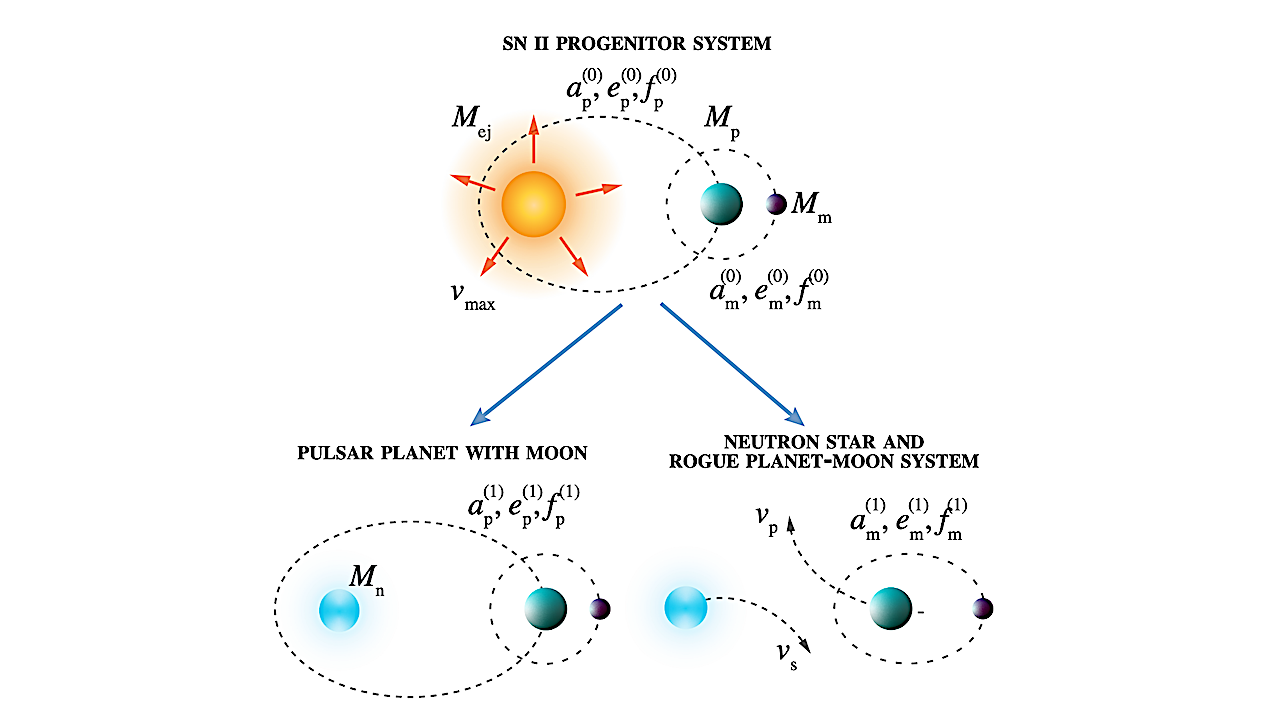
The visual representation of the parameters used for modelling the SN II explosion. The progenitor system (top) can evolve into two distinct end states (bottom): the planet-moon system can stay
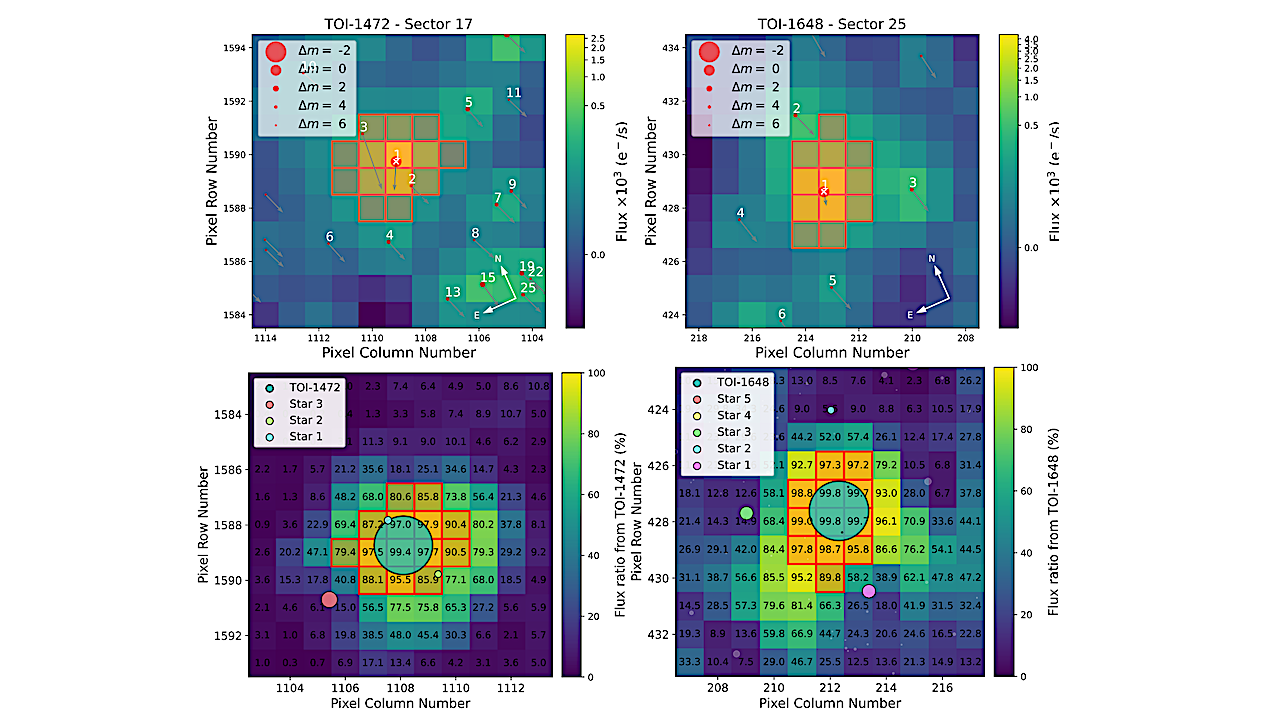
Upper: TESS TPF (Target Pixel Files) of Sector 17 for TOI-1472, and Sector 25 for TOI-1648. The color scale represents electron counts per pixel. Orange squares mark the pixels selected
Matrix plot summarizing the main differences between the 22 model scenarios. The x and y-axes show the scenario numbers. Values in the blue-shaded boxes show the absolute mean difference ()
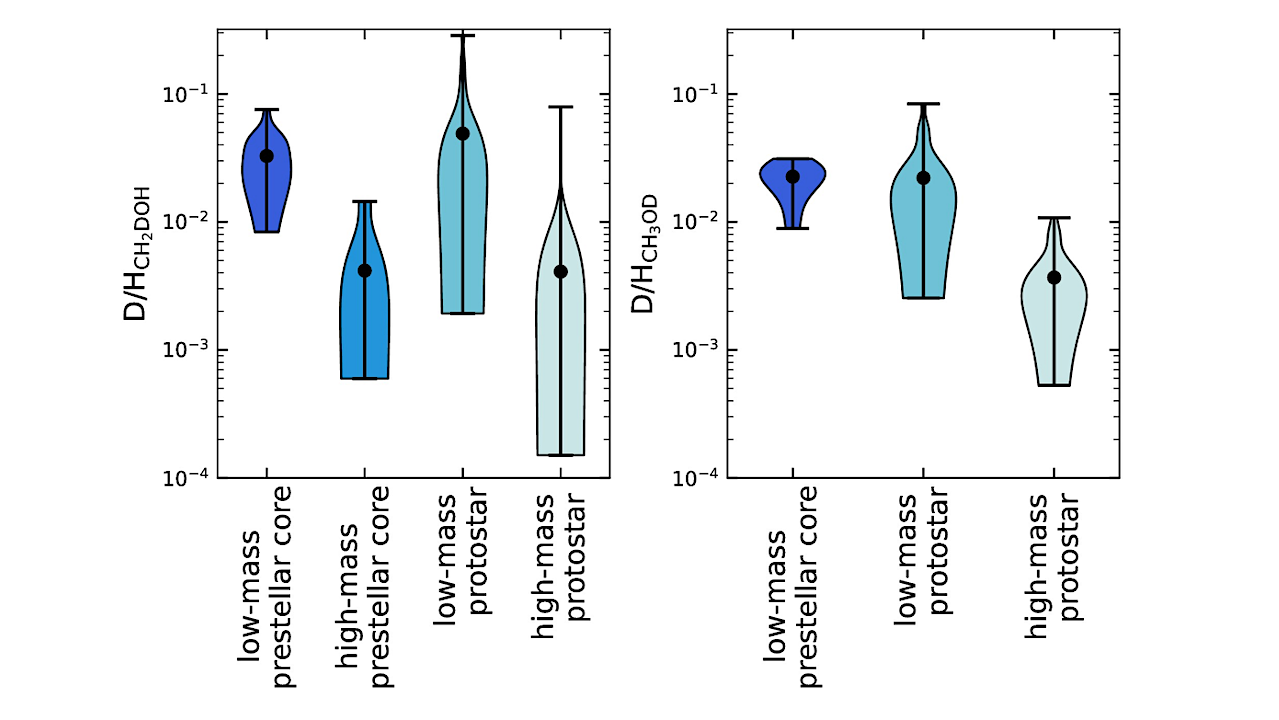
D/H ratios for CH2DOH (left panel) and CH3OD (right panel) across the star-forming sequence. The spread per source type was calculated using all column densities listed in Table A. The
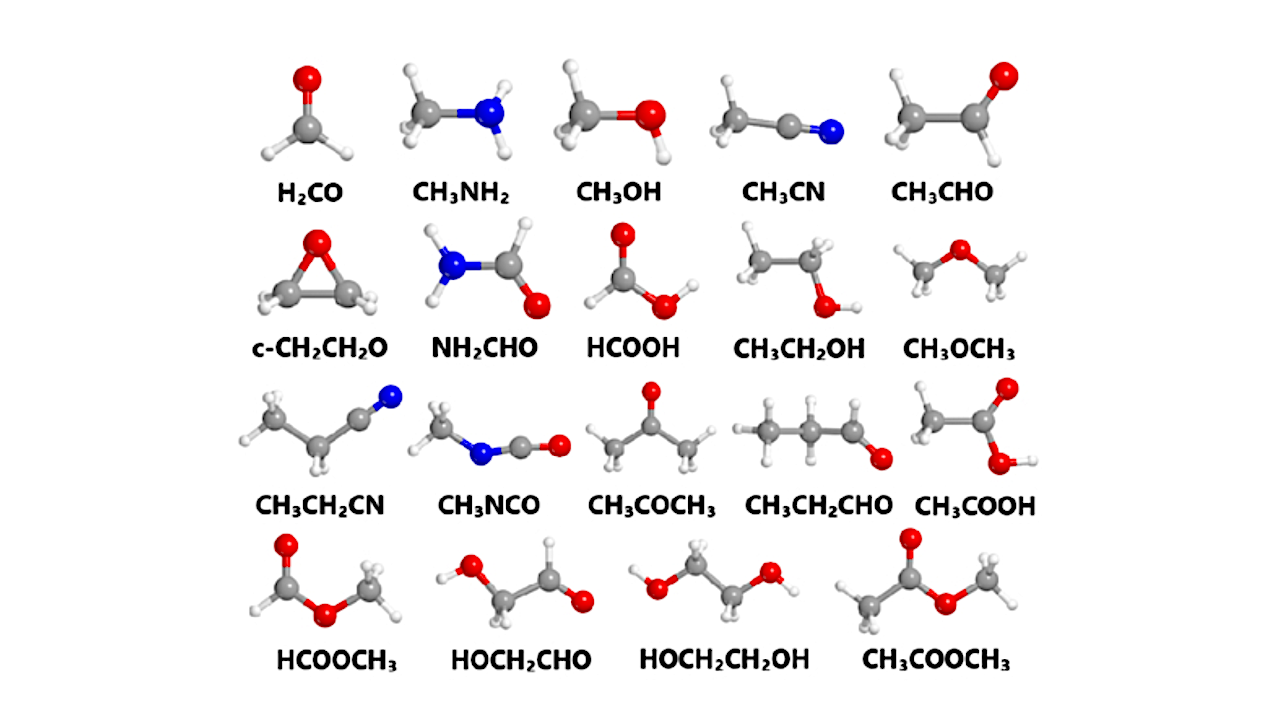
Set of iCOMs considered in this work. Color code: red for oxygen, white for hydrogen, gray for carbon, and blue for nitrogen. — The Astrophysical Journal Interstellar dust grains are
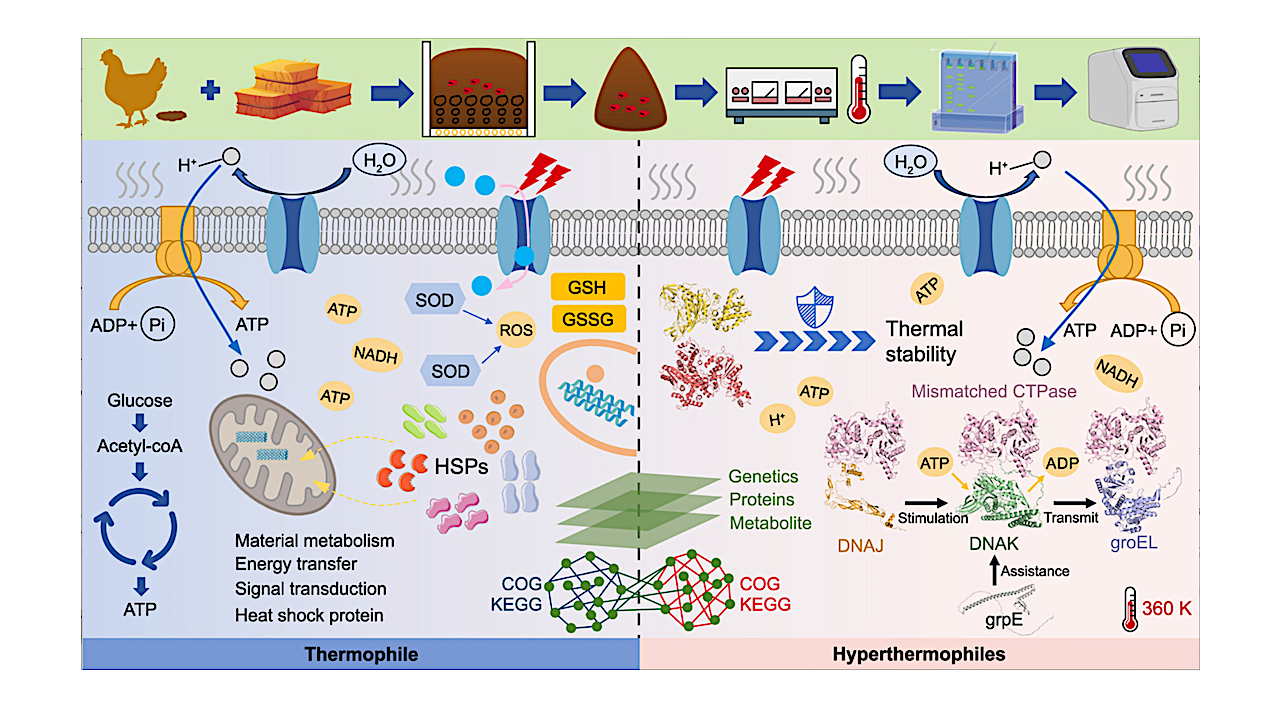
Chaperone-assisted protein remodeling enables microbial survival under extreme composting heat. During hyperthermophilic composting, microbial communities endure temperatures approaching 87 °C by activating a network of heat shock proteins that stabilize
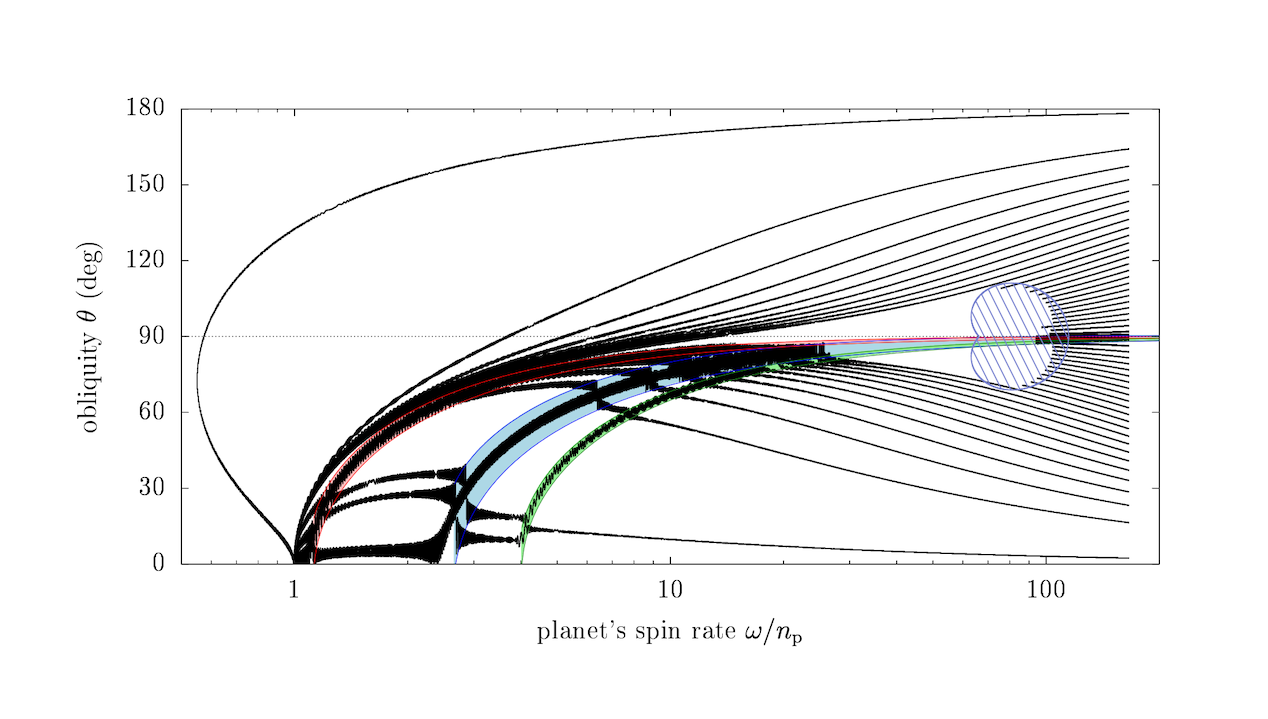
Self-consistent obliquity and spin rate evolution for several realizations of exoplanet Kepler-79 d. Trajectories go from right to left. The planet is initalized with a spin rate of 7.5 hours
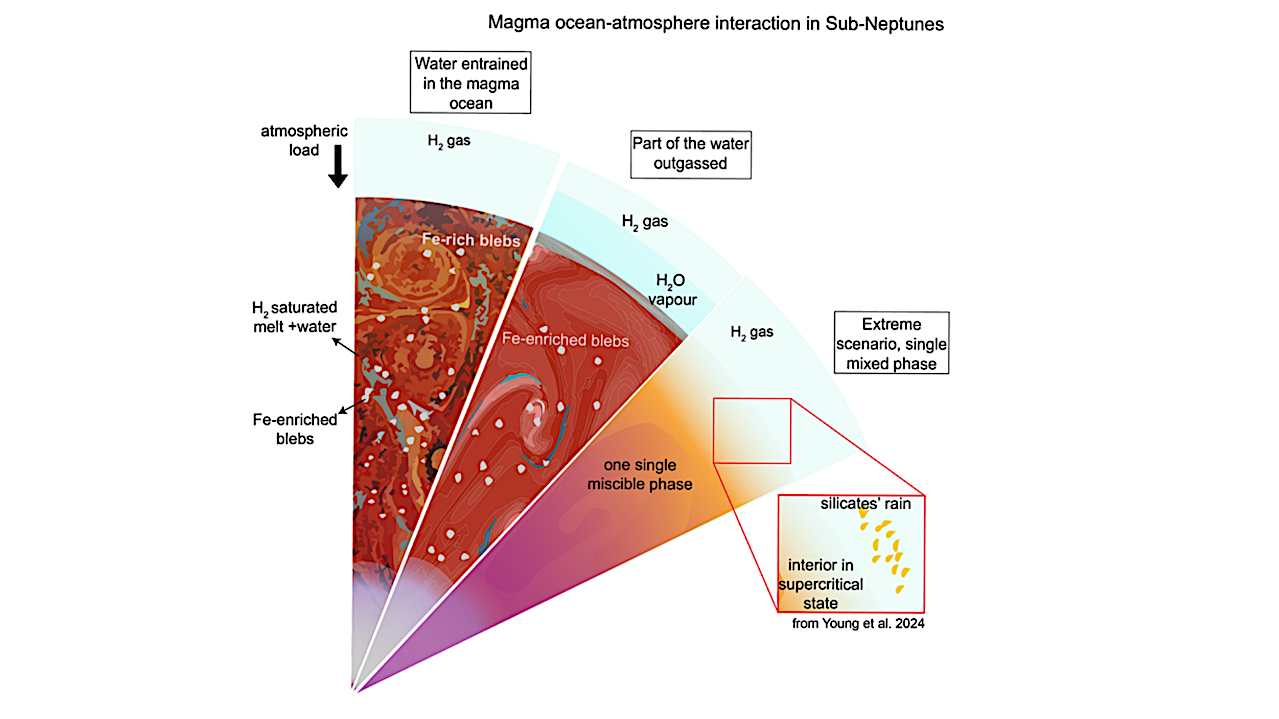
Left, the free fluids phase and Fe-enriched blebs are entrained in the magma ocean. Center: water is outgassed to create a steam atmosphere while the Fe-enriched blebs sink toward the

WASP-39b 3D model cross sections. Shown are the local gas temperature, Tgas (left) and cloud dust-to-gas mass ratio, ρdust/ρgas (right). The values are derived from the 3D GCM results