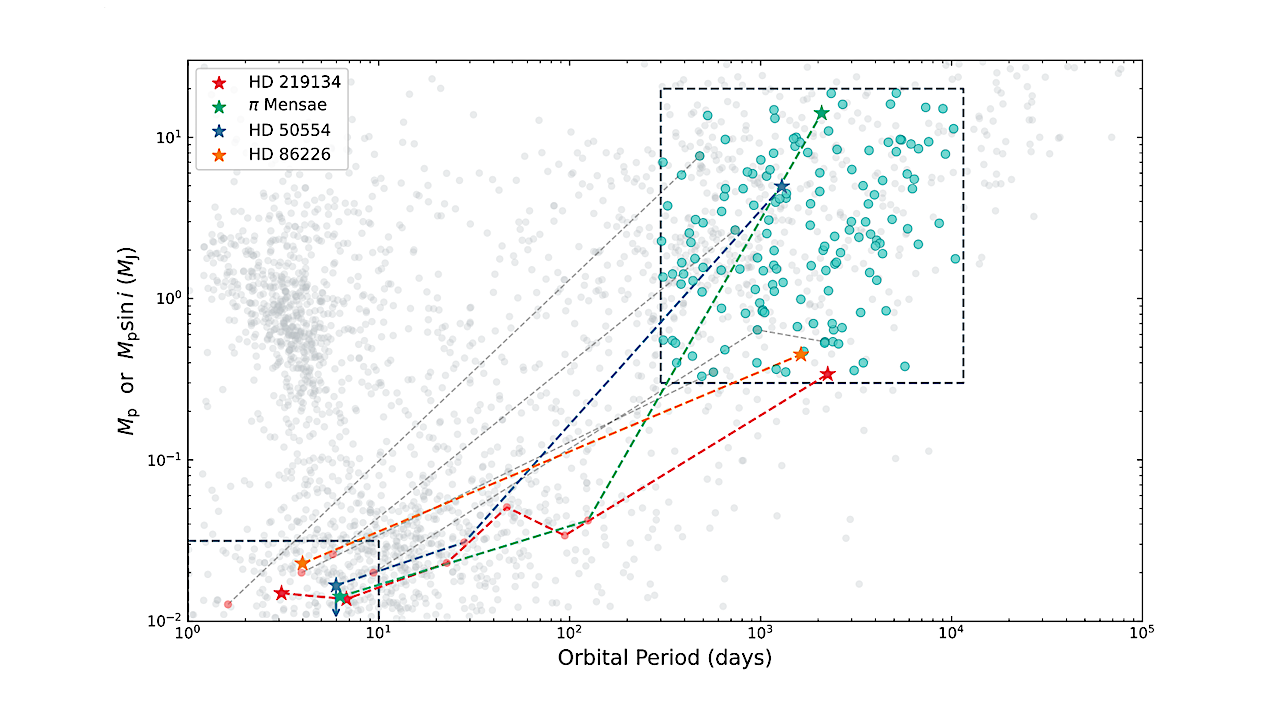
Planet mass (or minimum mass) as a function of orbital period for planetary systems hosting cold Jupiters. Gray points represent the full population of confirmed exoplanets from the NASA Exoplanet

Planet mass (or minimum mass) as a function of orbital period for planetary systems hosting cold Jupiters. Gray points represent the full population of confirmed exoplanets from the NASA Exoplanet
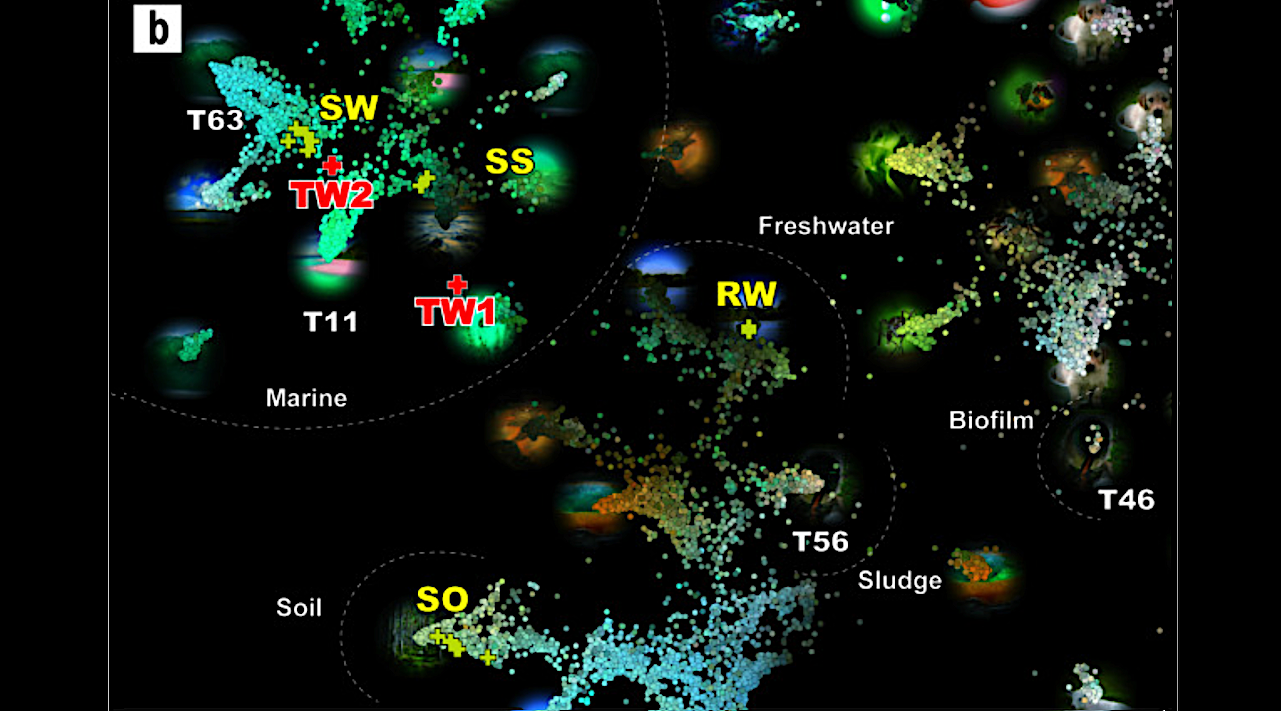
LEA of microbial communities from torus room waters and other environmental samples. Symbol “+” indicates the positions of the samples analyzed in this study, together with the sample names (TW1,
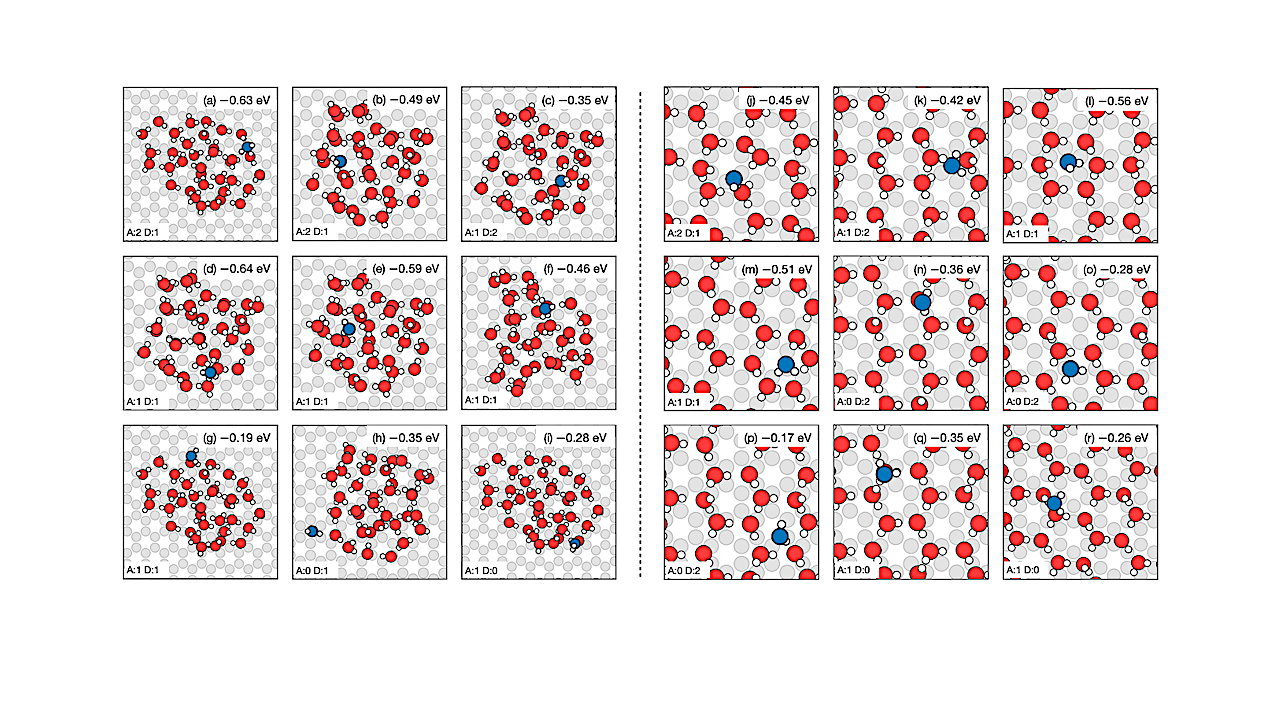
Structures of selected H2O adsorption configurations for cluster (left) and monolayer (right). Ice structures were generated with global optimization. The labels indicate the adsorption energy and the number of hydrogen

A group of ecologically tolerant microbes known as ‘generalists’ can thrive across very different environments, creating a planet-wide, interconnected network of microbiomes. — Credit Daniela Velasco/EMBL In a new study
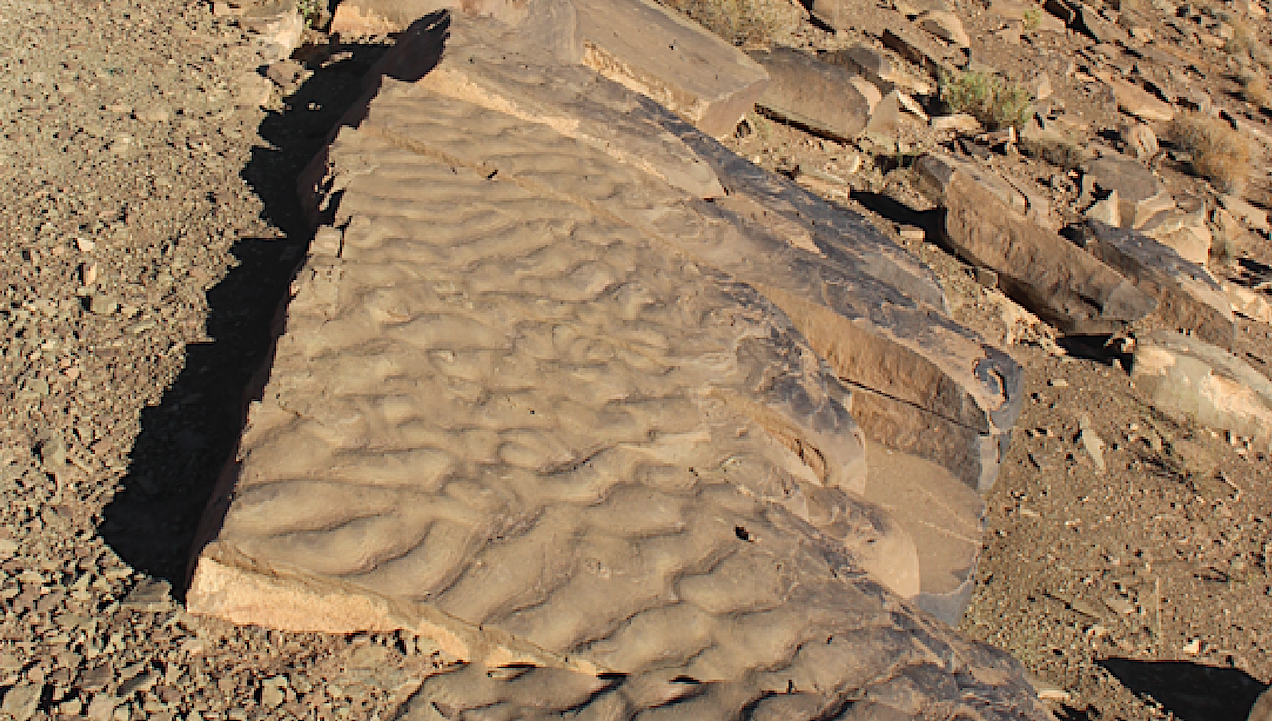
Tagoudite Formation in the Central High Atlas Mountains, Morocco In 2016 while hiking on a hillside in Morocco, geologist Rowan Martindale saw something that made her stop in her tracks:
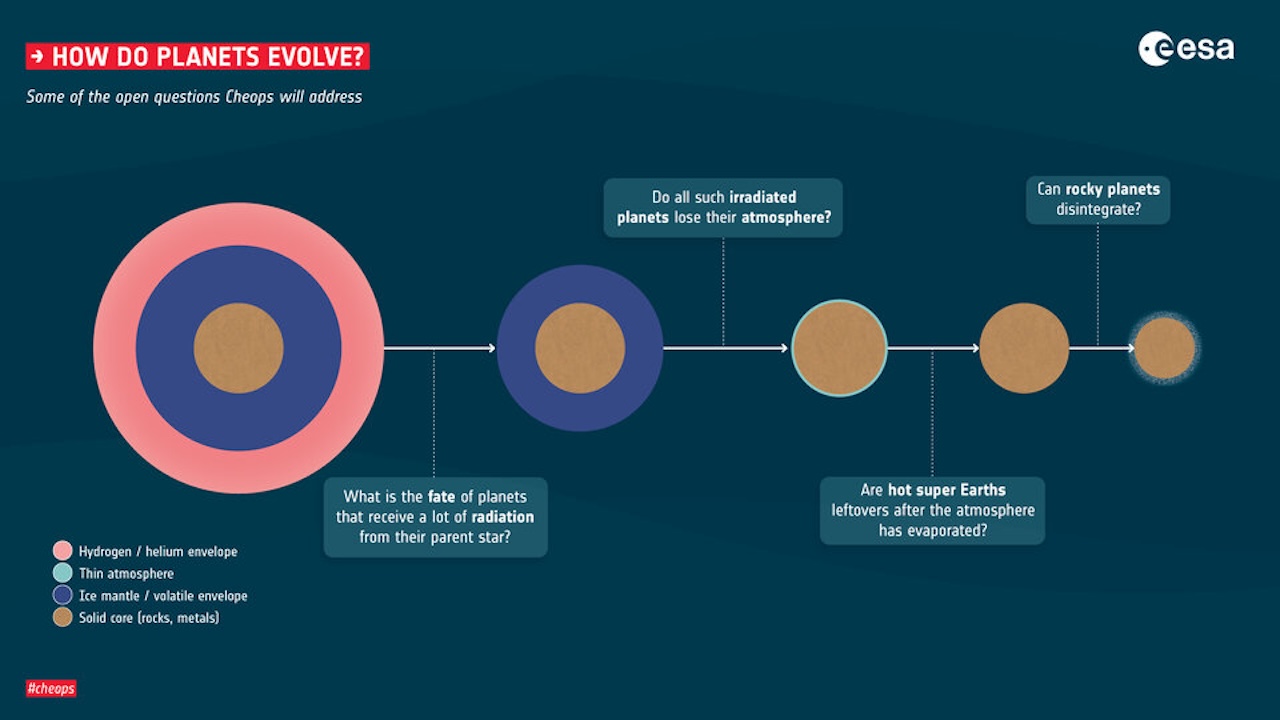
Cheops open questions: How do planets form? Many Vile Earthlings Munch Jam Sandwiches Under Newspapers and My Very Educated Mother Just Served Us Nachos. What sounds like gibberish half-sentences are
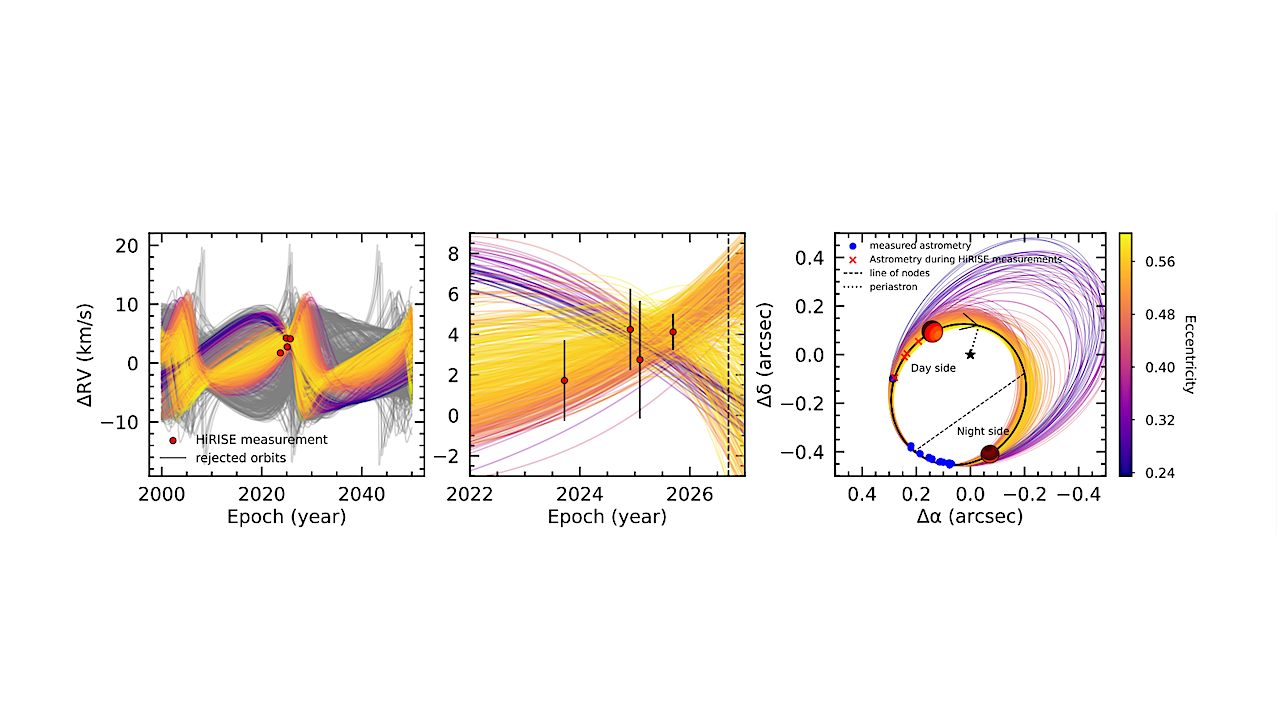
Orbit of 51 Eri b. The left panel shows the predicted RV of the planet as a function of time. The HiRISE RV measurements are overplotted as red dots, along
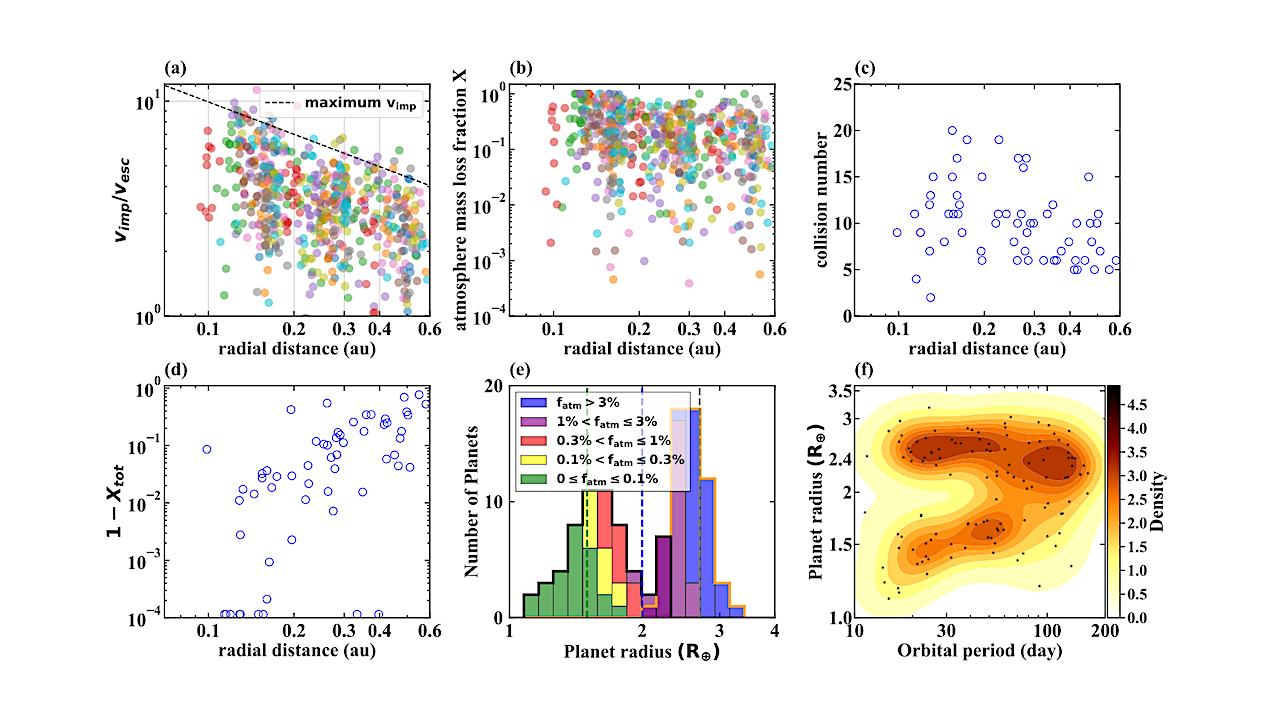
Results of full N -body simulations with the initial conditions eini = 0.8 and Nini = 80. (a) Impact velocities between SNs and embryos. (b) Atmospheric mass-loss fraction. (c) Total

Molecular structures of cis-HCOOH and transHCOOH. Carbon (C), hydrogen (H), and oxygen (O) atoms are represented by grey, white, and red spheres, respectively — astro-ph.GA In the interstellar medium, formic
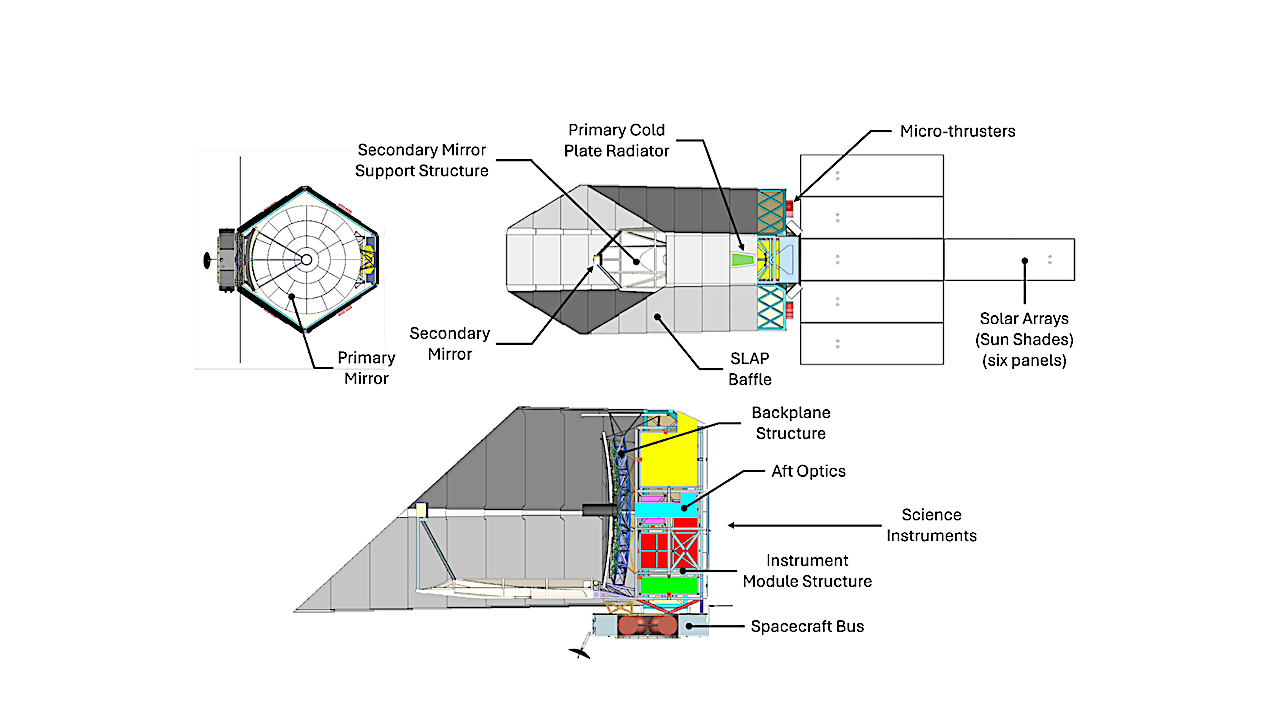
EAC3 Deployed Configuration. — astro-ph.IM The Habitable Worlds Observatory (HWO), NASA’s next flagship science mission, follows in the tradition of the Nancy Grace Roman Space Telescope and other preceding great