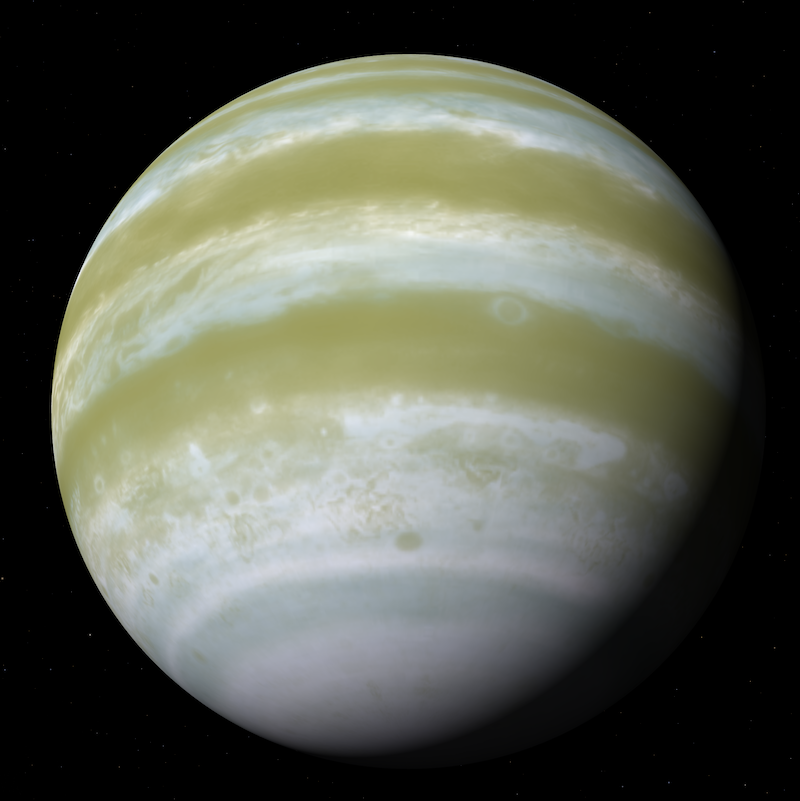
After the sun, Jupiter is the most massive object in our solar system. More than 1,000 Earths could fit inside it. And now a new study has revealed how mighty
View at EarthSky Community Photos. | Amr Elsayed captured this on October 7, 2025, from Egypt, and wrote: “A bright full supermoon glowing vividly against the night sky, showcasing its
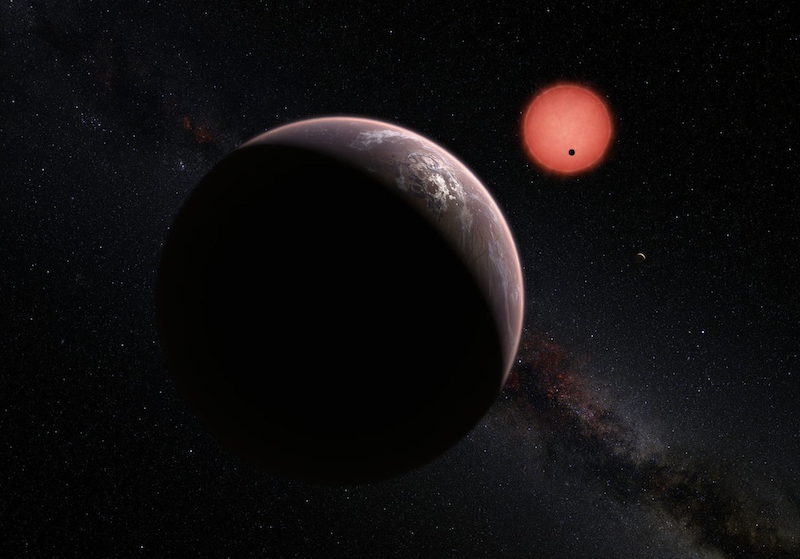
View larger. | Artist’s concept of GJ 251 c, a potentially habitable world, a super-Earth type exoplanet only 18 light-years away. It orbits in the habitable zone of its red
View entire image here. | This is a selection of the new radio view of the Milky Way galaxy. Click here to see how it compares to an optical image
View at EarthSky Community Photos. | Joel Weatherly in Edmonton, Canada, captured Taurid meteors emanating from the constellation Taurus the Bull on November 11, 2020. Thanks, Joel! New research says
View larger. | In this image from NASA’s Galileo spacecraft – captured in 1997 – an active volcano erupts on the limb, or edge, of Jupiter’s moon Io. If it’s
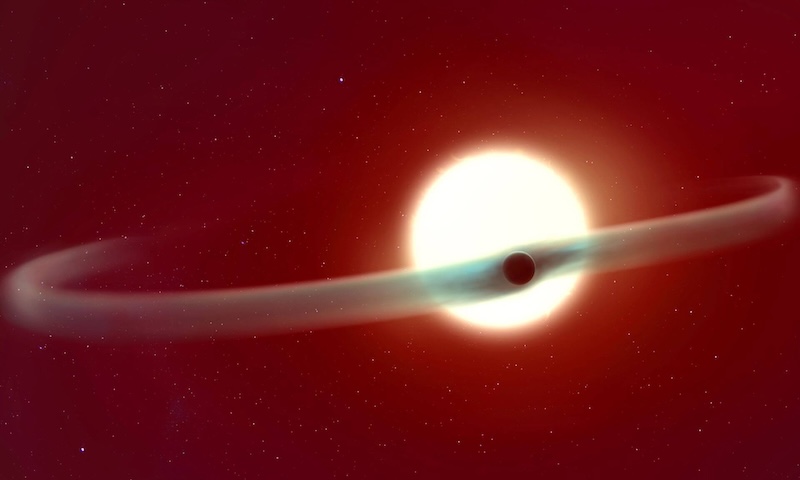
Artist’s concept showing a 3-billion-year-old dead star, known as a white dwarf, accreting material from the remnants of its former planetary system. Gravitational instabilities caused a surviving planet to spiral
An artist’s impression of the V883 Ori planet-forming disk, along with some early comets. New results from the ALMA radio telescope revealed ancient water in the protoplanetary disk around its
The European Space Agency’s Mars Express orbiter took this stunning view of the ice-filled Korolev Crater on Mars in 2018. New research shows that microbes on Mars – either ancient
Mysterious gullies on Mars appear to have been dug, but by whom or what? Video via Faculty of Geosciences Utrecht University. Gullies are common on Mars. Flowing water likely created