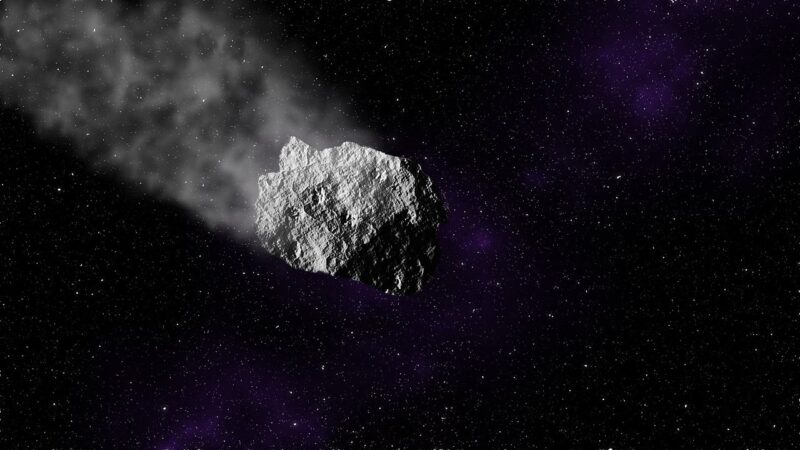
A new study from Johns Hopkins University said that lifeforms can survive an asteroid impact and a journey to another planet. Image via Buddy Nath/ Pixabay. Tiny microbes can survive

A new study from Johns Hopkins University said that lifeforms can survive an asteroid impact and a journey to another planet. Image via Buddy Nath/ Pixabay. Tiny microbes can survive
This brief video gives you a look at the new image of the Milky Way center taken in radio wavelengths. It’s the largest image the Atacama Large Millimeter/submillimeter Array (ALMA)
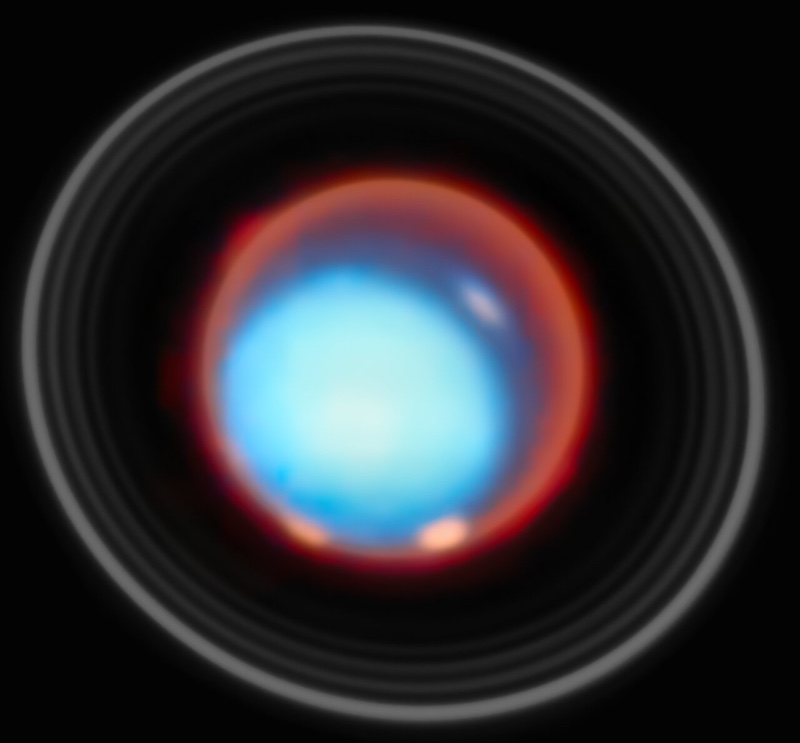
View larger. | Webb used its Near InfraRed Spectrograph (NIRSpec) instrument to take this near-infrared view of the upper atmosphere of Uranus in January 2025. The bright spots are auroral
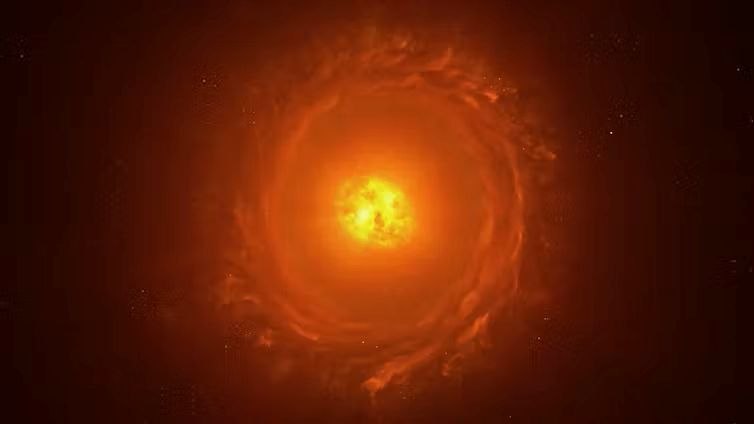
This is an artist’s impression of the dying star WOH G64. It’s more than 160,000 light-years away, in the Large Magellanic Cloud. It’s one of the biggest stars in the
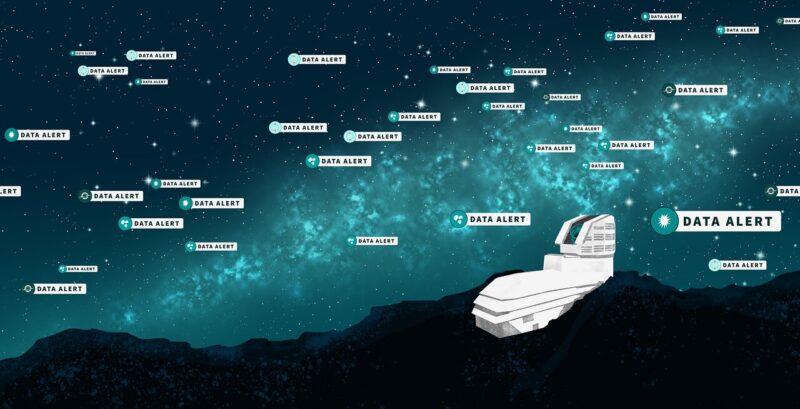
This artist’s illustration represents the start of the alert stream from NSF–DOE Vera C. Rubin Observatory. The summit facility is on a rocky ridge with the Milky Way above. The
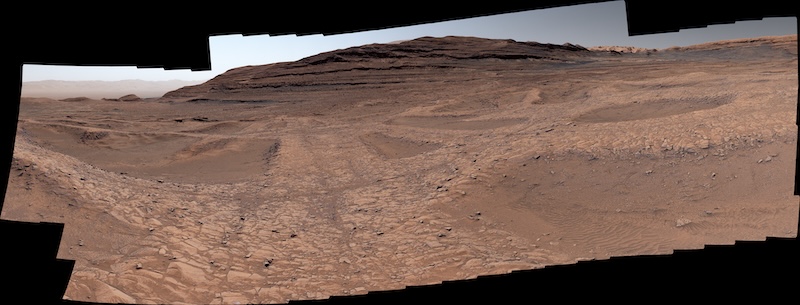
View larger. | NASA’s Curiosity rover captured this closeup view of some of the red planet’s boxwork – or “spiderweb” – formations on September 26, 2025. These “spiderwebs” on Mars
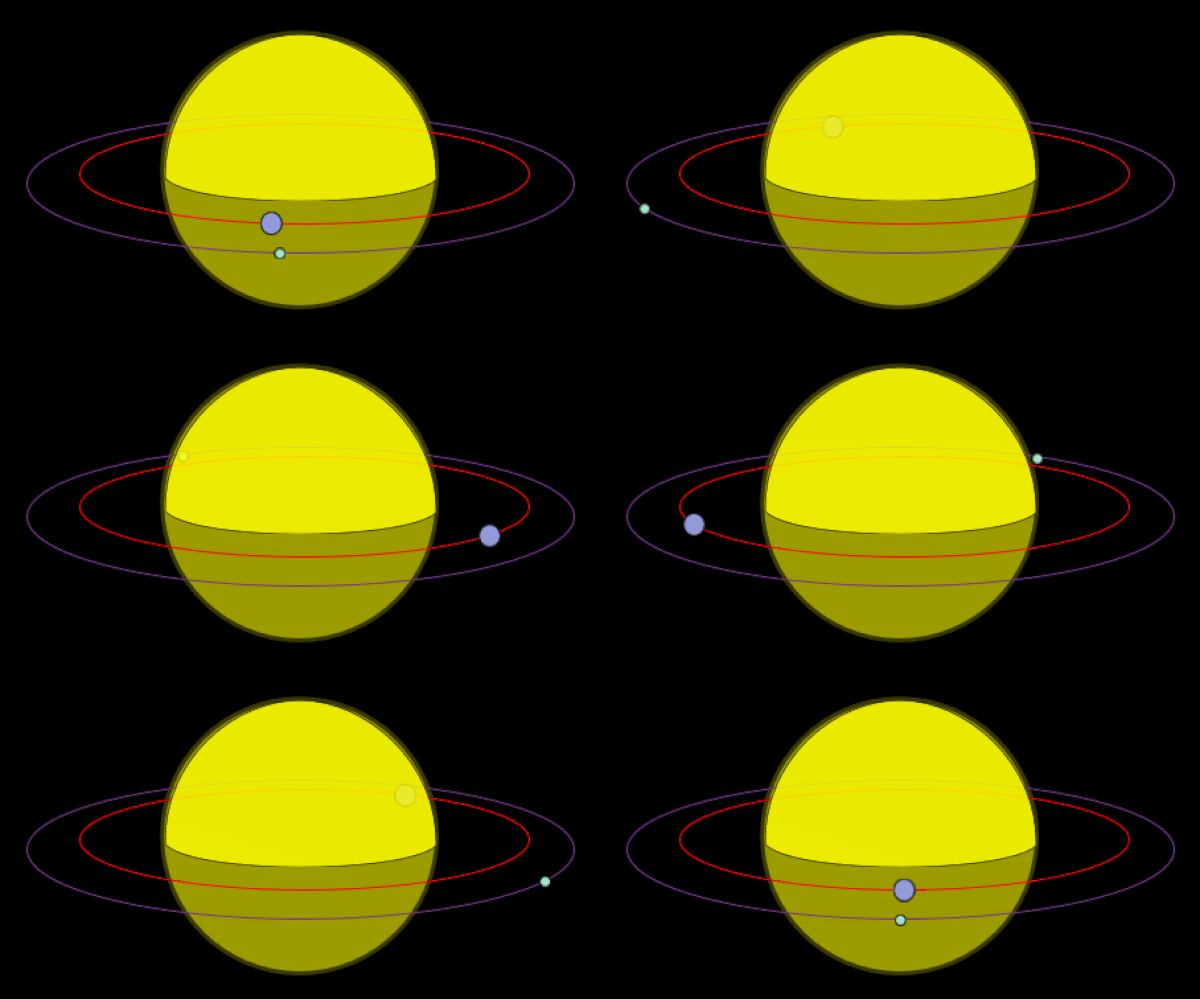
Astronomers use the term orbital resonance to describe the way planets can gravitationally affect each other when their orbits line up in a regular way. Here, we see 2 planets
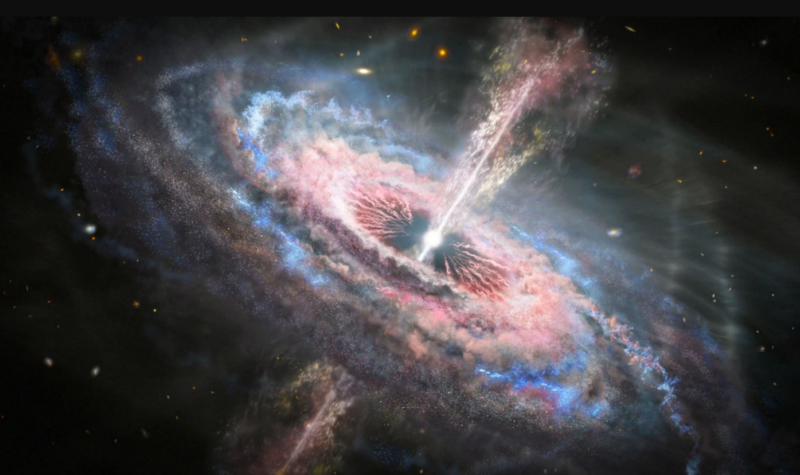
Artist’s concept of a galaxy with an active supermassive black hole millions to billions of times the mass of the sun – also known as a quasar – at its
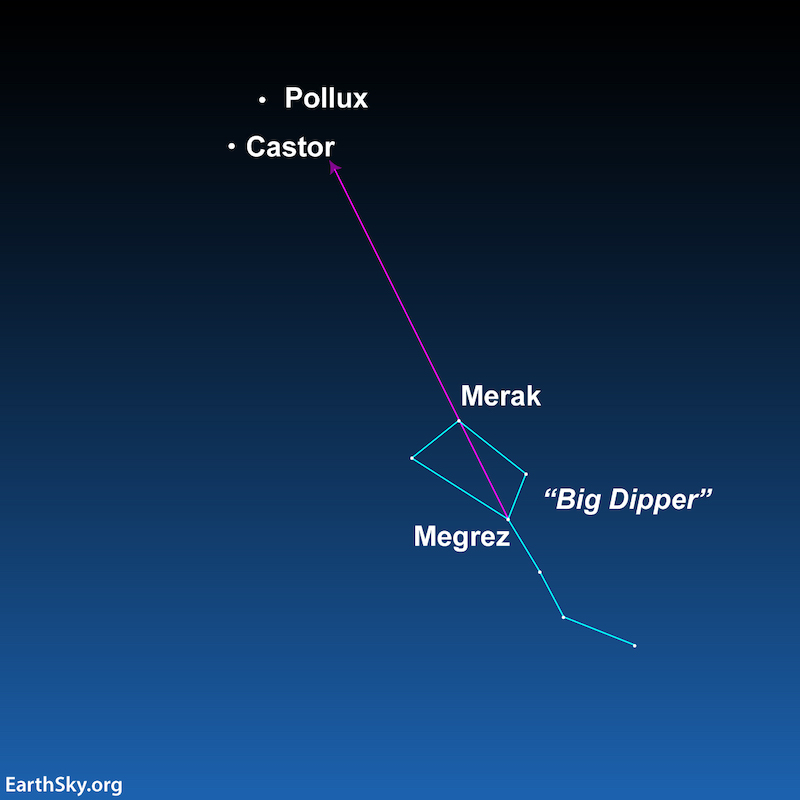
From a Northern Hemisphere location, face generally northward to find the Big Dipper asterism in the constellation Ursa Major. Look mid-evening or later in February, earlier in March. Draw an
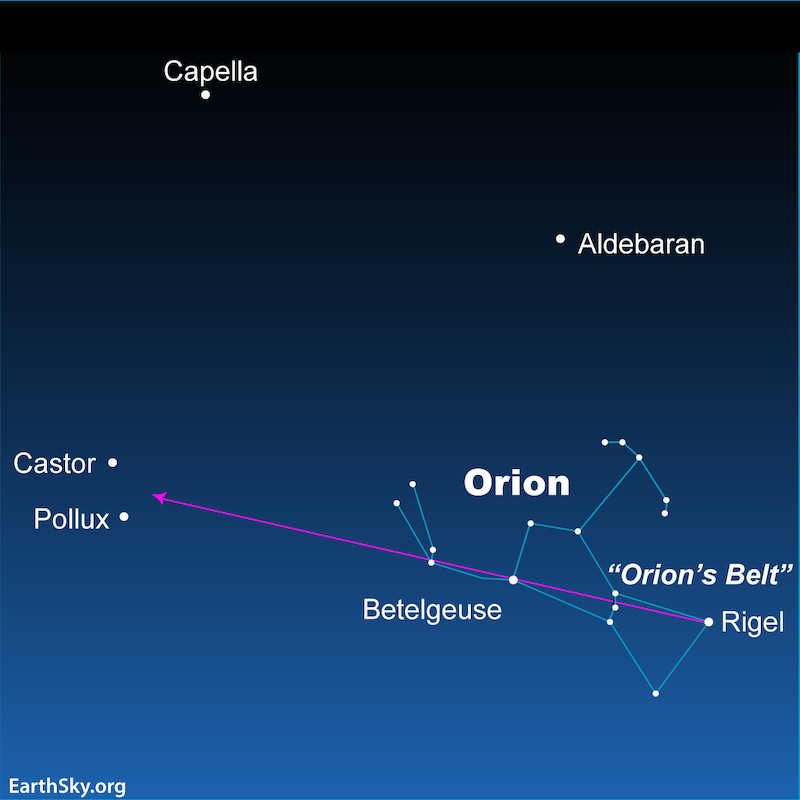
Draw an imaginary line from 2 bright stars in the easy-to-see constellation Orion the Hunter to star-hop to the “twin” stars Castor and Pollux. The line goes from Orion’s bright