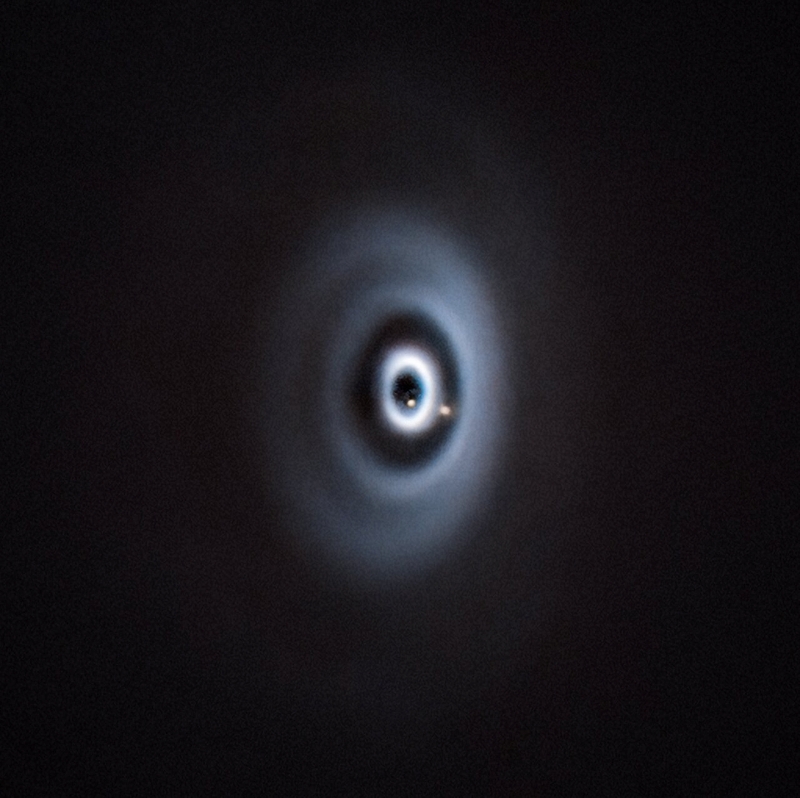
This composite image from ESO’s Very Large Telescope (VLT) shows 2 planets forming in the disk of dust around the young star WISPIT 2. Astronomers discovered the outermost planet, WISPIT

This composite image from ESO’s Very Large Telescope (VLT) shows 2 planets forming in the disk of dust around the young star WISPIT 2. Astronomers discovered the outermost planet, WISPIT
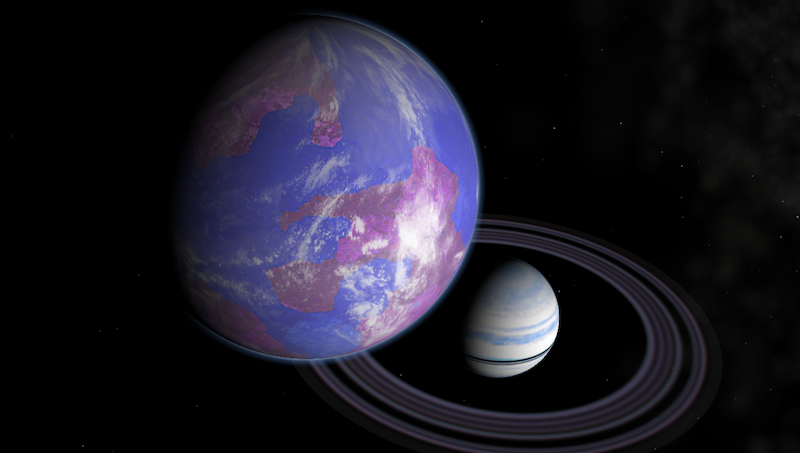
View larger. | Artist’s concept of an Earth-like exomoon orbiting a rogue Saturn-like exoplanet. A new study led by Ludwig Maximilian University of Munich in Germany looked at moons of
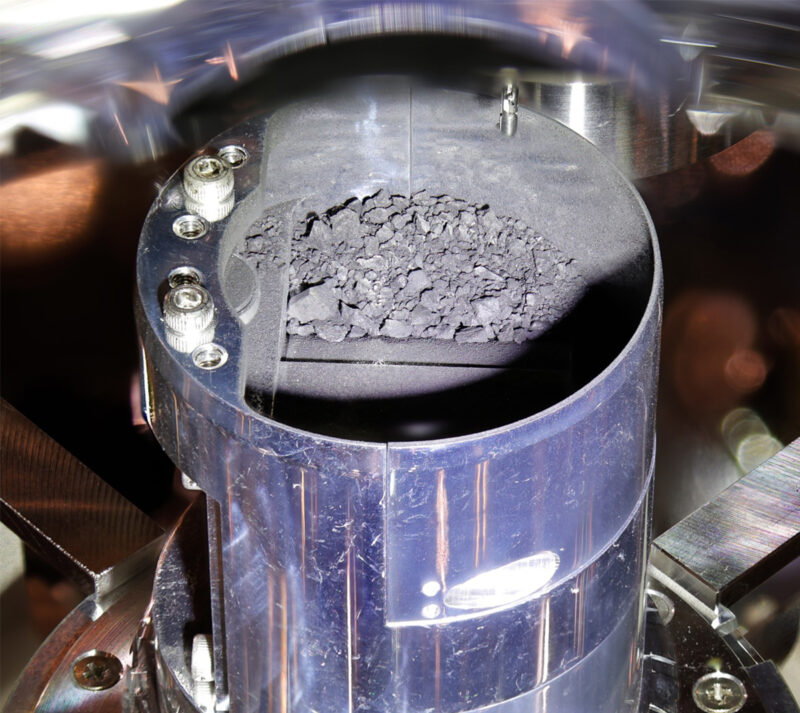
This is a sample of the asteroid Ryugu. The Japanese mission Hayabusa2 brought it back to Earth in 2020. A new study found all 5 fundamental units of life’s genetic
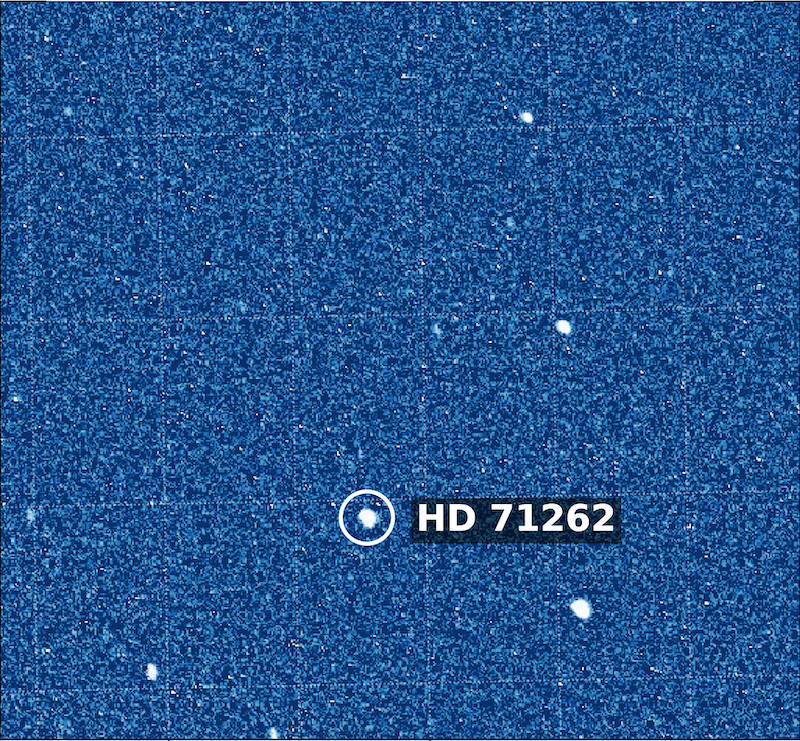
View larger/full image. | This is the first light image from the Star-Planet Activity Research CubeSat (SPARCS). It shows the star HD 71262 and other stars in near-ultraviolet light. NASA’s
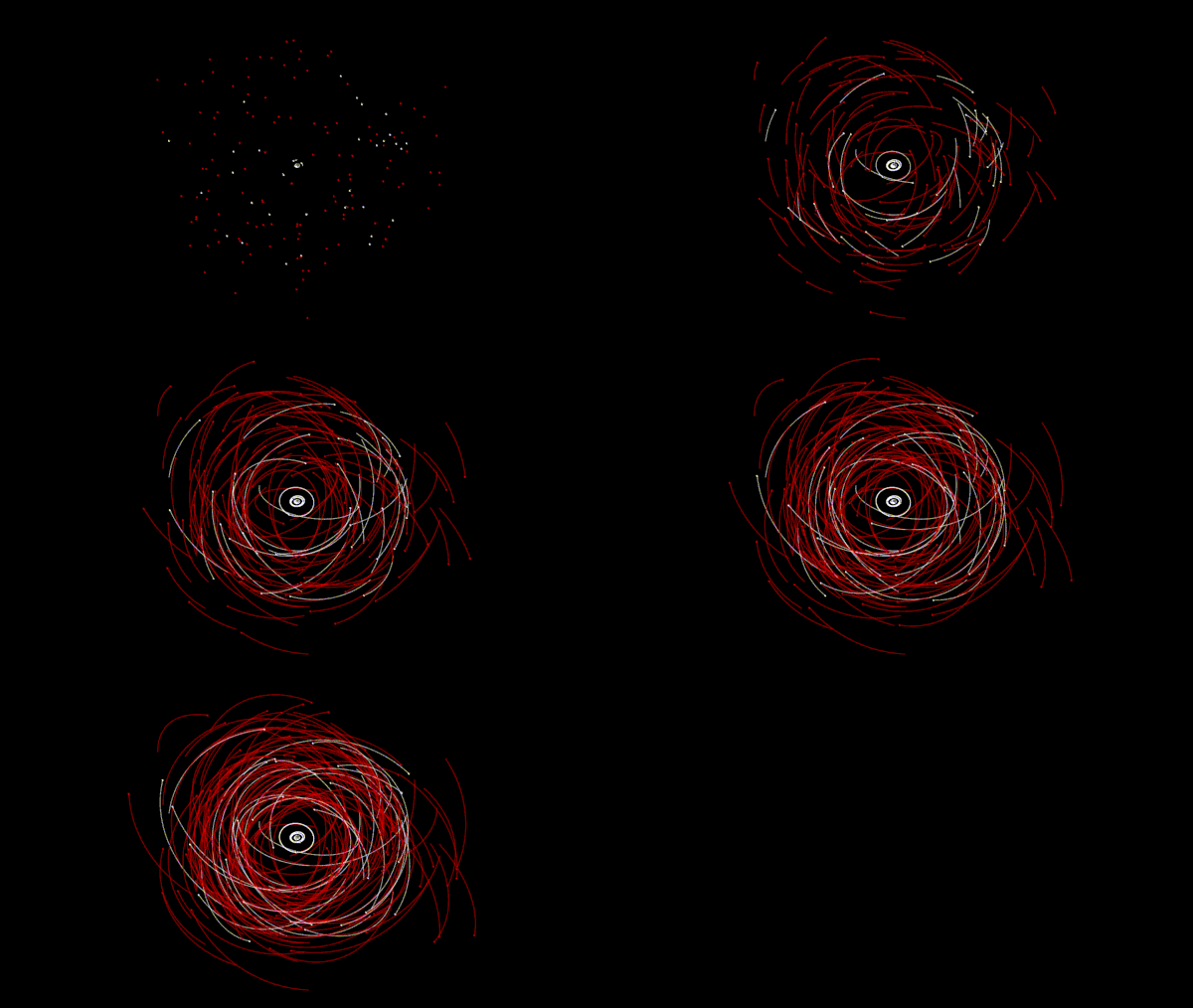
Saturn now officially has 285 moons! This animation, from Tony Dunn at Orbitsimulator.com, shows some of the previously known moons in white and newly discovered moons in red, as they
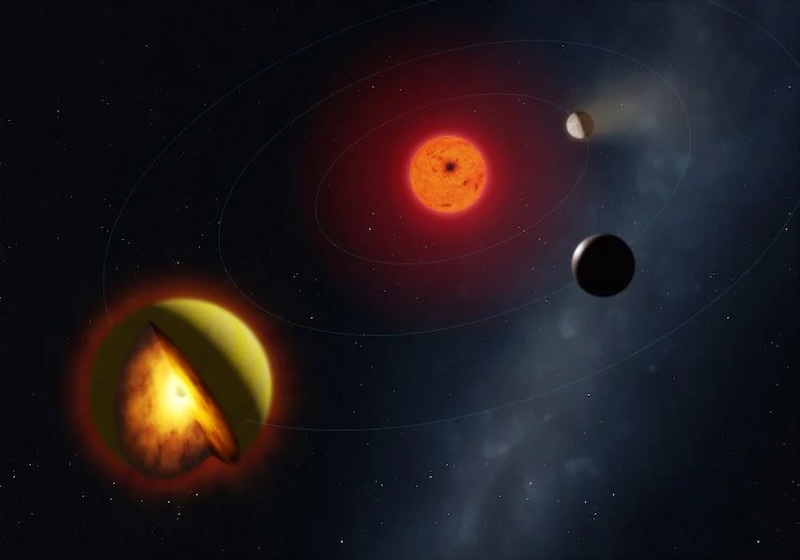
View larger. | An artist’s concept of the star L 98-59 and its 3 exoplanets. At front is a cutaway view of the molten super-Earth exoplanet L 98-59 d. A
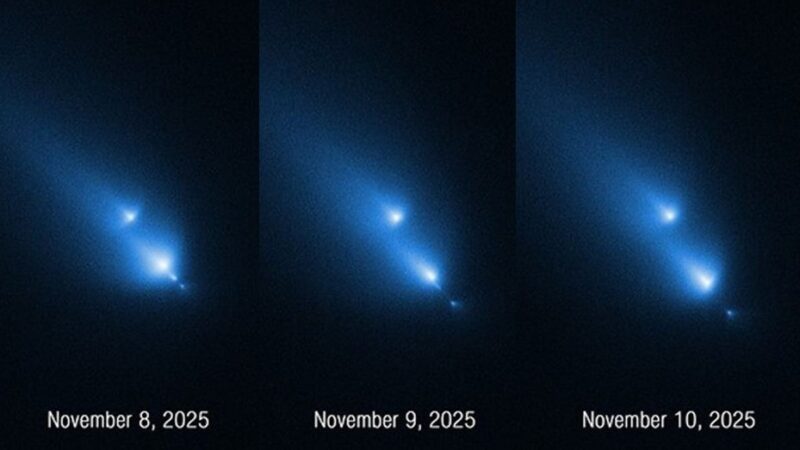
A comet breaks apart in this series of images from NASA’s Hubble Space Telescope. The comet was C/2025 K1 (ATLAS) (not to be confused with the interstellar comet 3I/ATLAS). These
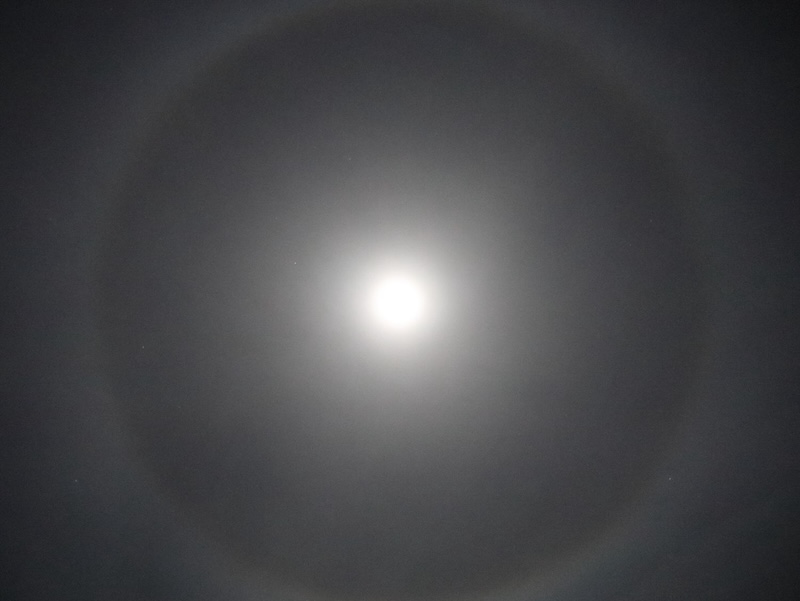
We tell you all you need to know about halos in our YouTube video here. Don’t forget to subscribe! What causes halos? Have you ever looked up and spotted a
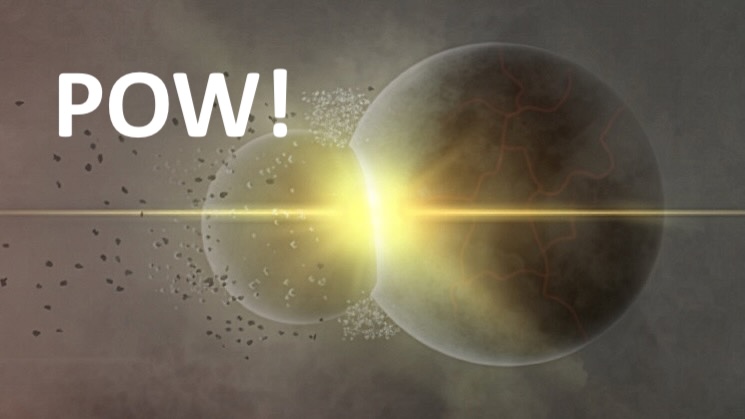
Artist’s concept of a collision of 2 exoplanets. Light from the collision in a star system called Gaia20ehk could be seen in the year 2021. Image via Anastasios Tzanidakis/ University
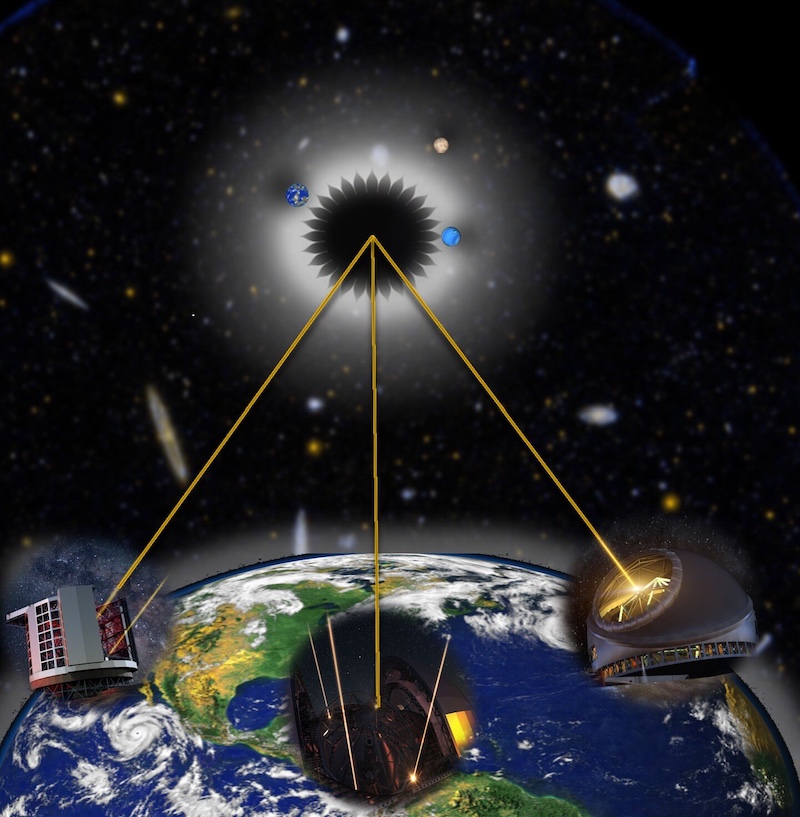
View larger. | Artist’s illustration of a new telescope conceived for seeking other Earths. It would be a hybrid: partly ground-based and partly space-based. The starshade in orbit (top center)