
Now Reading: China set to advance space exploration with upcoming Tiangong missions and international collaborations
-
01
China set to advance space exploration with upcoming Tiangong missions and international collaborations

China set to advance space exploration with upcoming Tiangong missions and international collaborations

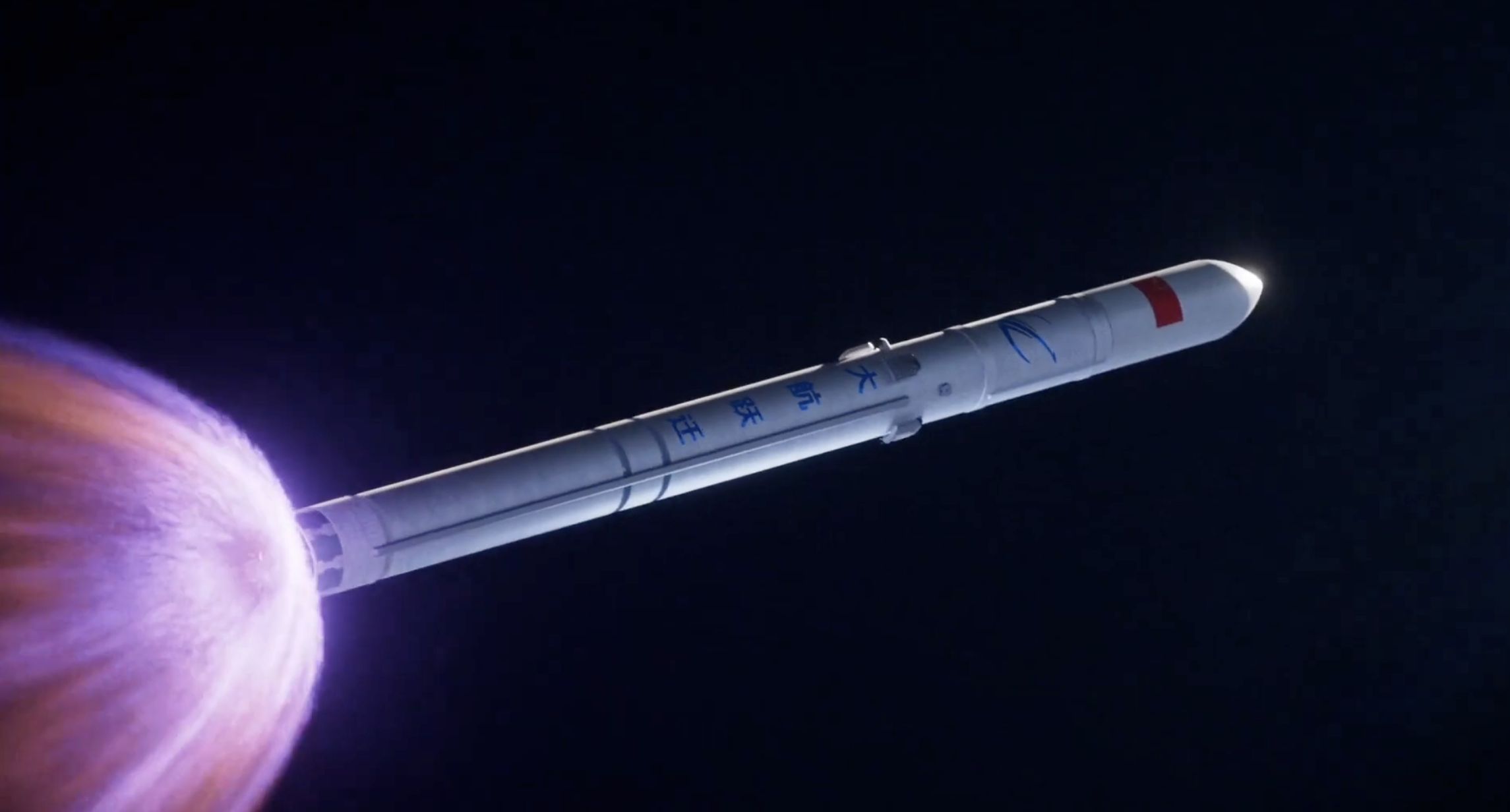

China is gearing up for significant advancements in its space exploration efforts, with imminent launches planned for both cargo and crew missions to the Tiangong space station. The upcoming month will witness two missions, with Tianzhou-10 scheduled to lift off on May 9, serving as the ninth cargo resupply operation for the space station. The mission will be launched from the Wenchang Space Launch site aboard a Chang Zheng 7 rocket. Recent adjustments to the station’s orbit, completed on April 30, have readied it for the arrival of the Tianzhou cargo craft.
Currently, a crew of three astronauts, who launched aboard Shenzhou-21 last October, are on board the Tiangong station. Their mission, initially set for six months, has been extended, and they’re expected to return home on the Shenzhou-22 vehicle, which was launched uncrewed in November as a precaution after damage was detected on the Shenzhou-20 capsule. While aboard, the astronauts have conducted scientific experiments and completed extravehicular activities, including maintenance tasks performed by Zhang Lu and Wu Fei on April 16.
Though the China Manned Space Agency has not yet confirmed the launch date for Shenzhou-23, it is anticipated that one of its crew members will set a milestone by remaining in orbit for an entire year. Additionally, a Pakistani astronaut is slated to participate in a short stay at the station aboard the following Shenzhou-24 mission. Pakistan’s candidates for this mission, Khurram Daud and Muhammad Zeeshan Ali, are currently training in China.
Further developments in China’s space initiatives include ongoing collaboration with international partners for deep space missions targeting the Moon and Mars. The soon-to-launch Solar Wind Magnetosphere Ionosphere Link Explorer (SMILE) mission, developed in cooperation with the European Space Agency, aims to investigate the interactions between solar winds and Earth’s magnetosphere. SMILE is expected to launch by May 19.
China’s commitment to expanding the Tiangong station is also evident, with plans to evolve its structure into a more complex configuration that will accommodate additional modules and enhance its scientific capabilities. This expansion includes a larger launch vehicle fairing being developed for the Chang Zheng 5B rocket, which will facilitate the station’s growth.
As China’s commercial space sector continues to evolve, innovative projects are underway, including the maiden flight of the fully reusable Chang Zheng 10B rocket, expected later this month. Efforts to enhance collaboration with international entities and implement reusable rocket technologies underscore China’s ambitions in the global space arena. Meanwhile, ongoing developments in the commercial launch sector are poised to increase accessibility for both domestic and international payloads, driven in part by the establishment of new regulatory frameworks aimed at standardizing operations within this burgeoning industry.










Related Posts

Stay Informed With the Latest & Most Important News
Previous Post
Next Post



Advertisement
-
 01Two Black Holes Observed Circling Each Other for the First Time
 -
 02From Polymerization-Enabled Folding and Assembly to Chemical Evolution: Key Processes for Emergence of Functional Polymers in the Origin of Life
 -
 03Astronomy 101: From the Sun and Moon to Wormholes and Warp Drive, Key Theories, Discoveries, and Facts about the Universe (The Adams 101 Series)
 -
 04True Anomaly hires former York Space executive as chief operating officer
 -
 05Φsat-2 begins science phase for AI Earth images
 -
 06Hurricane forecasters are losing 3 key satellites ahead of peak storm season − a meteorologist explains why it matters
 -
 07Binary star systems are complex astronomical objects − a new AI approach could pin down their properties quickly