
Now Reading: Genomic Adaptations Of Novel Halotolerant Bacteria From Extreme North Greenland
-
01
Genomic Adaptations Of Novel Halotolerant Bacteria From Extreme North Greenland


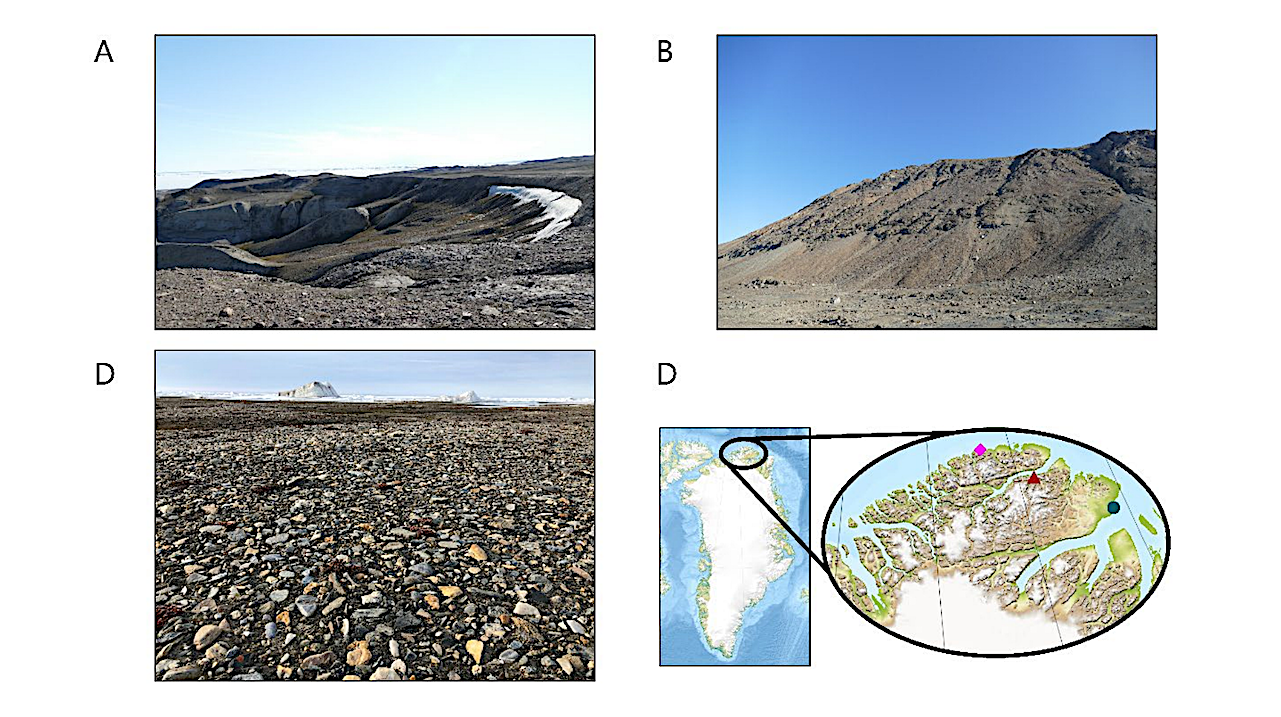
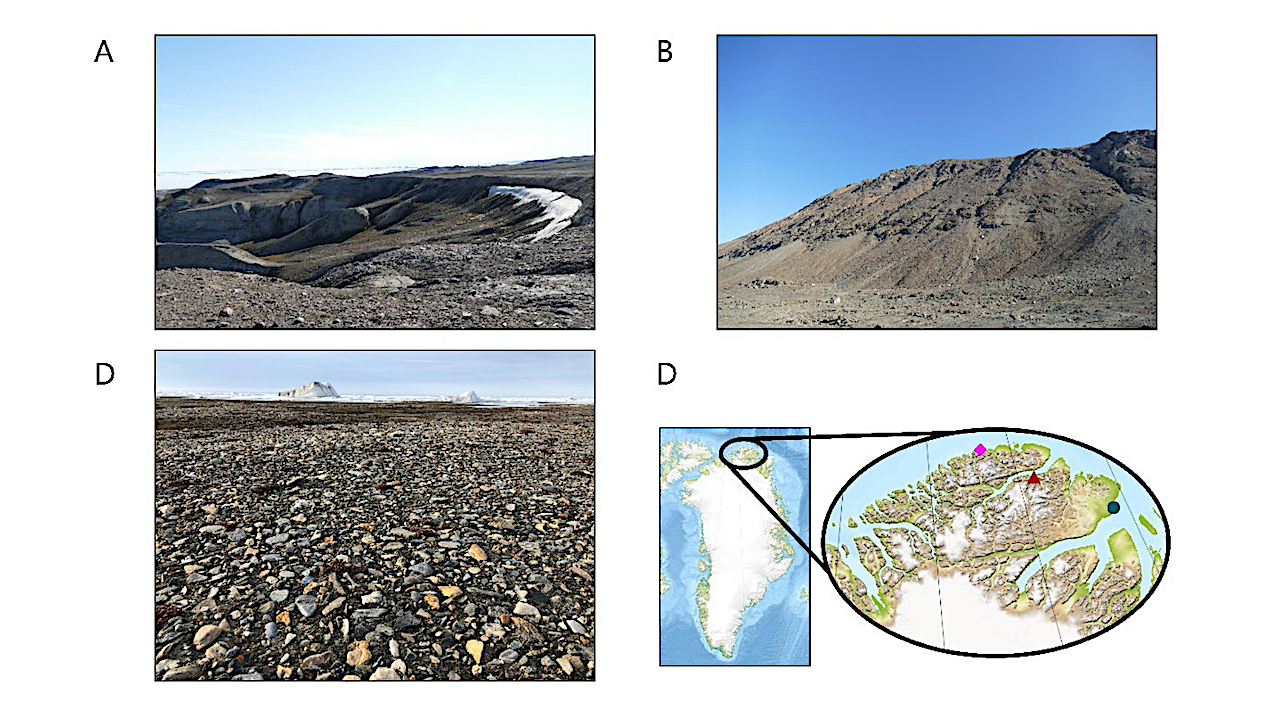
Sampling sites at Kap København (a) where permafrost soil samples were obtained at the erosion front left of the snowpack, Citronen Fjord (b) and Cape Morris Jessup (c). d: Location of Peary Land within Greenland and sampling sites: Cape Morris Jessup (magenta diamond), Citronen Fjord (red triangle) and Kap København (dark green circle). Greenland map: Uwe Dedering, CC BY-SA 3.0. Peary Land map: Blue Green Atlas, CC BY 4.0.
Peary Land, northern-most Greenland, is a cold desert region whose soil microbiome remains underexplored. This is the first study to explore the halotolerant soil microbiome of this region with culture-dependent methods.
Forty-nine taxonomically diverse bacterial isolates were obtained from dry biological soil crust, surface soil and permafrost soil. Nine isolates were selected for whole genome sequencing; these genomes showed adaptations to their cold, saline native environment, such as cold shock proteins and a large number of osmoprotectant transporters.
The genomes also contained several biosynthetic gene clusters, including a large variety of clusters involved in the production of antimicrobial compounds. Furthermore, most of the sequenced genomes showed low digital DNA-DNA hybridisation to their closest relatives, suggesting that they represent novel species.
Overall, this study demonstrates the unexplored potential of High Arctic deserts as a source of novel halotolerant bacteria and their secondary metabolites.
Genomic adaptations of novel halotolerant bacteria from extreme North Greenland, biorxiv.org
Astrobiology











Related Posts
Stay Informed With the Latest & Most Important News
Previous Post
Next Post


Advertisement
-
 01Two Black Holes Observed Circling Each Other for the First Time
 -
 02From Polymerization-Enabled Folding and Assembly to Chemical Evolution: Key Processes for Emergence of Functional Polymers in the Origin of Life
 -
 03Astronomy 101: From the Sun and Moon to Wormholes and Warp Drive, Key Theories, Discoveries, and Facts about the Universe (The Adams 101 Series)
 -
 04True Anomaly hires former York Space executive as chief operating officer
 -
 05Φsat-2 begins science phase for AI Earth images
 -
 06Hurricane forecasters are losing 3 key satellites ahead of peak storm season − a meteorologist explains why it matters
 -
 07Binary star systems are complex astronomical objects − a new AI approach could pin down their properties quickly