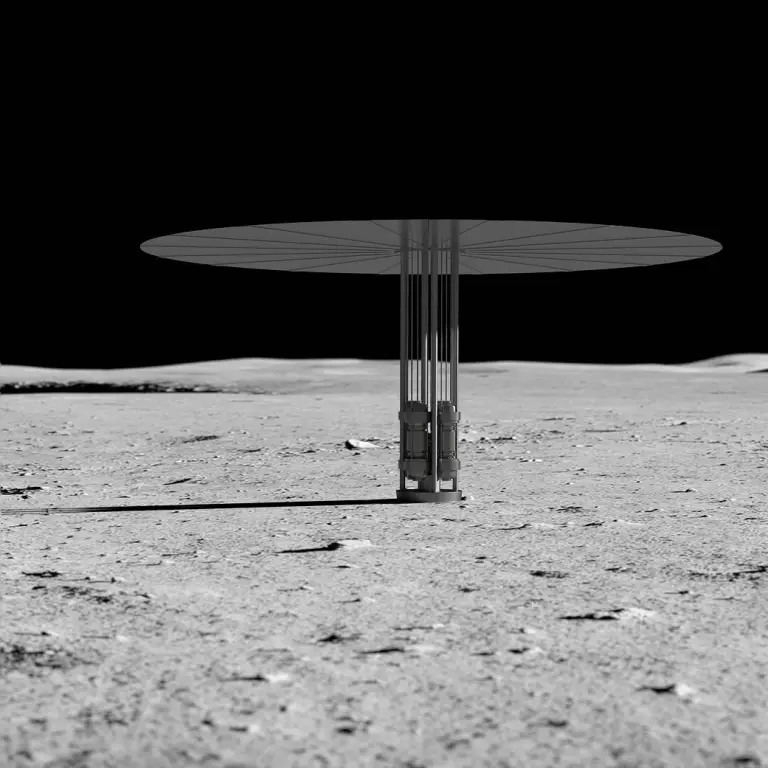
The US’s federally funded space program has been struggling of late. With the recent cancellation of the Mars Sample Return mission, and mass layoffs / resignations taking place at NASA,

The US’s federally funded space program has been struggling of late. With the recent cancellation of the Mars Sample Return mission, and mass layoffs / resignations taking place at NASA,
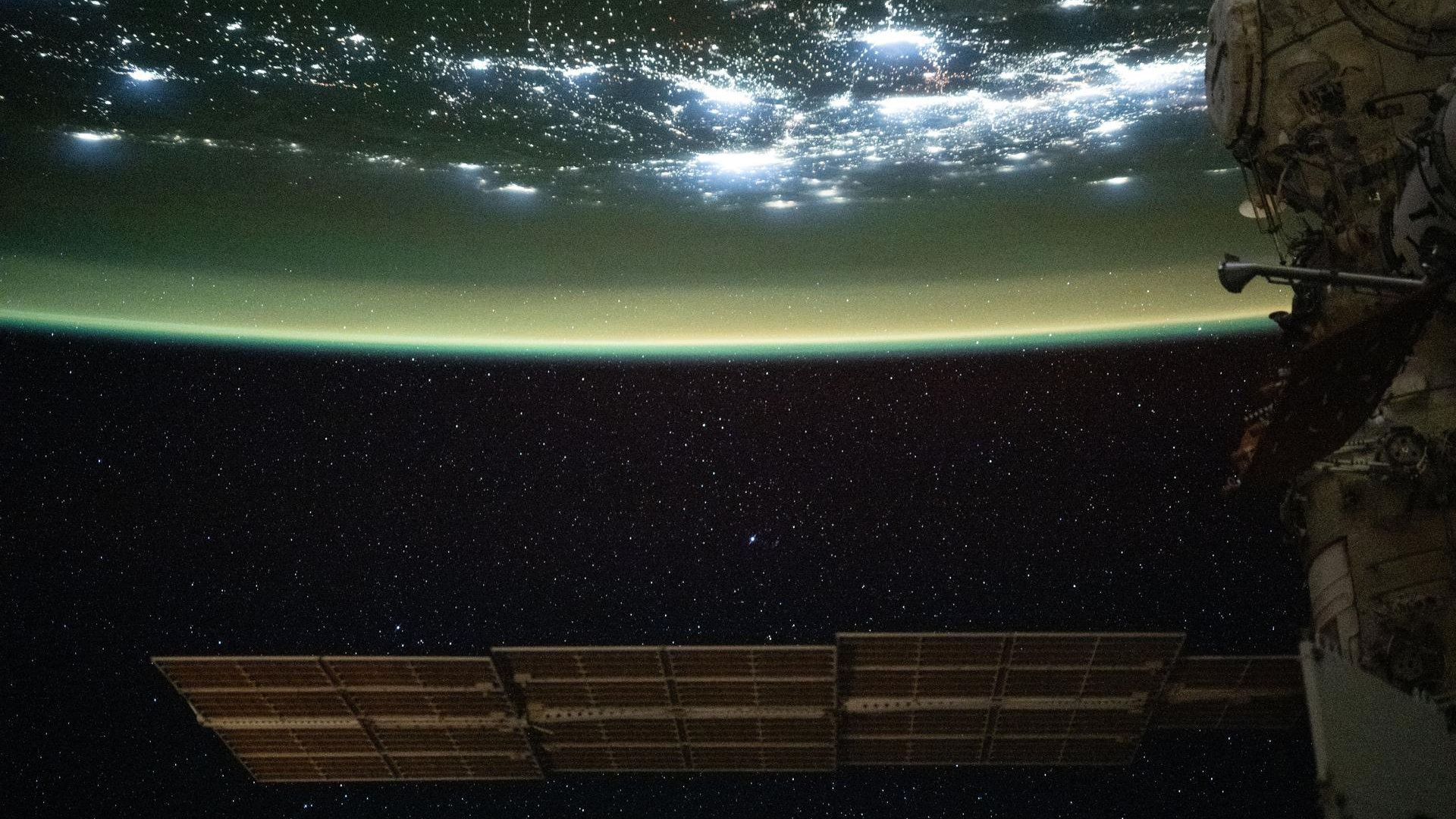
Some of the best views of Earth come from beyond our home planet, as recently captured by astronauts aboard the International Space Station (ISS). In late October, astronauts saw Earth
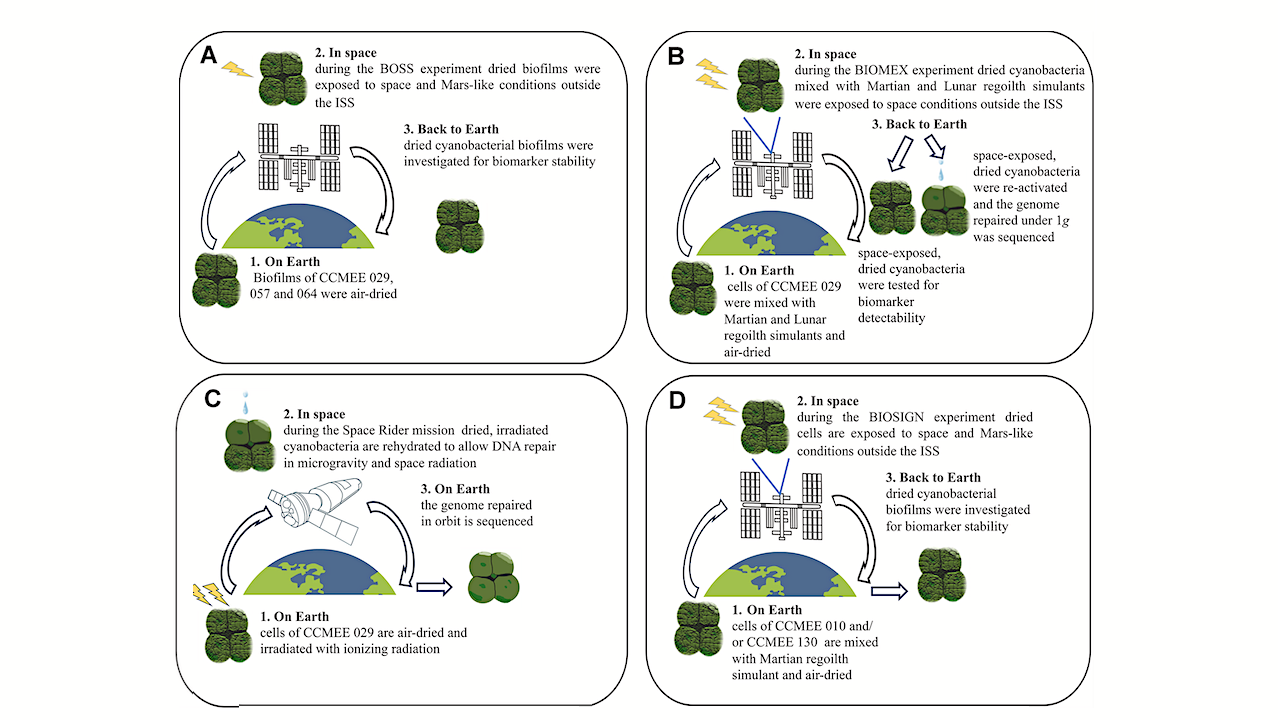
Workflow of space missions. A. BOSS: Cyanobacterial biofilms were air-dried on the ground and integrated in the EXPOSE-R2 facility. Dried samples were exposed in LEO for 1.5 years. After retrieval
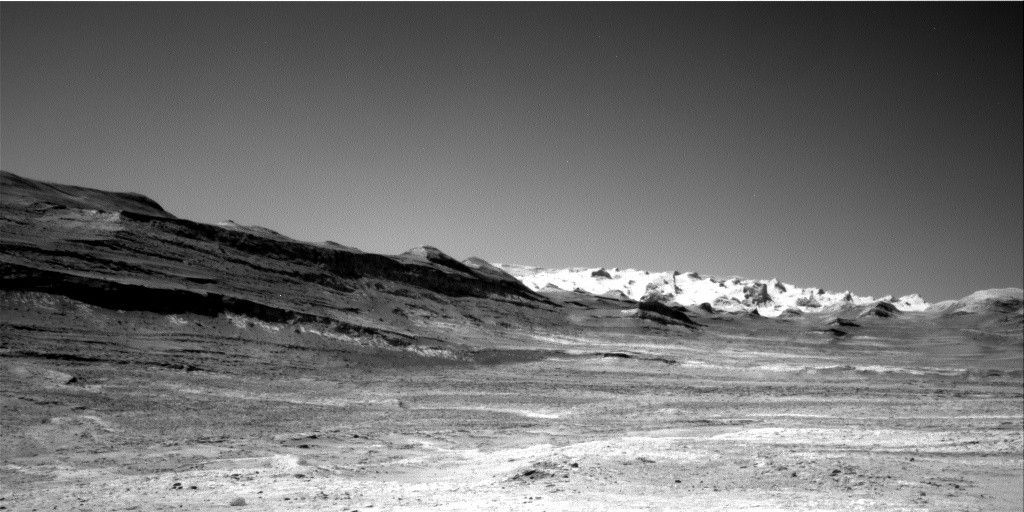
Curiosity Navigation Curiosity Home Mission Overview Where is Curiosity? Mission Updates Science Overview Instruments Highlights Exploration Goals News and Features Multimedia Curiosity Raw Images Images Videos Audio Mosaics More Resources
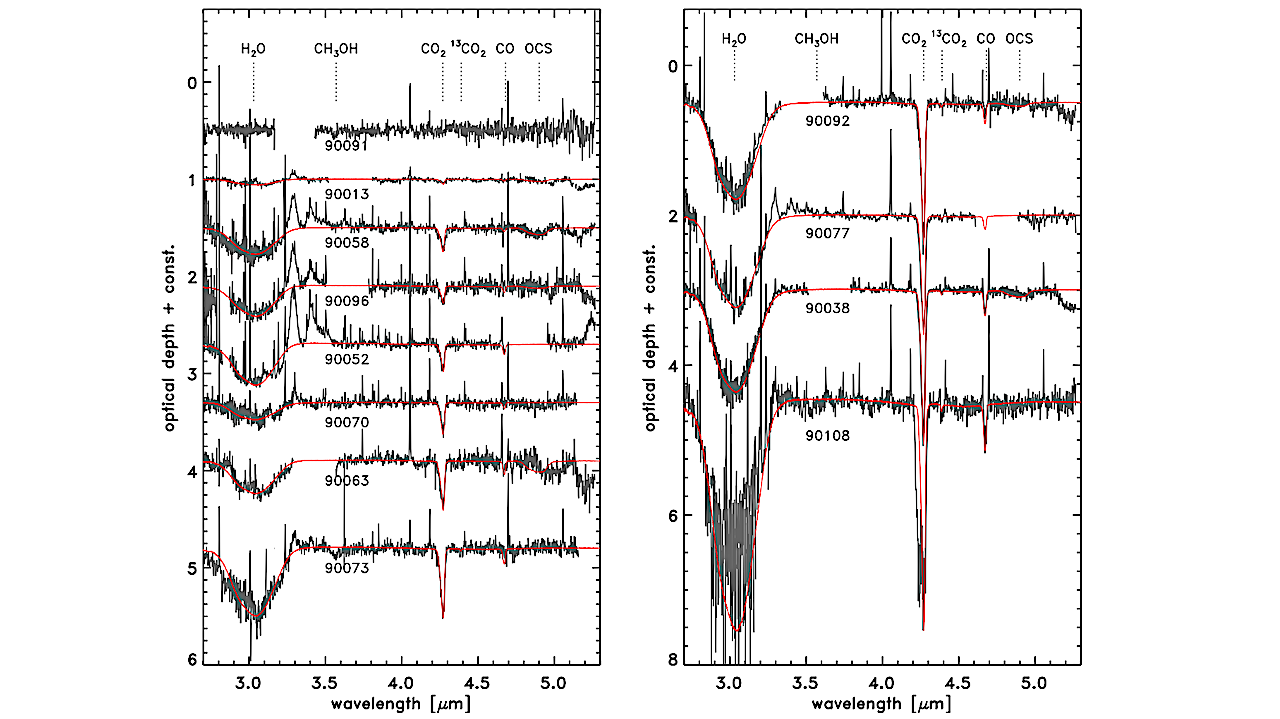
Optical depth spectra of the YSOs in our sample, shifted vertically for clarity. For illustration purposes, the red lines correspond to a linear combination of four ice mixtures selected from
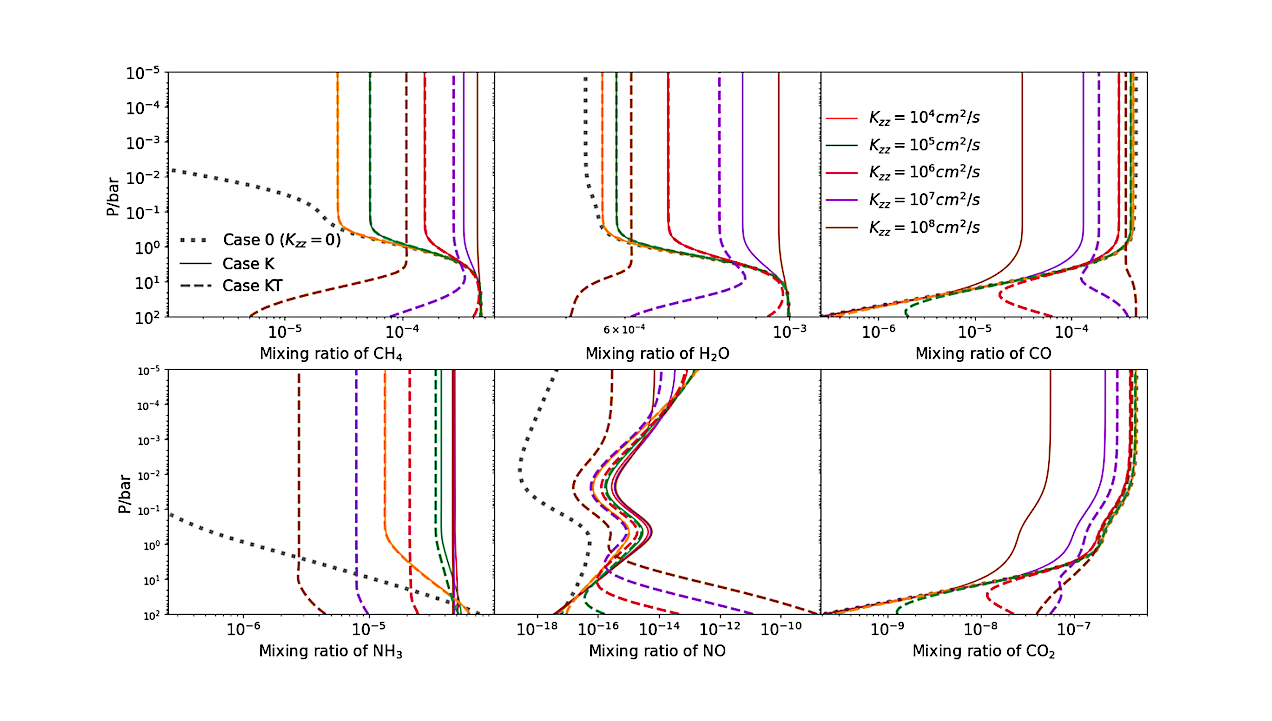
The mixing ratios of CH4, H2O, CO, NH3, NO and CO2 across varying intensities of vertical mixing. The dotted line (Case 0) corresponds to the case where there is no
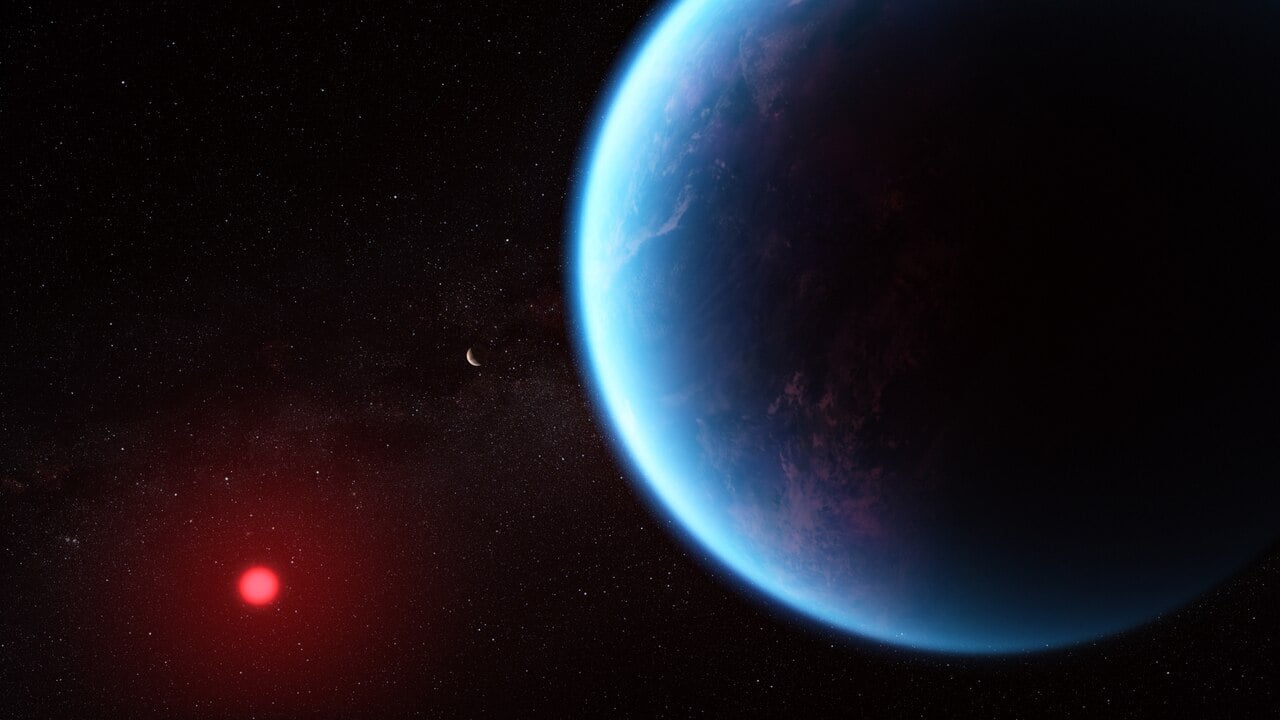
When astronomers detected potential biosignatures in the atmosphere of exoplanet K2-18 b, it raised a critical question, ‘could this world’s atmosphere even survive its host star’s radiation?’ A new study
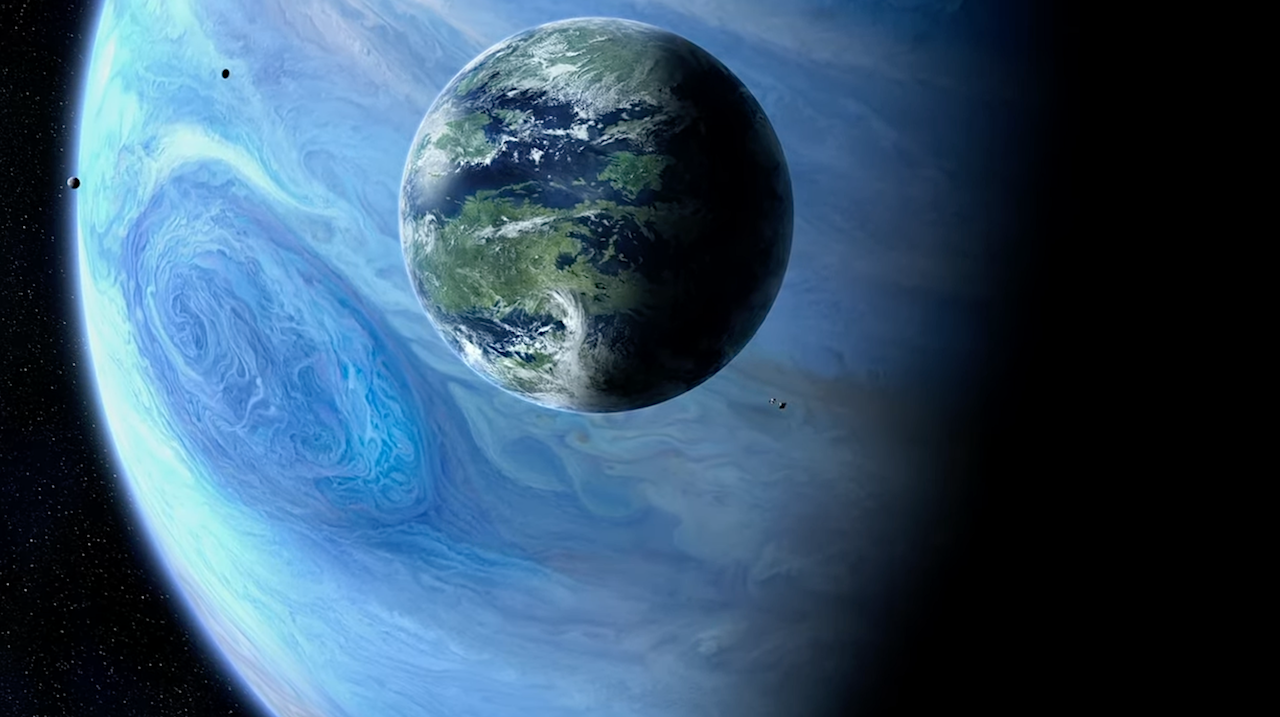
Pandora, an Earth-class planet orbiting the Gas Giant Polyphemus in the Alpha Centauri A star system in the “Avatar”series of films. — 20th CenturyFox Nearby giant exoplanets offer an opportunity
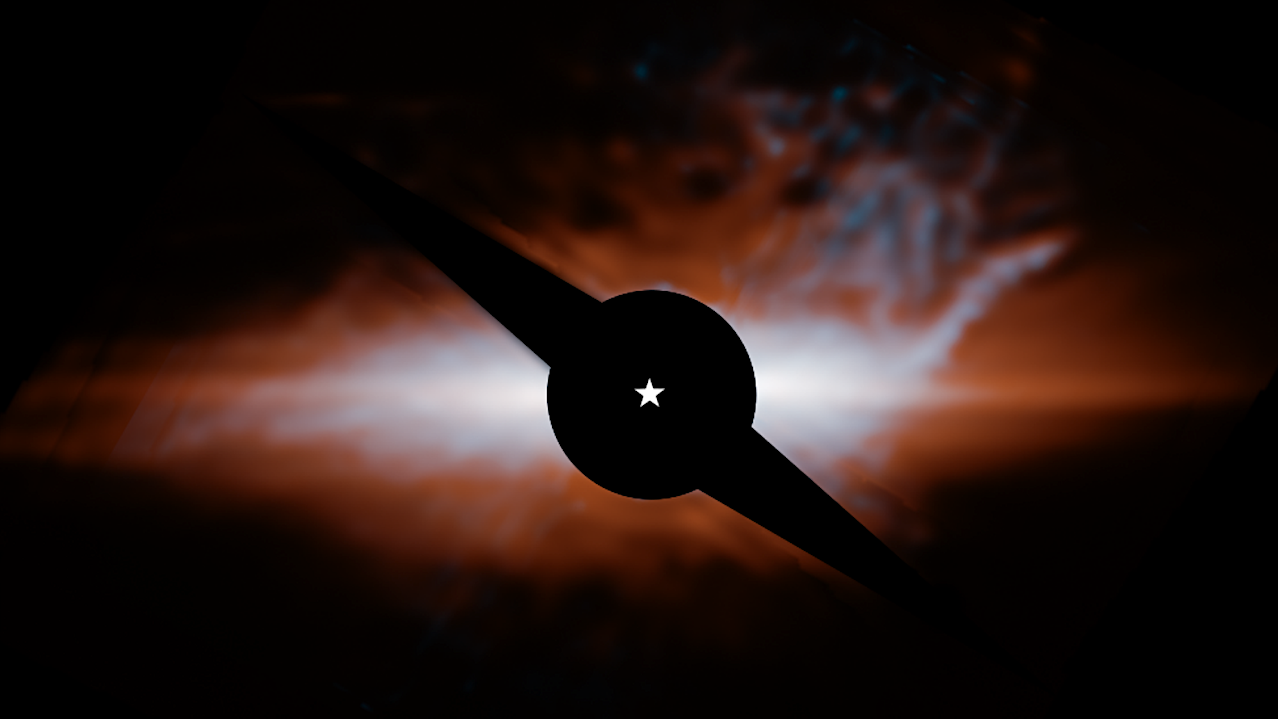
Figure from Rebollido et al. (2024). The debris disk around Beta Pictoris seen with JWST/MIRI. — astro-ph.IM The study of the last stages of planet formation, also known as debris
Rohan Rahatgaonkar is a Ph.D. student at the Instituto de Astrofísica-Pontificia Universidad Católica de Chile. Darryl Z. Seligman is an Assistant Professor of Physics and Astronomy at Michigan State University.