
Now Reading: How a Black Hole and a Shredded Star Could Light Up a Galaxy
1
-
01
How a Black Hole and a Shredded Star Could Light Up a Galaxy


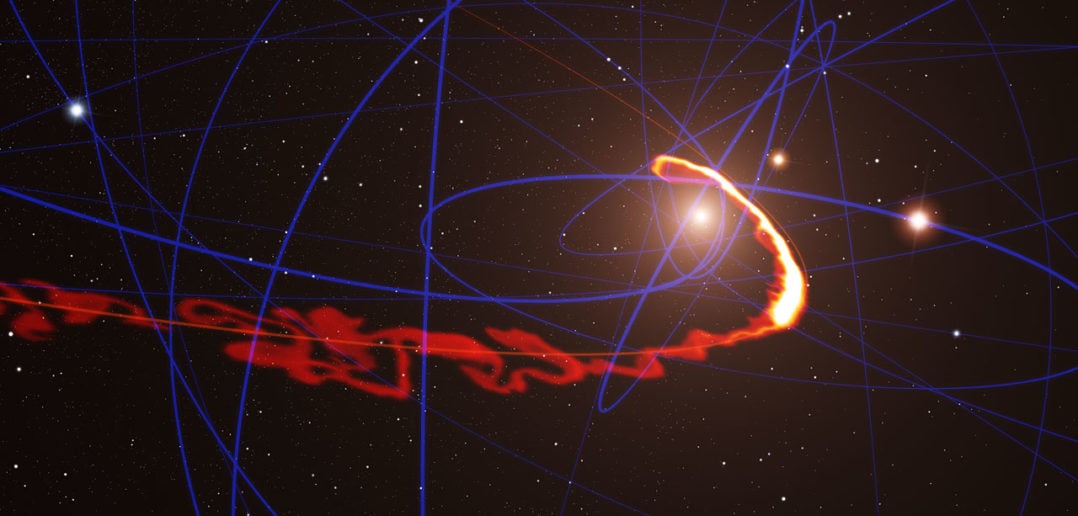
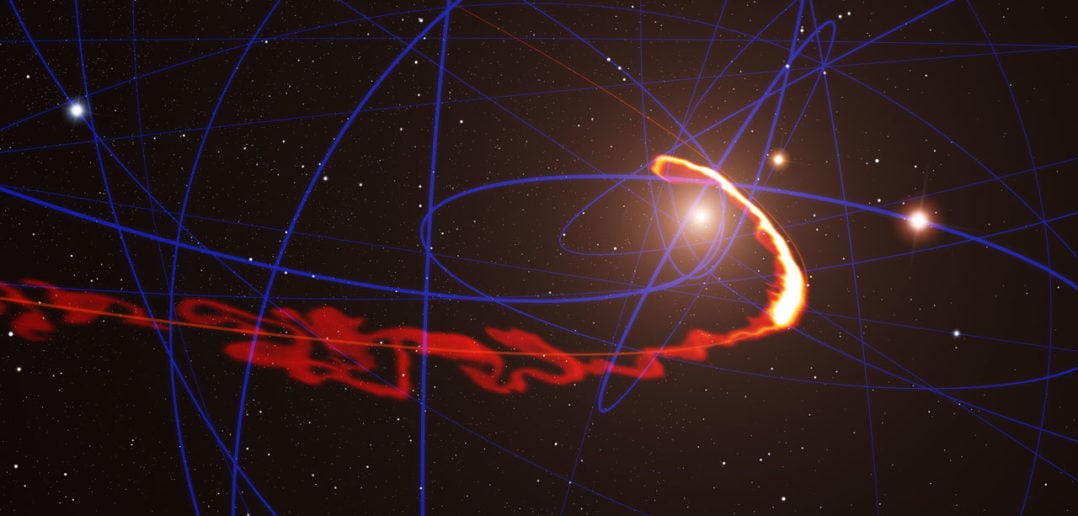
In 2014, a strange cloudy object called G2 made a close approach to Sagittarius A*, (Sag A*) the supermassive black hole at the heart of the Milky Way Galaxy. Astronomers were pretty excited, partly because they thought it might get torn apart by Sag A*’s intense gravitational pull. That didn’t happen, and the event was a cosmic fizzle. Instead, G2 skipped around the black hole. Various observations showed that it wasn’t just a gas cloud. It was likely a dusty protostellar object encased in a dusty cloud. Or perhaps several merged stars. But, it survived the flyby and continued on a shortened orbit.










Related Posts
Stay Informed With the Latest & Most Important News
[mc4wp_form id=314]
Previous Post
Next Post

Advertisement
Loading Next Post...
Popular Now
-
 01Two Black Holes Observed Circling Each Other for the First Time
 -
 02From Polymerization-Enabled Folding and Assembly to Chemical Evolution: Key Processes for Emergence of Functional Polymers in the Origin of Life
 -
 03Astronomy 101: From the Sun and Moon to Wormholes and Warp Drive, Key Theories, Discoveries, and Facts about the Universe (The Adams 101 Series)
 -
 04True Anomaly hires former York Space executive as chief operating officer
 -
 05Φsat-2 begins science phase for AI Earth images
 -
 06Hurricane forecasters are losing 3 key satellites ahead of peak storm season − a meteorologist explains why it matters
 -
 07Binary star systems are complex astronomical objects − a new AI approach could pin down their properties quickly
Scroll to Top