
Now Reading: NASA Faces Significant Delays in Next-Generation Spacesuit Development Ahead of Artemis Mission
-
01
NASA Faces Significant Delays in Next-Generation Spacesuit Development Ahead of Artemis Mission

NASA Faces Significant Delays in Next-Generation Spacesuit Development Ahead of Artemis Mission

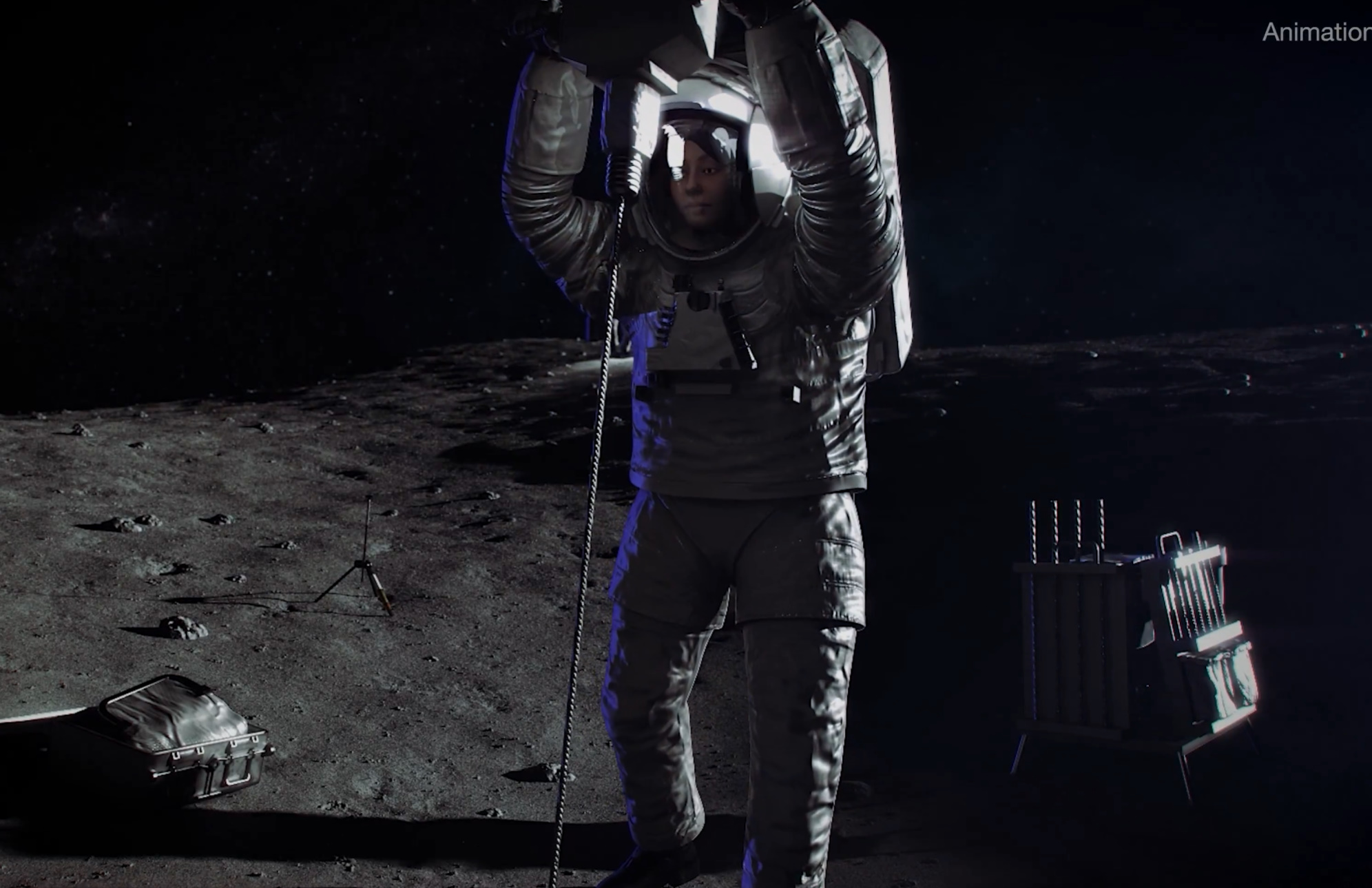

NASA and Axiom Space are responding to a recent alert from the NASA Office of Inspector General (OIG) regarding significant delays in the development of next-generation spacesuits, essential for upcoming lunar missions and operations aboard the International Space Station (ISS). The OIG’s report, titled “NASA’s Acquisition of Next-Generation Spacesuit Services,” highlights the challenges the agency faces as it continues to rely on a single contractor, which jeopardizes the timeline for the projected 2028 Artemis lunar landing and activities on the ISS before its planned retirement in 2030.
Spacesuits have been a cornerstone of human space exploration since the dawn of the space age. From the early Mercury missions, which used basic pressure suits, to the advanced A7L spacesuits worn during the Apollo program that allowed astronauts to roam the lunar surface, these garments have evolved dramatically. However, following the Apollo era, the focus shifted to low Earth orbit, with the Extravehicular Mobility Unit (EMU) becoming the standard for shuttle and ISS missions. Unfortunately, the EMU’s design is now over 40 years old, and its limitations have surfaced prominently, including problems with water leaks and outdated components.
NASA has been working on next-generation suits to facilitate longer lunar missions and enhance ISS spacewalks for over a decade. The challenges in developing these suits have led the agency to rely solely on Axiom Space for both the Artemis lunar mission suits and updated suits for the ISS. Initial timelines had set demonstrations for the lunar suit in November 2025 and the microgravity suit by April 2026; however, these have been pushed back by more than a year and a half. As of January 2026, Axiom is now projecting that demonstrations will occur in late 2027, a timeframe that leaves little room for error before the lunar landing or ISS operations end.
According to the OIG report, “NASA faces challenges in ensuring next-generation spacesuits are available to meet the Agency’s current schedules for the Artemis lunar landing mission in 2028 and prior to the ISS’s decommissioning in 2030.” The report elaborates that historical data indicates a longer average timeline for development than NASA initially anticipated, estimating that delays could stretch demonstrations into 2031—well after critical deadlines.
Complicating these issues is NASA’s acquisition strategy, which has been criticized as overly ambitious given the technical complexities of designing suits after decades of stagnation. The agency’s initial approach involved awarding contracts to both Axiom and Collins Aerospace, but when Collins failed to meet design milestones, NASA had to scale back their involvement, leaving Axiom as the sole contractor.
In June 2024, after struggling to meet deadlines, Collins agreed to reduce their task orders, with NASA reallocating funds initially meant for Collins to Axiom. The OIG report states, “Collins’ descope from xEVAS negated the competition and redundancy sought by the Agency,” highlighting the risk of counting on a single supplier.
In light of these setbacks, NASA has increased its monitoring of supply chain risks and intensified in-house testing while collaborating closely with Axiom. The agency is also examining its acquisition strategy to ensure that future projects do not face similar challenges. Axiom has commented on the report by vowing to meet the necessary deadlines, citing extensive testing and engineering efforts already underway.
NASA Administrator Jared Isaacman expressed his gratitude for the OIG’s insights and reaffirmed the agency’s commitment to facilitating the lunar mission, while also acknowledging potential flaws in their acquisition strategy. He emphasized the importance of learning from these experiences to better support future contracts and the need for ongoing industry engagement to maintain competition.
Looking ahead, the OIG’s recommendations include inviting industry feedback on current contract requirements and improving interoperability standards between spacesuits and lunar vehicles. NASA has indicated its agreement with these recommendations and is taking steps to bolster future collaboration and innovation.
As the countdown to Artemis approaches and the ISS nears its operational end, NASA’s focus will need to remain on effectively qualifying Axiom’s spacesuits while also considering potential new entrants into the market to ensure the country achieves its ambitious goals in lunar exploration. The success of these efforts will be crucial in determining whether NASA can meet its deadlines and enable a sustainable human presence on the Moon and beyond.










Related Posts
Stay Informed With the Latest & Most Important News
Previous Post
Next Post


Advertisement
-
 01Two Black Holes Observed Circling Each Other for the First Time
 -
 02From Polymerization-Enabled Folding and Assembly to Chemical Evolution: Key Processes for Emergence of Functional Polymers in the Origin of Life
 -
 03Astronomy 101: From the Sun and Moon to Wormholes and Warp Drive, Key Theories, Discoveries, and Facts about the Universe (The Adams 101 Series)
 -
 04True Anomaly hires former York Space executive as chief operating officer
 -
 05Φsat-2 begins science phase for AI Earth images
 -
 06Hurricane forecasters are losing 3 key satellites ahead of peak storm season − a meteorologist explains why it matters
 -
 07Binary star systems are complex astronomical objects − a new AI approach could pin down their properties quickly