
Now Reading: NASA science faces ‘very serious threat’ from new White House budget, experts say
-
01
NASA science faces ‘very serious threat’ from new White House budget, experts say


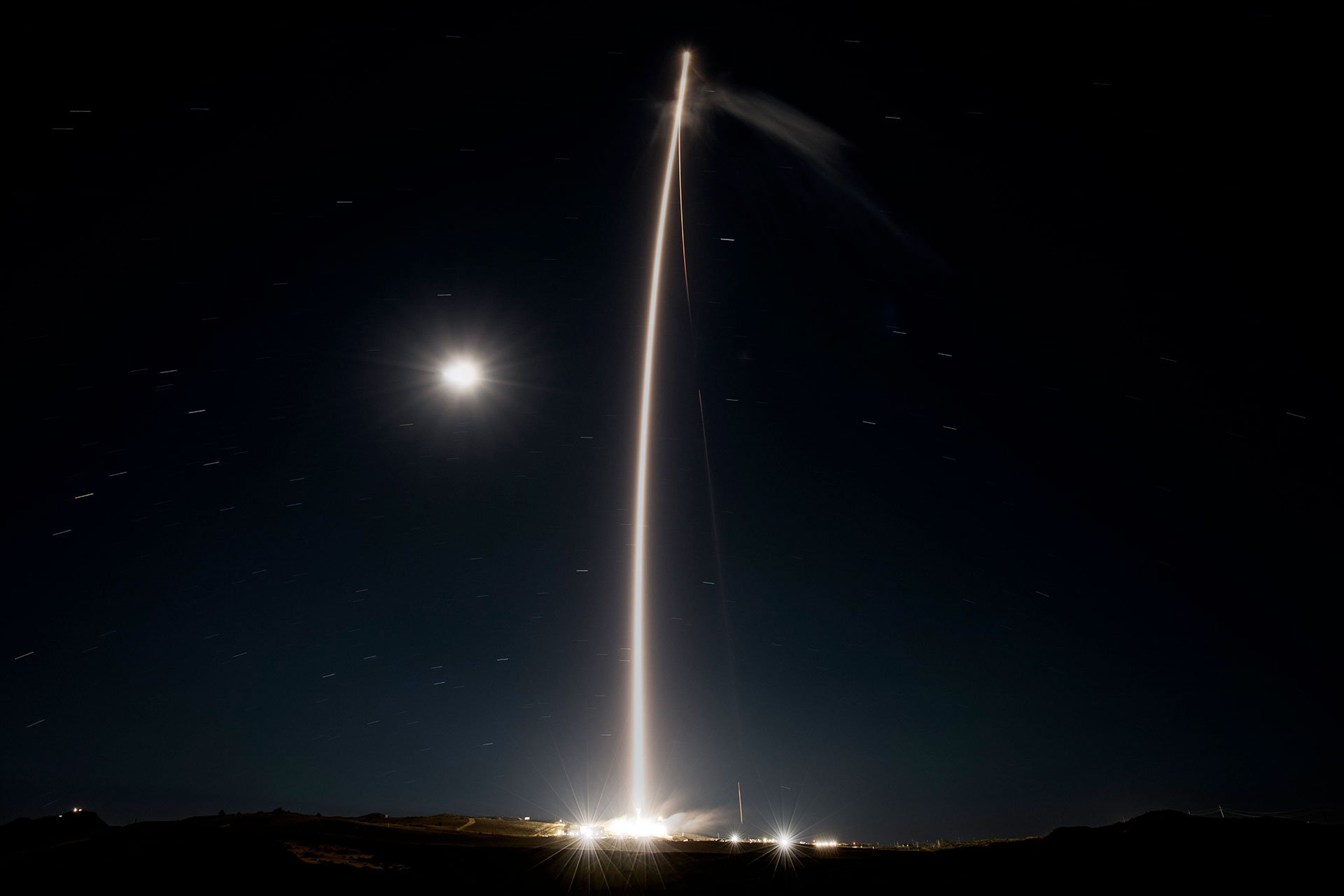
A new White House fiscal year 2027 budget proposal for NASA is drawing sharp criticism from space advocates, who warn it could dramatically reshape the space agency by cutting overall funding by 23% and reducing its science programs by nearly half.
The newly released FY 2027 top-line budget request for NASA reduces the space agency’s Science Mission Directorate from $7.25 billion to $3.9 billion, representing a 47% cut to science funding, coupled with a 23% cut to the agency’s overall funding. The nonprofit Planetary Society issued a statement in response to the budget proposal, urging that it is notable not just for its scale, but for how it departs from long-standing budget practices.
“There are two things: the astonishing lack of transparency and the abject refusal to acknowledge political reality,” Casey Dreier, chief of space policy at The Planetary Society, told Space.com in an email, explaining that the request is a significant break from decades of precedent. “This is the least transparent NASA budget request I’ve ever seen — and I’ve literally looked through every single one since 1960.”
Instead of explicitly identifying canceled missions, the proposal omits them entirely, requiring comparisons with prior budgets to determine what has been cut. It also removes prior-year funding levels — a standard feature of NASA budgets for more than 60 years — making it difficult to assess how funding has changed.
Dreier also pointed to large, loosely defined funding pools within the proposal, including a $438 million “Mars Technology” line with minimal detail or cost breakdowns. The amount exceeds the entire heliophysics division budget, yet is described only in broad terms.
Beyond transparency concerns, Dreier said the FY 2027 request largely repeats a plan Congress already rejected during the FY 2026 cycle, when lawmakers restored NASA’s science funding after a similar proposal was overturned in a bipartisan vote. Thus, Dreier said, this year’s proposal comes across as a “copy-paste budget” from last year, as well as “sloppy and unprofessional,” with a number of errors, including ending the Mars Sample Return mission that was already canceled in 2026 and mention of the wrong fiscal year for James Webb Space Telescope funding, Dreier explained.
“It’s functionally the same as last year in most places,” Dreier said. “They’ve learned nothing from the loss, and are proposing the same mission cancellations as before and the same draconian cuts as before.”
If enacted, the cuts would be sweeping. The proposal would cancel more than 40 science projects — roughly one-third of NASA’s portfolio — including missions in development and active spacecraft.
“New Horizons, OSIRIS-APEX, Juno — all cancelled (again),” Dreier said. “It’s the same set of mission cancellations as last year proposed to do.”
The proposed budget cuts also impact U.S. contributions to international efforts, including the Rosalind Franklin rover — the second mission of the European Space Agency’s (ESA) ExoMars program — which NASA recently recommitted to supporting during its March 24 “Ignition” event. That event outlined a series of transformative, agencywide initiatives aimed at advancing the National Space Policy and strengthening American leadership in space.
However, such reductions could strain international partnerships. Dreier warned that the plan “aims to cancel at least a dozen joint missions,” potentially weakening the United States’ reputation as a reliable collaborator in space science.
At the same time, the budget maintains support for human spaceflight, particularly the Artemis program, which aims to return astronauts to the surface of the moon later this decade and successfully launched Artemis 2 on April 1, marking the agency’s first astronaut mission toward the moon since 1972.
But critics argue that emphasis comes at the expense of science programs that depend on sustained public investment. “There’s no private option for space science,” Dreier said, explaining that the scale, cost and long timelines of such missions make them uniquely reliant on government funding.
“Space science is resource-intensive effort, the results uncertain, and results are all back-filled — it takes a lot of time to design, build and fly a spacecraft to Jupiter, say, before any results are sent back to Earth,” Dreier said.
As a result, it’s not especially appealing to individual philanthropists, and there isn’t a reliable commercial marketplace for the basic science data from these missions to justify the high upfront investment costs.
“It’s the essence of why we have public investment in basic science. Just because SpaceX is very good and launching rockets does not then mean that it’s now easy to get high quality science data at Mars,” Dreier said. “The two activities are very different, but they often get conflated together.”
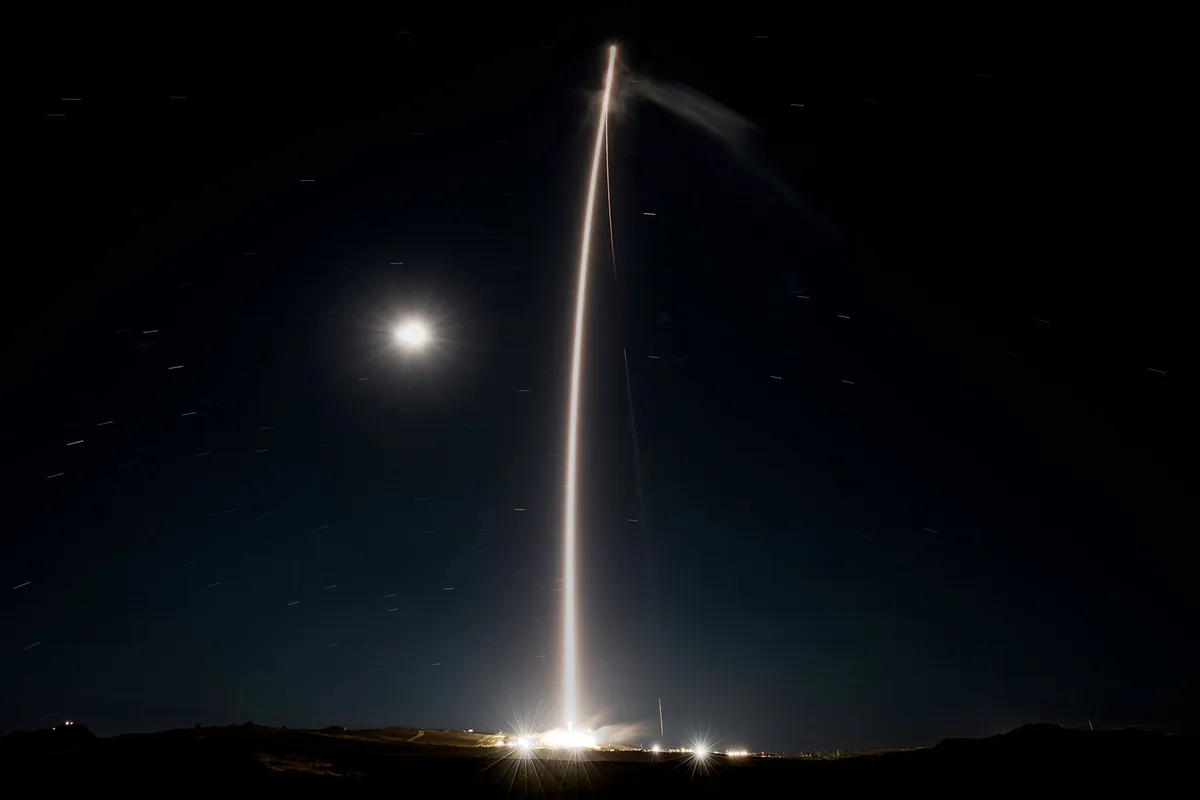
Despite the proposal, Congress is expected to once again play a decisive role. Similar cuts were rejected as part of the FY 2026 budget, and just last month more than 100 members of the House of Representatives signed onto a bipartisan letter calling for an increase to the NASA science budget.
“That’s a clear statement of intent. But that’s not enough — the House must move forward with their FY 2027 appropriations proposal for NASA with a clear counter proposal that rejects this destructive cut to NASA science,” Dreier said. “Ideally, Congress will pass final appropriations before the fiscal year, but that is very unlikely given the upcoming midterm elections.”
Given that similar cuts were proposed and rejected in FY 2026, strong pushback from Congress is expected again — consistent with earlier action this year, when lawmakers passed a “minibus” spending bill allocating $24.4 billion to NASA for FY 2026, which began on Oct. 1. Already, key members of Congress have signaled their opposition to the budget proposal.
“Members of both parties understand that dismantling the U.S. space science program is a short-sighted, wasteful, strategic blunder,” Dreier told Space.com.
In response to the FY 2027 proposal, The Planetary Society has relaunched its Save NASA Science campaign, encouraging space advocates to write to Congress, participate in the April 19–20 Day of Action and donate to its Space Policy & Advocacy program to help mobilize nationwide engagement. With Congress expected to review the budget and debate the proposed cuts in the coming months, Dreier urges now is the time to take action.
“It is a very serious threat to NASA science and we must absolutely work to stop it,” he said.










Related Posts

Stay Informed With the Latest & Most Important News
Previous Post
Next Post




Advertisement
-
 01Two Black Holes Observed Circling Each Other for the First Time
 -
 02From Polymerization-Enabled Folding and Assembly to Chemical Evolution: Key Processes for Emergence of Functional Polymers in the Origin of Life
 -
 03Astronomy 101: From the Sun and Moon to Wormholes and Warp Drive, Key Theories, Discoveries, and Facts about the Universe (The Adams 101 Series)
 -
 04True Anomaly hires former York Space executive as chief operating officer
 -
 05Φsat-2 begins science phase for AI Earth images
 -
 06Hurricane forecasters are losing 3 key satellites ahead of peak storm season − a meteorologist explains why it matters
 -
 07Binary star systems are complex astronomical objects − a new AI approach could pin down their properties quickly