
Now Reading: Nations opt for a mix of sovereign, bilateral, federated and commercial space capabilities
-
01
Nations opt for a mix of sovereign, bilateral, federated and commercial space capabilities

Nations opt for a mix of sovereign, bilateral, federated and commercial space capabilities

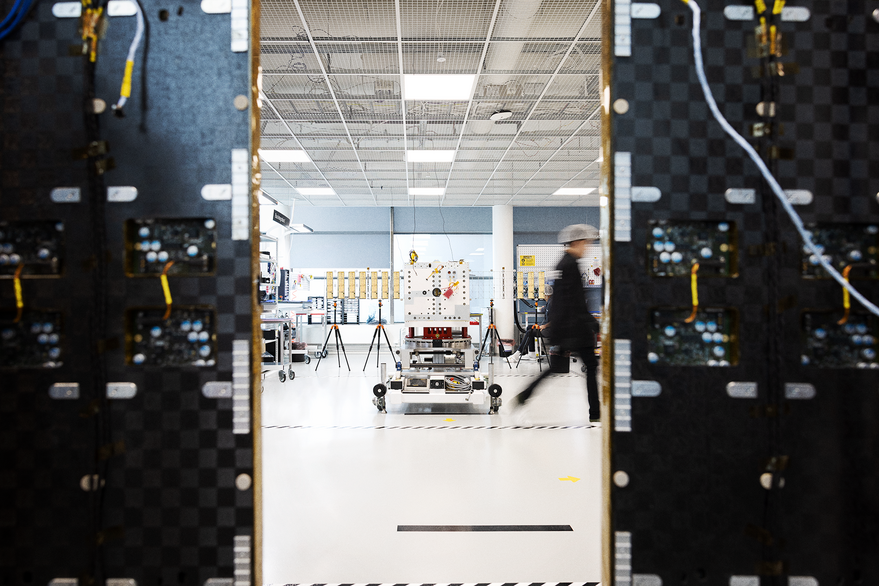

AMSTERDAM – European nations are adopting a mix of sovereign, bilateral, federated and dual-use commercial technologies to enhance military readiness.
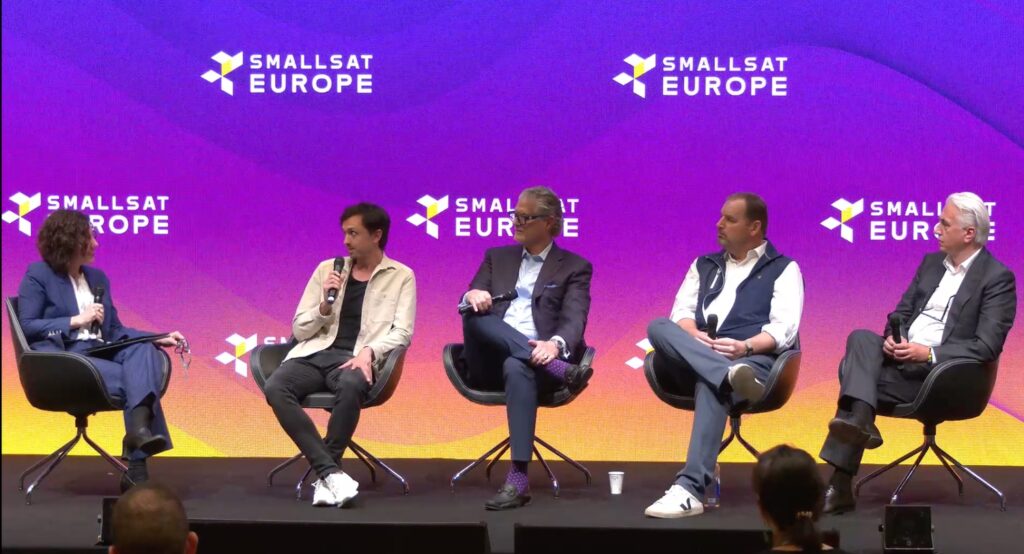
“When we talk about sovereignty, independence, safety or security, we need to think about different sources of data,” Col. Marcin Mazur, Polish Space Agency vice president, said May 26 at the SmallSat Europe conference. “It’s important to own, operate and task national systems, but also to have access also to commercial ones, to federated ones and to bilateral or European ones.”
Still, it’s can be difficult to determine which capabilties should be owned and operated nationally and when it’s preferable to pool resources to establish multinational space systems.
“What level of sovereignty do we need versus trusting in our partners and our neighbors?” asked Kees Buijsrogge, TNO Space director. “That’s a difficult puzzle, especially if we look at the European situation at the moment.”
Coexistence
As nations adopt a mix of space-related products and services, it’s important to ensure that commercial and sovereign capabilities can coexist, said Celia Pelaz, Spire Global chief commercial officer. Nations need sovereign systems to provide signals intelligence and targeting, but that doesn’t mean that similar capabilities shouldn’t also exist commercially. “If you are a government or a military agency, it is better to have your own but also to make use of what is available commercially that some others might use,” she said.
At the outset of the invasion of Ukraine, Russian hackers knocked offline tens of thousands of Viasat KA-SAT modems in Europe. The attack proved “that one source of data is not enough to feel comfortable when any situation can happen with an invasion or an operation in your country,” Mazur said.
European nations have varying budgets and differing levels of ambition to own and operate space assets. Still, every European member “state needs to collaborate and to focus on technology that can be useful for everybody,” said Sitael CEO Chiara Pertosa. “Every country can decide to invest in some technology, but not in everything. It’s a question of industrial politics that needs to be applied also here.”
Another important consideration is technological sovereignty, Buijsrogge said. The Netherlands is home to ASML, the world’s leading supplier of lithography machines for semiconductor manufacturing. That type of technology can make a small country like the Netherlands strategically relevant and give policymakers a seat at the table where international decisions are made. “If you’re not at the table, you’re probably on the menu,” he added.
Big Bang
In addition to purchasing space technologies, nations are encouraging the development of local space industries.
“Each nation may have the expectation to push its own companies to win the global market,” said retired Italian Air Force Brigadier General and ESA astronaut Roberto Vittori.
National financial markets also can provide windfalls for SpaceX and other companies that sell stock through initial public offerings.
“That has the power to completely reshape everything that we are discussing today,” Vittori said. By seeking to raise $80 billions dollars, the SpaceX IPO could create “a giant bubble. What is going to happen if that bubble explodes? We don’t know, but it will be so powerful, it will be like a big bang.”










Related Posts
Stay Informed With the Latest & Most Important News
Previous Post
Next Post




Advertisement
-
 01Two Black Holes Observed Circling Each Other for the First Time
 -
 02From Polymerization-Enabled Folding and Assembly to Chemical Evolution: Key Processes for Emergence of Functional Polymers in the Origin of Life
 -
 03Astronomy 101: From the Sun and Moon to Wormholes and Warp Drive, Key Theories, Discoveries, and Facts about the Universe (The Adams 101 Series)
 -
 04True Anomaly hires former York Space executive as chief operating officer
 -
 05Φsat-2 begins science phase for AI Earth images
 -
 06Hurricane forecasters are losing 3 key satellites ahead of peak storm season − a meteorologist explains why it matters
 -
 07Binary star systems are complex astronomical objects − a new AI approach could pin down their properties quickly