
Now Reading: New organics on Mars raise questions about life
-
01
New organics on Mars raise questions about life


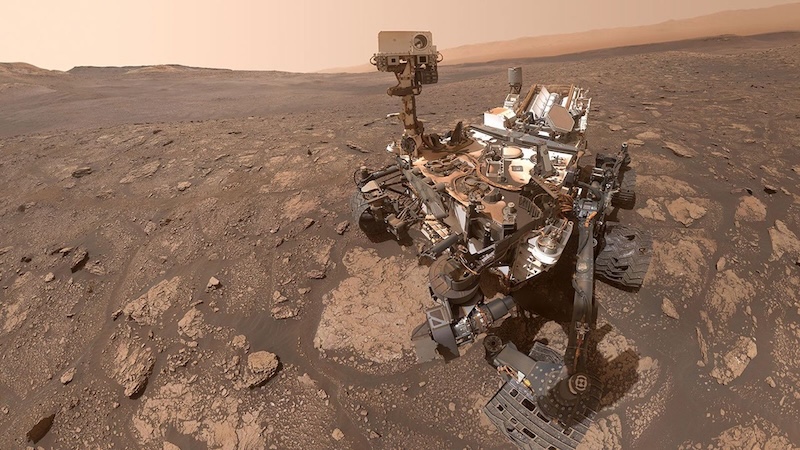
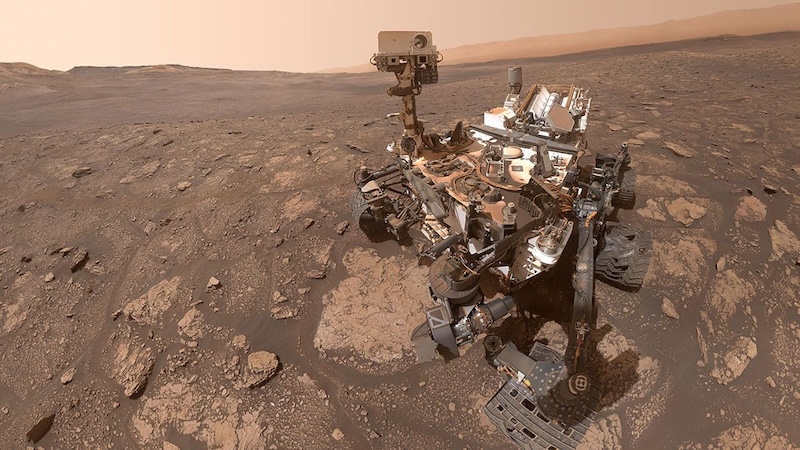
- NASA’s Curiosity rover has found the most diverse collection of organic molecules ever seen on Mars.
- The organics include seven new carbon-bearing molecules. Such molecules on Earth form the basis of all biological processes. They make up the structures of cells and tissues, participate in chemical reactions that sustain life, and store and transmit genetic information.
- The new organics add to the evidence for Mars’ life now or in the past. Mars apparently had (or has) the right chemistry to support life.
Most diverse organic molecules on Mars
There are two active rovers on Mars now. And both Curiosity and Perseverance have found an abundance of Martian organic molecules in recent years. These are molecules containing carbon, capable of forming long chains and complex rings. On Earth, they’re related to life. And now Curiosity has identified the most diverse collection of organic molecules yet seen on Mars. They include organics not seen before on the red planet.
NASA said on April 21, 2026, that pinpointing them took years of lab work, both in Curiosity’s onboard laboratory and in comparison studies back on Earth. Overall, the rover found 21 carbon-bearing molecules in a rock it first sampled in 2020. Seven of those molecules are new discoveries on Mars.
It isn’t known if any of the organics are related to ancient life. But the scientists said they add to the evidence that Mars had the right chemistry to support life.
Notably, rocks that had been exposed to harsh ultraviolet radiation for billions of years were still able to preserve the organics.
The researchers published the tantalizing peer-reviewed results in Nature Communications on April 21, 2026.
NASA’s Curiosity Finds Organic Molecules Never Seen Before on Marswww.nasa.gov/missions/mar…
— HiRISE Beautiful Mars (NASA) (@uahirise.bsky.social) 2026-04-21T21:25:34.798Z
Mary Anning 3
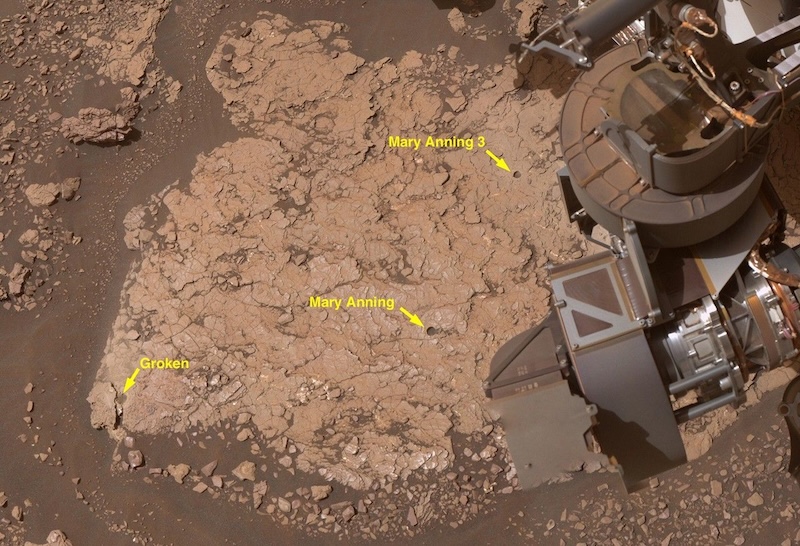
Curiosity found the diverse collection of organics in a drill sample nicknamed Mary Anning 3. It’s one of three holes that the rover drilled in the same rock. The other two holes are named Mary Anning and Groken. (A nearby spot named Mary Anning 2 is one that Curiosity never drilled.) Mary Anning is the name of an early 19th-century English fossil collector and paleontologist.
The rock is on a part of Mount Sharp in Gale Crater where lakes and flowing rivers once existed. The area is rich in clay minerals, which are ideal for preserving organic molecules.
The most interesting organics
One of the most interesting organic molecules researchers found is nitrogen heterocycle. It’s a ring of carbon atoms including nitrogen. These molecules are predecessors to both DNA and RNA. Lead author Amy Williams at the University of Florida in Gainesville said:
That detection is pretty profound because these structures can be chemical precursors to more complex nitrogen-bearing molecules. Nitrogen heterorcycles have never been found before on the Martian surface or confirmed in Martian meteorites.
Curiosity also found benzothiophene, a carbon- and sulfur-bearing molecule that’s been found in many meteorites. Such molecules might have seeded prebiotic chemistry across the early solar system.
Curiosity project scientist Ashwin Vasavada at NASA’s Jet Propulsion Laboratory in Southern California said:
This is Curiosity and our team at their best. It took dozens of scientists and engineers to locate this site, drill the sample, and make these discoveries with our awesome robot. This collection of organic molecules once again increases the prospect that Mars offered a home for life in the ancient past.

Wet chemistry reveals organic molecules
One of the ways Curiosity detects organic molecules is with wet chemistry. The minicab inside the rover, called Sample Analysis at Mars (SAM), can drop samples of powdered rock into small cups containing solvent. The chemical reactions that take place can break apart larger molecules. These molecules can be difficult to detect otherwise. There are several cups. Two of them contain the solvent tetramethylammonium hydroxide (TMAH). Those two cups are reserved for the “highest-value” samples. And Mary Anning 3 was the first sample tested in one of those cups.
As a comparison, the research team also tested the wet chemistry technique back on Earth. They used a piece of the famous Murchison meteorite, which is over 4 billion years old. The results were interesting, indeed. Murchison contains organic molecules, just like the Mary Anning 3 samples. When the scientists exposed the meteorite sample to the TMAH solvent, the larger molecules broke down into smaller ones. These included some of the organics found in Mary Anning 3, including benzothiophene.
This similar breakdown of organics shows that the organic molecules in Mary Anning 3 could indeed have resulted from the breakdown of more complex organic molecules.

Largest organic molecules on Mars
The new findings by Curiosity also complement the announcement last year of the largest organic molecules ever found on Mars. Curiosity made that discovery as well.
But determining that for sure (or not) will likely require the samples the rover took to be brought back to Earth for closer study.
Those molecules included the long-chain hydrocarbons decane, undecane and dodecane. Scientists think they are the remains of fatty acids. And they are the most complex organics yet found on Mars. Plus, last February, NASA scientists said that these organics are hard to explain without biology:
As the non-biological sources they considered could not fully explain the abundance of organic compounds, it is therefore reasonable to hypothesize that living things could have formed them.
Leopard spots and poppy seeds
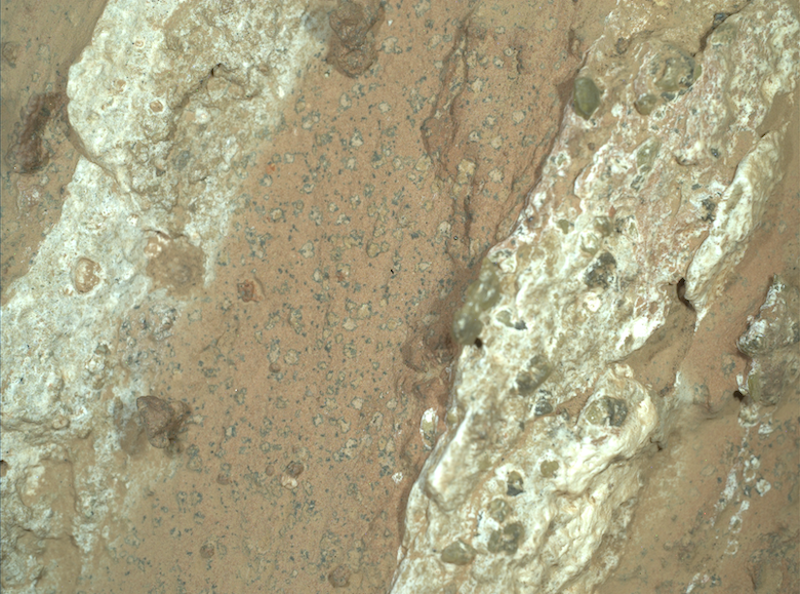
The findings also come after the Perseverance rover, in Jezero Crater, found intriguing leopard spots and poppy seeds in rocks. First announced in 2024, the chemical signatures of the markings suggest they might be traces of ancient microbial life.
Bottom line: NASA’s Curiosity rover has identified the most diverse collection of organic molecules on Mars ever found. They include some organics never seen before.
Source: Diverse organic molecules on Mars revealed by the first SAM TMAH experiment
Read more: NASA says organics on Mars are hard to explain without life
Read more: Surprisingly big organic molecules on Mars: A hint of life?
The post New organics on Mars raise questions about life first appeared on EarthSky.










Related Posts

Stay Informed With the Latest & Most Important News
Previous Post
Next Post





Advertisement
-
 01Two Black Holes Observed Circling Each Other for the First Time
 -
 02From Polymerization-Enabled Folding and Assembly to Chemical Evolution: Key Processes for Emergence of Functional Polymers in the Origin of Life
 -
 03Astronomy 101: From the Sun and Moon to Wormholes and Warp Drive, Key Theories, Discoveries, and Facts about the Universe (The Adams 101 Series)
 -
 04True Anomaly hires former York Space executive as chief operating officer
 -
 05Φsat-2 begins science phase for AI Earth images
 -
 06Hurricane forecasters are losing 3 key satellites ahead of peak storm season − a meteorologist explains why it matters
 -
 07Binary star systems are complex astronomical objects − a new AI approach could pin down their properties quickly