
Now Reading: Northern Norway is ready to launch. EU Space Regulation — and its new Arctic policy – is not.
-
01
Northern Norway is ready to launch. EU Space Regulation — and its new Arctic policy – is not.

Northern Norway is ready to launch. EU Space Regulation — and its new Arctic policy – is not.

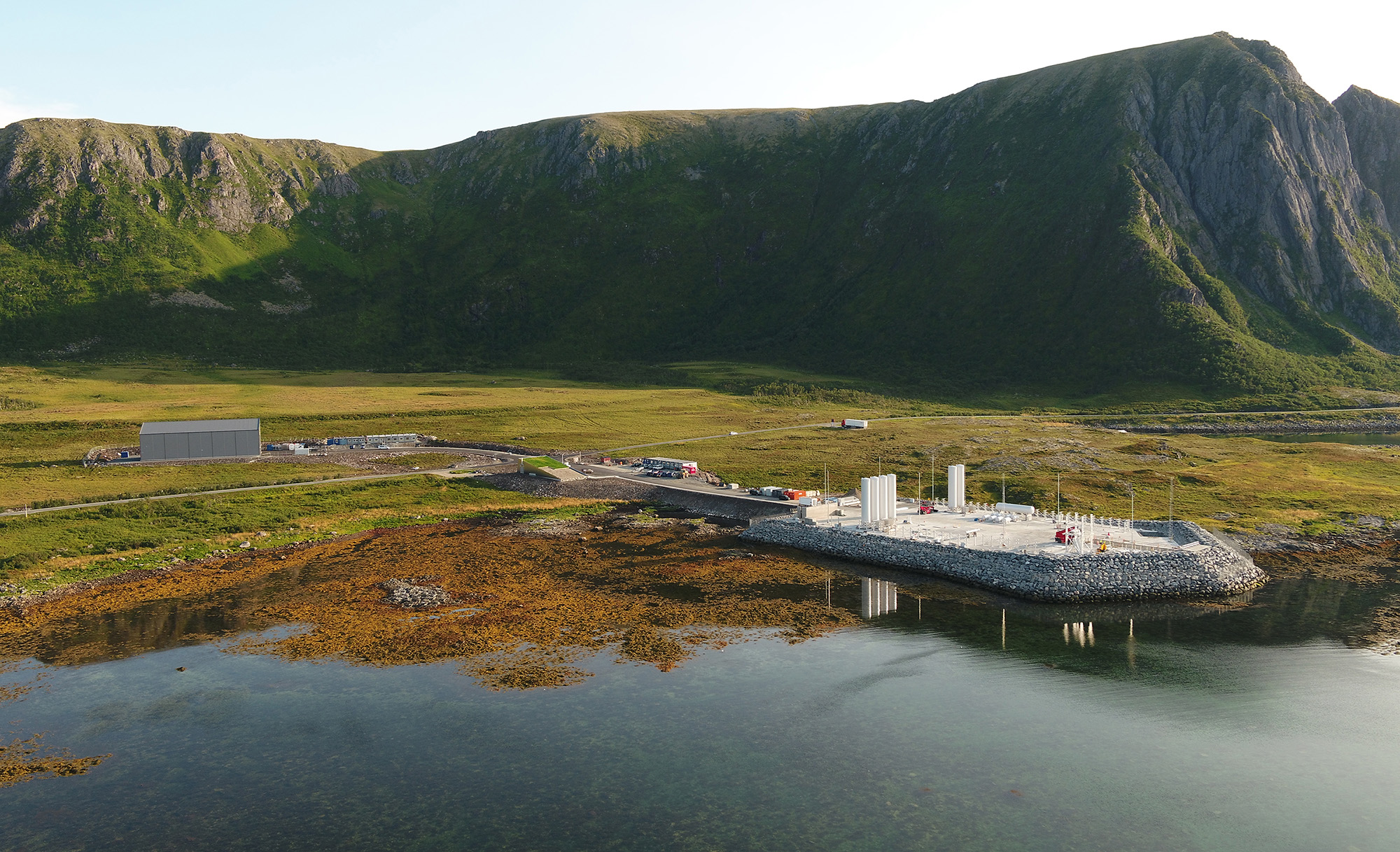

The European Commission is currently updating its Arctic policy, with a new policy statement expected this coming autumn. Unlike the latest policy from 2021, the update will place greater emphasis on security, defense and connectivity. These additions matter. But there is a risk that Brussels will articulate an ambitious Arctic policy while overlooking one of Europe’s most significant strategic assets: Andøya Spaceport in Northern Norway. The barrier preventing Andøya from becoming a standard part of Europe’s launch infrastructure is not technical, but political.
A concrete test of whether the EU’s new priorities are taken seriously will be how it approaches access to space from the European Arctic. The EU should align its updated Arctic policy with the IRIS² Secure Connectivity program to fully integrate Andøya Spaceport into European critical infrastructure for security, resilience and connectivity — and it should update the IRIS² framework accordingly to make that integration possible.
A milestone that redefines Europe’s space geography
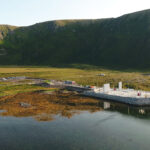
On March 13, 2026, Norwegian Prime Minister Jonas Gahr Støre and German Chancellor Friedrich Merz stood together at Andøya to witness Europe’s next step toward autonomous access to space. The German rocket company Isar Aerospace is preparing its second Spectrum mission at Andøya Spaceport. If successful, Andøya will become the first operational spaceport on the European mainland to place payloads into Low Earth Orbit — a milestone that directly reduces Europe’s dependence on non-European launch infrastructure.
This is not a single-company story. An emerging Nordic space corridor is taking shape. Sweden’s Esrange Space Center is advancing toward satellite launch capabilities. Finland’s ICEYE has signed a letter of intent with the Swedish Space Corporation to deepen cooperation in launch, missions and satellite operations. Norwegian KSAT is extending its world-class Arctic ground segment into orbit with its Hyper in-orbit relay constellation. And in November 2025, ESA and Norway signed a letter of intent to explore establishing a permanent ESA Arctic Space Centre in Tromsø — the first time ESA has considered a dedicated institutional Arctic footprint on Norwegian soil.
The financial commitments reflect the strategic weight of this moment. ESA approved 22.3 billion euro budget for 2026–2028, its largest-ever contribution package. Norway has committed 292 million euros within that framework. Germany has announced 35 billion euros in national space-related defense investments by 2030. Norway’s own High North strategy, published in August 2025, places the Andøya space investment in the same strategic frame as the country’s defense build-up and its energy and industrial expansion in Finnmark — treating all three as structural investments of national security significance, not sectoral niceties.
The rule that makes Andøya a third-country problem
Norway participates in Copernicus, Galileo and EGNOS through the EEA Agreement and has recently secured participation in the EU’s new IRIS² Secure Connectivity program with a 451.6 million krone commitment through 2027. That is a significant financial and political commitment. But there is a structural contradiction at its heart.
Under the current IRIS² framework, launches are in principle to take place from the territory of an EU member state. Use of a spaceport in a third country such as Norway is permitted only in duly justified exceptional cases. That means Andøya cannot, under the current rules, become a standard European launch option for IRIS² missions — even where the regulatory barrier is political rather than technical.
The distinction between “exceptional case” and “standard option” is consequential. If Andøya is to be used occasionally under an exception, governance decisions would likely rest primarily with the European Commission and the program’s implementing and security mechanisms — though how launch-site exceptions would work in practice remains to be tested. But if Norway and the EU want Andøya to become a reliable part of Europe’s launch architecture, political goodwill is not enough. The regulation itself must change.
What the Arctic policy update must get right on space
This is precisely why the EU Arctic policy review matters for space, and why the space question must be in the Arctic policy review. The Commission’s call for evidence explicitly adds connectivity, safety and security as well as international cooperation as new priorities alongside the climate and sustainability agenda that dominated the 2021 Communication. Space infrastructure belongs squarely in that expanded frame. Andøya provides Europe with launch access at a high-latitude Arctic site that no other European spaceport can replicate. Polar and sun-synchronous orbits — essential for Earth observation, climate monitoring, maritime domain awareness and military surveillance — are optimally reached from the Norwegian Arctic. That geographic reality has a direct bearing on the EU’s stated goals for both climate action and Arctic security.
The European Parliament’s Arctic resolution of November 2025 pointed toward exactly this logic, stressing Norway’s crucial role in EU energy security and geopolitical resilience and calling for deeper strategic partnerships with Norway. An updated EU Arctic policy that takes connectivity and space seriously should translate that political language into regulatory consequence: explicitly recognising closely integrated EEA partners as eligible hosts for EU space program launches under defined security and governance conditions. A revised IRIS² framework — expected to be negotiated in the coming year — is the concrete vehicle for doing so.
The window is open, but not indefinitely
Norway’s Nordic neighbours have already drawn the conclusion that infrastructure in the European Arctic is inseparable from the continent’s own security. Finland has committed 20 million euros to planning Rail Nordica, a European standard-gauge rail link toward Narvik, explicitly to ensure NATO military mobility and Atlantic port access. The three Nordic transport ministers signed a Joint Nordic Strategy for Transport System Preparedness in Rovaniemi in March 2026. The logic applied to roads and rail applies equally to launch pads: if Europe’s strategic infrastructure stops at the EU’s political border rather than its geographic one, the strategy has a flaw.
At this year’s High North Dialogue in Bodø, Espen Barth Eide, Norway’s Minister of Foreign Affairs, has again highlighted how closely Norway and Europe have moved towards each other. Yet this proximity requires sustained effort from both sides to ensure that both fully benefit from cooperation along Europe’s northern borders. The EU’s 2026 Arctic policy update offers a timely opportunity to define those roles clearly. Oslo should be making this case in Brussels now — not as a plea for a Norwegian exception, but as a strategic argument for recognising Andøya as European critical infrastructure. Strategy and regulation must align. At present, they do not.
Johannes Schmied-Wirén is senior advisor at the High North Center for Business and Governance and the Business School of Nord University in Bodø, Norway.
Andreas Raspotnik is director at the High North Center for Business and Governance at Nord University in Bodø, Norway.
SpaceNews is committed to publishing our community’s diverse perspectives. Whether you’re an academic, executive, engineer or even just a concerned citizen of the cosmos, send your arguments and viewpoints to opinion (at) spacenews.com to be considered for publication online or in our next magazine. If you have something to submit, read some of our recent opinion articles and our submission guidelines to get a sense of what we’re looking for. The perspectives shared in these opinion articles are solely those of the authors and do not necessarily represent their employers or professional affiliations.










Related Posts

Stay Informed With the Latest & Most Important News
Previous Post
Next Post


Advertisement
-
 01Two Black Holes Observed Circling Each Other for the First Time
 -
 02From Polymerization-Enabled Folding and Assembly to Chemical Evolution: Key Processes for Emergence of Functional Polymers in the Origin of Life
 -
 03Astronomy 101: From the Sun and Moon to Wormholes and Warp Drive, Key Theories, Discoveries, and Facts about the Universe (The Adams 101 Series)
 -
 04True Anomaly hires former York Space executive as chief operating officer
 -
 05Φsat-2 begins science phase for AI Earth images
 -
 06Hurricane forecasters are losing 3 key satellites ahead of peak storm season − a meteorologist explains why it matters
 -
 07Binary star systems are complex astronomical objects − a new AI approach could pin down their properties quickly