
Now Reading: Pentagon officially ends OCX program, citing risk and delays
-
01
Pentagon officially ends OCX program, citing risk and delays


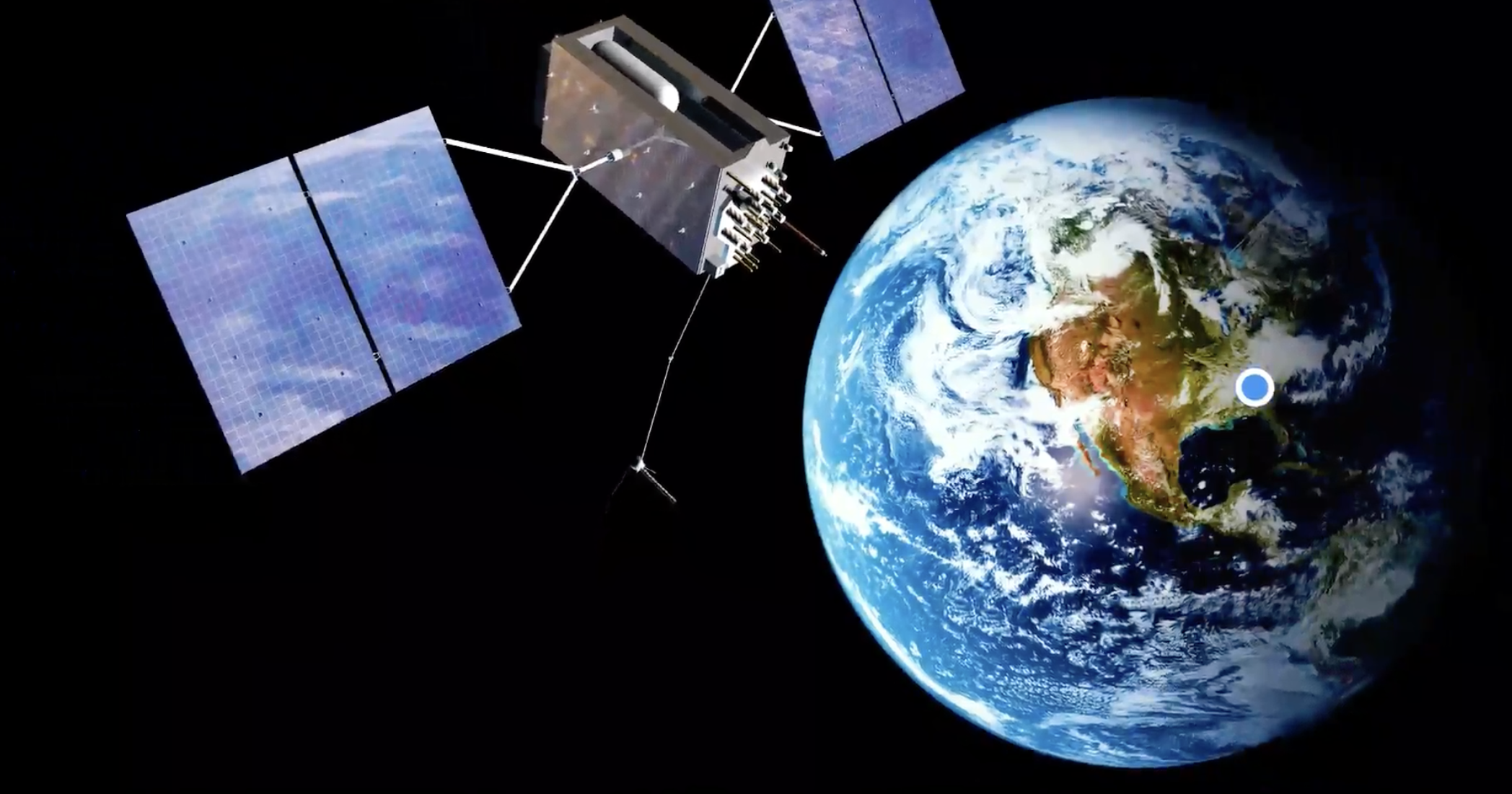

WASHINGTON — The Pentagon announced April 20 it has formally terminated the Next Generation Operational Control System, or OCX, ending a 15-year effort to modernize the ground system that operates the U.S. military’s Global Positioning System satellites.
The decision was made April 17 by the Defense Department’s acquisition chief at the recommendation of the Space Force’s acting acquisition executive, marking the end of one of the department’s most troubled software programs.
SpaceNews reported last month that the Pentagon was expected to move toward canceling the program, citing technical and schedule challenges.
OCX was intended to replace the current GPS ground system, known as the Architecture Evolution Plan, as well as the separate system used for launch, anomaly response and satellite disposal. The program aimed to deliver a more secure and capable platform to manage both legacy and next-generation GPS satellites.
But officials concluded the system could not deliver the required capabilities on a timeline or at a level of risk acceptable to support the modernization of the GPS constellation.
“It’s important we refine and update acquisition processes to prioritize rapid, incremental capability delivery versus complex ‘all or nothing’ system deliveries,” said Thomas Ainsworth, the Space Force’s acting acquisition executive. “The Department of War has made clear that we need to deliver warfighting capability at a faster rate.”
The program, led by RTX, was awarded in 2010 and had accumulated costs of about $6.27 billion as of January 2026, including government testing and program support expenses.
In July 2025, the U.S. Space Force formally accepted an initial version of OCX following years of factory testing and began integrated testing with satellites, ground systems and user equipment. That phase uncovered a range of technical issues that proved difficult to resolve.
“Regrettably, extensive system issues arose during the integrated testing of OCX with the broader GPS enterprise,” said Col. Stephen Hobbs, commander of Mission Delta 31. “We discovered problems across a broad range of capability areas that would put current GPS military and civilian capabilities at risk.”
Officials said the scope of remaining work, combined with the risks of further delays, led to the conclusion that continuing the program was no longer viable.
The Space Force recently awarded Lockheed Martin a $105 million contract to continue upgrading the existing Architecture Evolution Plan system, which has been incrementally improved over the past decade to compensate for OCX delays. Those upgrades have enabled AEP to support newer GPS satellites and assume functions originally planned for OCX.
“Ultimately, we analyzed the work remaining on OCX and compared this with the current GPS control system capability,” Hobbs said. “The analysis revealed additional investment in OCX was no longer the best solution.”










Related Posts


Stay Informed With the Latest & Most Important News
Previous Post
Next Post



Advertisement
-
 01Two Black Holes Observed Circling Each Other for the First Time
 -
 02From Polymerization-Enabled Folding and Assembly to Chemical Evolution: Key Processes for Emergence of Functional Polymers in the Origin of Life
 -
 03Astronomy 101: From the Sun and Moon to Wormholes and Warp Drive, Key Theories, Discoveries, and Facts about the Universe (The Adams 101 Series)
 -
 04True Anomaly hires former York Space executive as chief operating officer
 -
 05Φsat-2 begins science phase for AI Earth images
 -
 06Hurricane forecasters are losing 3 key satellites ahead of peak storm season − a meteorologist explains why it matters
 -
 07Binary star systems are complex astronomical objects − a new AI approach could pin down their properties quickly