
Now Reading: President Trump signs legislation reauthorizing SBIR
-
01
President Trump signs legislation reauthorizing SBIR


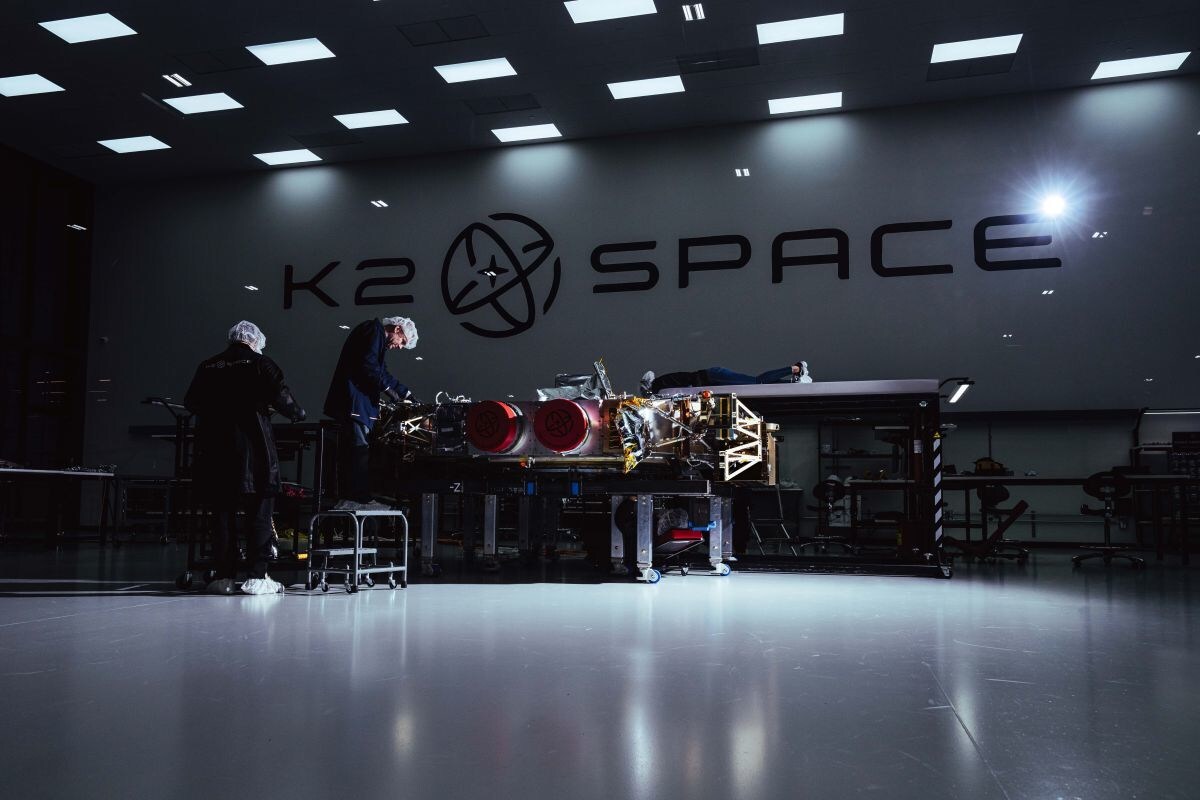

COLORADO SPRINGS – President Donald Trump signed the Small Business Innovation and Economic Security Act April 13, reestablishing key sources of funding for early-stage space companies.
The legislation reauthorizes the Small Business Innovation Research (SBIR) and Small Business Technology Transfer (STTR) programs through Sept. 30, 2031, and enhances screening of applicants to ensure they do not pose national security risks. Authority for the SBIR and STTR programs, which awards more than $4 billion annually, lapsed Sept. 30 amid concerns that some awardees had close ties to countries of concern as defined by the U.S. State Department.
The U.S. Space Force, through its innovation arm SpaceWERX, has provide SBIR contracts to fund research and development of technologies ranging from space-based refueling and deployable solar arrays to novel propulsion, software-defined radios and deep-space navigation. Prior to the reauthorization, leaders of the U.S. Space Force underscored the importance of small business innovation to national security space.
Through SBIR, “we have been able to build a vibrant industry,” Maj. Gen. Stephen Purdy, senior advisor to the U.S. Air Force Secretary, said in December at the 2025 SpaceNews Icon Awards. “Space has shown that we can take that authority and take that funding and use it for really good measures.”
The reauthorization was celebrated at the annual Space Symposium, where companies often interact with government officials who can approve SBIR and STTR awards. Anticipated awards and solicitations for new awards have been in limbo since statutory authority for SBIR and STTR lapsed.
Small space companies seek SBIR and STTR awards to fund early research and development. The awards also build credibility with partners and investors by showing that government agencies are interested in a firm’s technology.










Related Posts

Stay Informed With the Latest & Most Important News
Previous Post
Next Post
Previous Post

Next Post

Advertisement
-
 01Two Black Holes Observed Circling Each Other for the First Time
 -
 02From Polymerization-Enabled Folding and Assembly to Chemical Evolution: Key Processes for Emergence of Functional Polymers in the Origin of Life
 -
 03Astronomy 101: From the Sun and Moon to Wormholes and Warp Drive, Key Theories, Discoveries, and Facts about the Universe (The Adams 101 Series)
 -
 04True Anomaly hires former York Space executive as chief operating officer
 -
 05Φsat-2 begins science phase for AI Earth images
 -
 06Hurricane forecasters are losing 3 key satellites ahead of peak storm season − a meteorologist explains why it matters
 -
 07Binary star systems are complex astronomical objects − a new AI approach could pin down their properties quickly