
Now Reading: Sentinel-1D goes live: a milestone for Europe’s radar mission
-
01
Sentinel-1D goes live: a milestone for Europe’s radar mission



01/05/2026
81 views
1 likes
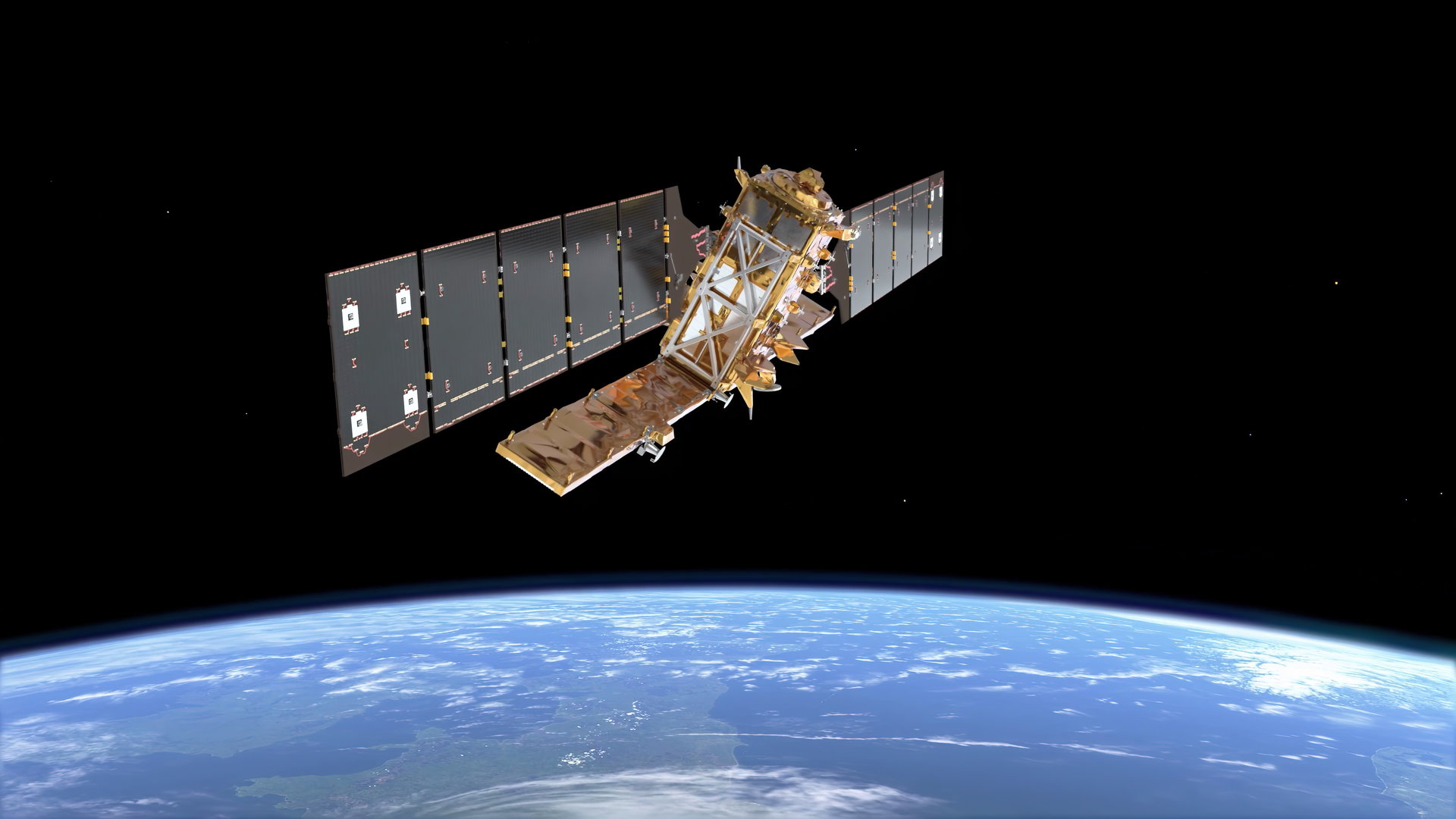
The Copernicus Sentinel-1D satellite, launched last November, is now fully operational after successfully completing its critical in-orbit commissioning phase.
With all four Sentinel-1 satellites having now been deployed, this achievement marks a major milestone for this flagship radar mission – a journey that began more than a decade ago and that has helped pave the way for the future of Earth observation.
When Sentinel-1A – the first of this generation – launched in 2014, it marked more than the start of a single mission; it signalled the beginning of Copernicus, the Earth observation component of the European Union’s space programme.
Its success demonstrated that Europe could deliver consistent, high-quality Earth observation data for the Copernicus Services, and more.
The Sentinel-1 mission was designed as a constellation of two identical satellites orbiting Earth 180 degrees apart for optimal coverage – so in 2016, Sentinel-1B was launched to pair with Sentinel-1A.
The Sentinel-1B mission came to an end in August 2022 after experiencing a technical anomaly that rendered it unable to acquire data. However, Sentinel-1C was launched in 2024 to restore the constellation, followed by Sentinel-1D a year later.
The mission delivers high-resolution synthetic aperture radar images of Earth’s surface in all weathers, day-and-night. The data are critical for monitoring everything from natural disasters and sea ice to land deformation and deforestation. The constellation’s all-weather, day-and-night imaging has become indispensable for scientists, policymakers and emergency responders worldwide.
Perhaps most remarkable is the longevity of the data record – the satellite series is on track to provide an unprecedented two decades of continuous radar observations. This long-term dataset strengthens Europe’s leadership in tracking climate change and environmental shifts, offering a reliable foundation for decision-making and research in an increasingly uncertain world.
The carousel of images above offers a mere glimpse of what the four Sentinel-1 satellites have returned over the last 12 years.
The Sentinel-1 mission has also broken ground in another crucial area: sustainability in space. Sentinel-1C and Sentinel-1D carry a world premiere of a new separation mechanism which will help avoid space debris, underscoring the European Space Agency’s and the European Commission’s commitment to clean space principles.
With the last of the first-generation Sentinel-1 satellites now beginning its operational life in orbit, ESA and the EC are looking ahead.
ESA’s Sentinel-1 Mission Manger, Nuno Miranda, said, “Sentinel-1 began as a trailblazer. With the successful commissioning of Sentinel-1D, it now stands as a cornerstone – reflecting Europe’s achievements while serving as a launchpad for what comes next.
“For several years, we have been advancing a follow-on mission: Sentinel-1 Next Generation, designed to ensure continuity of measurements well into the mid-2030s and beyond.
“These future satellites are expected to deliver enhanced performance and new capabilities, building on the legacy of their predecessors while addressing emerging scientific and societal needs.”










Related Posts
Stay Informed With the Latest & Most Important News
Previous Post
Next Post



Advertisement
-
 01Two Black Holes Observed Circling Each Other for the First Time
 -
 02From Polymerization-Enabled Folding and Assembly to Chemical Evolution: Key Processes for Emergence of Functional Polymers in the Origin of Life
 -
 03Astronomy 101: From the Sun and Moon to Wormholes and Warp Drive, Key Theories, Discoveries, and Facts about the Universe (The Adams 101 Series)
 -
 04True Anomaly hires former York Space executive as chief operating officer
 -
 05Φsat-2 begins science phase for AI Earth images
 -
 06Hurricane forecasters are losing 3 key satellites ahead of peak storm season − a meteorologist explains why it matters
 -
 07Binary star systems are complex astronomical objects − a new AI approach could pin down their properties quickly