
Now Reading: SpaceX successfully launches Falcon 9 carrying 46 payloads including Earth-observation satellite CAS500-2
-
01
SpaceX successfully launches Falcon 9 carrying 46 payloads including Earth-observation satellite CAS500-2

SpaceX successfully launches Falcon 9 carrying 46 payloads including Earth-observation satellite CAS500-2

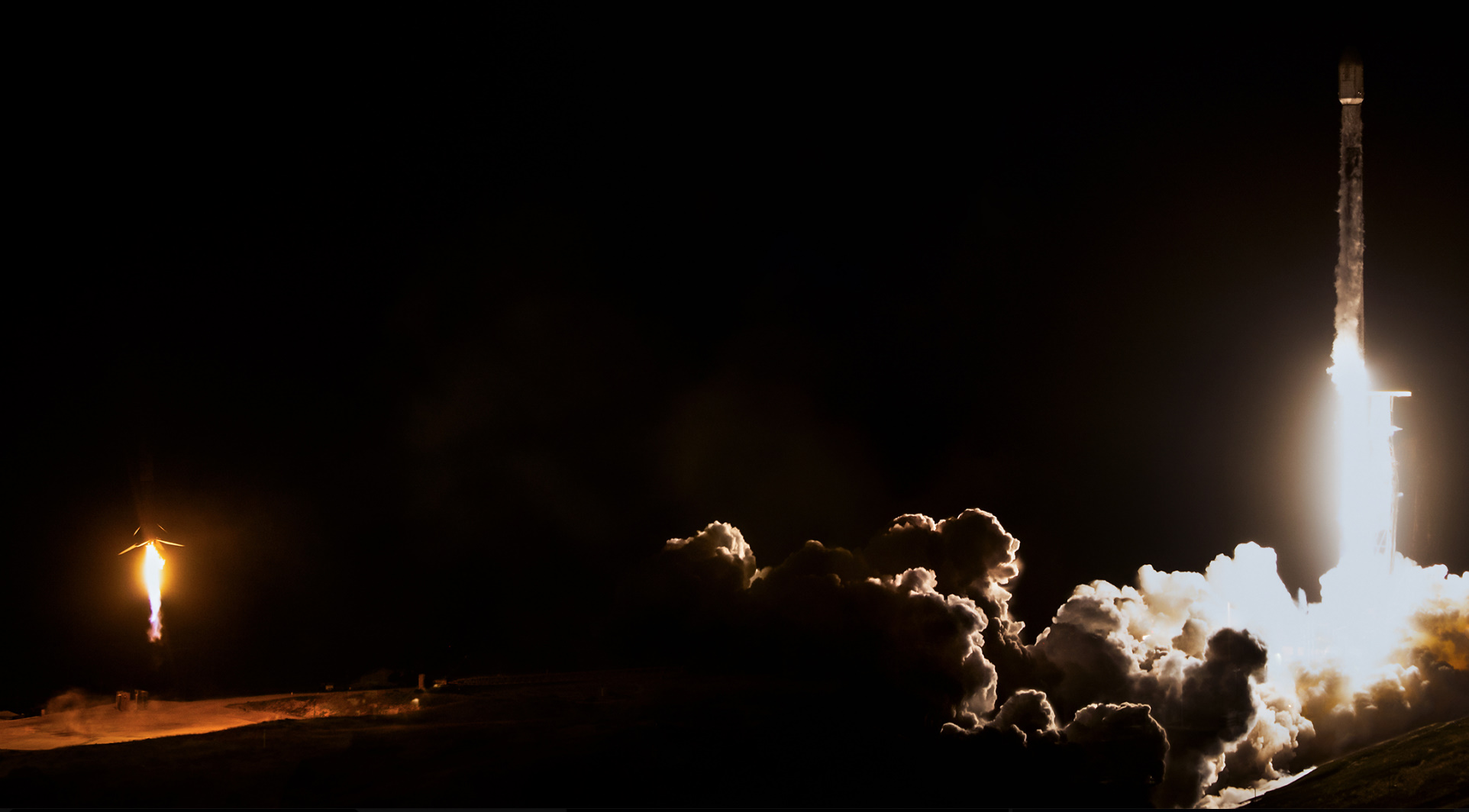

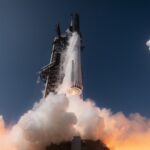
SpaceX has marked another milestone in its expanding rideshare program with the successful launch of Falcon 9, which took off from Vandenberg Space Force Base in California. This mission, the company’s third for 2026, carried the Compact Advanced Satellite 500-2 (CAS500-2) alongside an impressive total of 45 additional payloads.
The Falcon 9 rocket ascended from Space Launch Complex 4 East and achieved its target orbit with precision. Notably, the first-stage booster B1071 was successfully recovered after its flight, using a return-to-launch-site maneuver. This booster completed its mission at T+07:34 minutes, marking its remarkable 33rd flight to a Sun-synchronous orbit (SSO).
With a flight path angled to the south and a near-polar inclination of 98.1 degrees, the Falcon 9 performed four engine burns on its second stage to optimize altitude adjustments, sequentially delivering the payloads. The primary payload, CAS500-2, was deployed 59 minutes and 54 seconds after launch, with the final payload following just a short while later.
CAS500-2, developed by the Korean Aerospace Research Institute (KARI), is a 500 kg Earth-observation satellite that will enhance land surveillance, disaster assessment, and topographical mapping. Alongside its twin satellite CAS500-1, which was launched in 2021, CAS500-2 will collect images in both panchromatic and multispectral formats, with both satellites operating in tandem to accelerate revisit times. The pair will maintain an orbit at an altitude of 528 km.
Contributing significantly to the mission, German launch services provider Exolaunch brought a total of 39 payloads from various governmental and commercial clients. Exolaunch, which has facilitated deployments for 740 payloads on SpaceX rideshare missions and other launch vehicles, emphasized its ongoing collaboration with organizations in diverse sectors, including education and research.
Among the more innovative payloads, QUBE-II is a 6U microsatellite set to pioneer quantum key distribution (QKD), marking the first demonstration of this secure data transmission method from space. This technology aims to safeguard sensitive data by detecting any attempts at unauthorized interception.
Another notable payload is SNAPPY, a CubeSat developed by students from Wichita State University in partnership with NASA. This 3U satellite will act as the first solar neutrino detector in space, analyzing solar wind particles—a complex task for ground-bound studies.
Also included in the mission were two Earth-observation CubeSats, HELIOS and SELENE, developed in collaboration with the European Space Agency. These satellites aim to validate high-speed laser communications and demonstrate data processing capabilities necessary for future missions.
Further expanding the mission’s educational outreach, the University of Calgary’s Frontier Sat will examine the ionosphere and investigate the atmospheric phenomenon known as STEVE. This student-led initiative seeks to study a unique occurrence of plasma in the Earth’s atmosphere that creates vibrant light displays.
SpaceX’s ongoing partnership with numerous organizations also saw the launch of OroraTech’s Forest satellites, designed to monitor wildfires using thermal imaging—a critical need in the context of increasing global wildfire occurrences. The payloads included several other Earth-observation satellites, such as India’s Mission Drishti, which combines advanced radar technology with multispectral imaging to enhance observation capabilities.
The company continues to demonstrate its commitment to providing accessible and value for money launch solutions through its rideshare program, with more missions, including Transporter-17 and Transporter-18, scheduled for the coming months. Each successful deployment underscores the growing demand and reliance on small satellite technology across various sectors.










Related Posts
Stay Informed With the Latest & Most Important News

Advertisement
-
 01Two Black Holes Observed Circling Each Other for the First Time
 -
 02From Polymerization-Enabled Folding and Assembly to Chemical Evolution: Key Processes for Emergence of Functional Polymers in the Origin of Life
 -
 03Astronomy 101: From the Sun and Moon to Wormholes and Warp Drive, Key Theories, Discoveries, and Facts about the Universe (The Adams 101 Series)
 -
 04True Anomaly hires former York Space executive as chief operating officer
 -
 05Φsat-2 begins science phase for AI Earth images
 -
 06Hurricane forecasters are losing 3 key satellites ahead of peak storm season − a meteorologist explains why it matters
 -
 07Binary star systems are complex astronomical objects − a new AI approach could pin down their properties quickly