
Now Reading: Voyager to fly private astronaut mission to ISS
-
01
Voyager to fly private astronaut mission to ISS


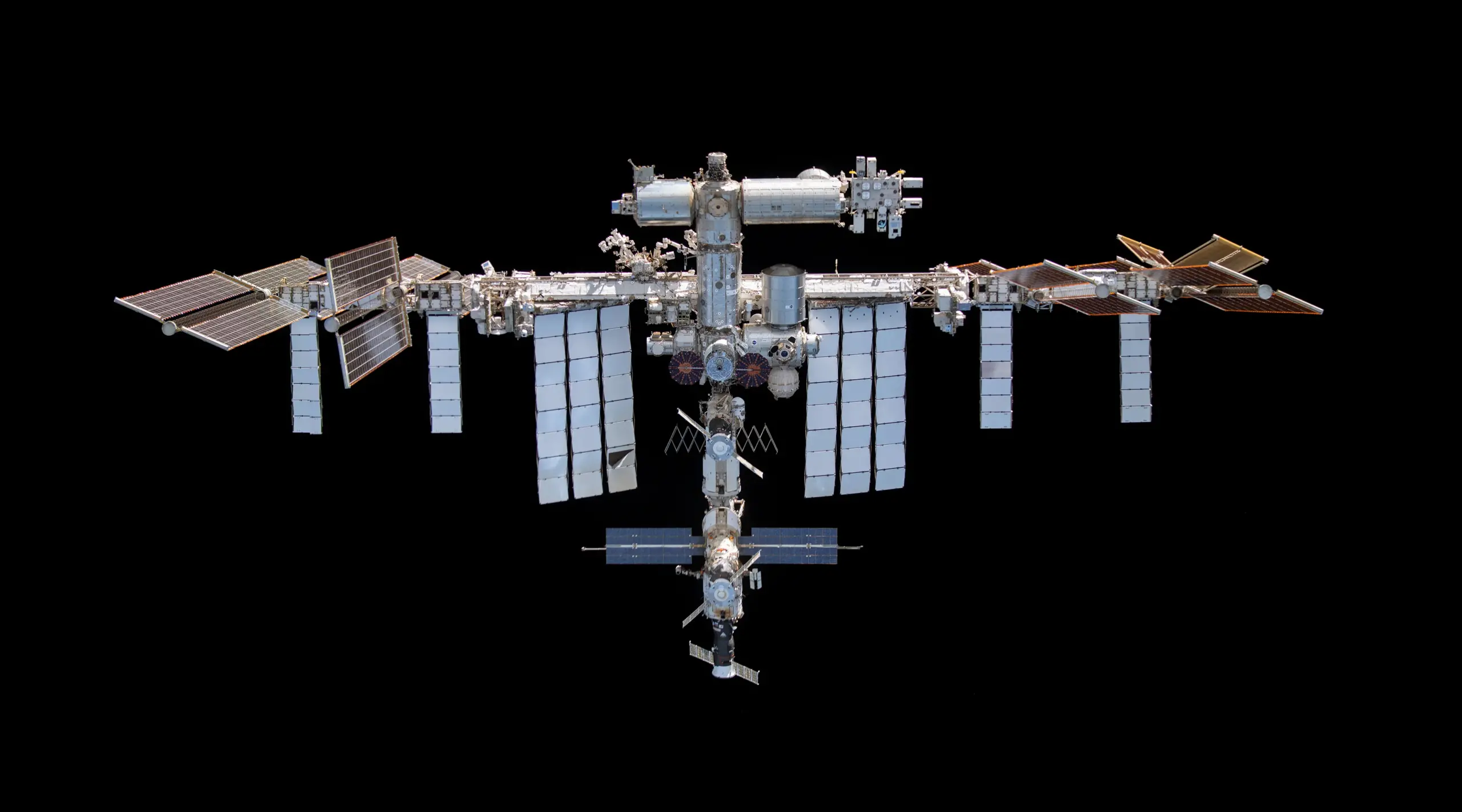

COLORADO SPRINGS — Voyager Technologies will be the third company to fly a private astronaut mission to the International Space Station, gaining experience for its commercial station.
NASA announced April 15 it selected Voyager to conduct a private astronaut mission (PAM) to the ISS, the seventh such mission awarded by NASA overall. The mission is scheduled to fly no earlier than 2028.
The announcement of the award was a surprise. NASA requested proposals in 2025 for two PAM missions, the fifth and sixth overall. NASA selected Axiom Space for the fifth mission in January and Vast for the sixth in February.
In a source selection statement released by NASA April 15, the agency said that while it selected Vast’s proposal for the sixth PAM mission over Voyager’s, it considered Voyager’s proposal “selectable for negotiations” and would consider it if additional resources were to become available.
“Due to changes in programmatic priorities and resource availability, NASA is now able to support an additional mission within the PAM 6 flight opportunity window, which is open-ended, beginning no earlier than mid-2027,” Dana Weigel, NASA ISS program manager, wrote in an addendum to the source selection statement, signed March 19.
She added that the earlier conclusions that Voyager’s proposal was selectable “remain valid for purposes of making an additional selection for the PAM 6 flight opportunity window” and that NASA would thus begin negotiations with the company for the seventh mission.
In a statement about the award, NASA Administrator Jared Isaacman argued that having three companies fly private astronaut missions to the ISS would help the companies develop commercial stations that will succeed the ISS.
“With three providers now selected for private missions, NASA is doing everything we can to send more astronauts to space and ignite the orbital economy. Each new partner brings fresh capabilities that move us closer to a future with multiple commercially operated space stations and a vibrant, sustainable marketplace in low Earth orbit,” he said.
All three companies with PAM awards are working on commercial space stations. Axiom, which flew the first four PAMs and will fly the fifth in early 2027, is developing Axiom Station. Vast, whose PAM mission is scheduled for the second half of 2027, is building the single-module Haven-1 station for launch next year and is planning the larger Haven-2 station.
Voyager is the lead partner on the Starlab Space joint venture planning the Starlab station. “This award reflects decades of partnership with NASA and validates our belief that the infrastructure being built in low Earth orbit today is the launchpad for humanity’s future in deep space,” Dylan Taylor, chairman and chief executive of Voyager, said in a statement.
None of the three companies have disclosed details about their upcoming PAM flights, although each would be about two weeks long and likely use SpaceX Crew Dragon spacecraft. The crews they select will require approval from NASA and the other ISS partners.
In an April 14 interview, Max Haot, chief executive of Vast, said his company was working to fill the crew for its PAM flight as well as the separate flights to Haven-1 scheduled to begin in 2027. The focus is on “sovereign customers,” astronauts representing national agencies rather than companies or individual private astronauts.
He argued that the Haven-1 flights had several advantages over a PAM flight, including being the first to go to a commercial space station as well as “very different” aesthetics compared to the ISS. The price of a Haven-1 mission is also “competitive” with a private ISS mission.
More conservative customers, though, might prefer the ISS flight. “There are government actors that want to choose the established, simpler decision,” he said.
One potential change to the future PAM missions is an announcement at NASA’s “Ignition” event March 24 that the agency will allow companies to sell the seat on PAM flights that is reserved for the mission’s commander. NASA had required that the commander be a former NASA astronaut with spaceflight experience employed by the company.
“We’re allowing for the sale of the PAM commander seat, which I know has been a challenge previously with the more stringent requirements we had,” Weigel said at the event. The agency, she said, would also consider buying seats on private astronaut missions and study “the potential for doing joint crew missions together.”
Industry supports that move. “We need to be able to sell that commander’s seat,” Mike Gold, president of Redwire Space, said on a panel at the 41st Space Symposium April 15, citing the additional revenue that it would provide.
“I love that Jared Isaacman is talking about red tape,” he said. “Let’s achieve escape velocity from red tape and begin by being able to sell that commander’s seat.”










Related Posts


Stay Informed With the Latest & Most Important News
Previous Post
Next Post



Advertisement
-
 01Two Black Holes Observed Circling Each Other for the First Time
 -
 02From Polymerization-Enabled Folding and Assembly to Chemical Evolution: Key Processes for Emergence of Functional Polymers in the Origin of Life
 -
 03Astronomy 101: From the Sun and Moon to Wormholes and Warp Drive, Key Theories, Discoveries, and Facts about the Universe (The Adams 101 Series)
 -
 04True Anomaly hires former York Space executive as chief operating officer
 -
 05Φsat-2 begins science phase for AI Earth images
 -
 06Hurricane forecasters are losing 3 key satellites ahead of peak storm season − a meteorologist explains why it matters
 -
 07Binary star systems are complex astronomical objects − a new AI approach could pin down their properties quickly