
Now Reading: Sci-fi stories never really end anymore, and that’s a problem
-
01
Sci-fi stories never really end anymore, and that’s a problem


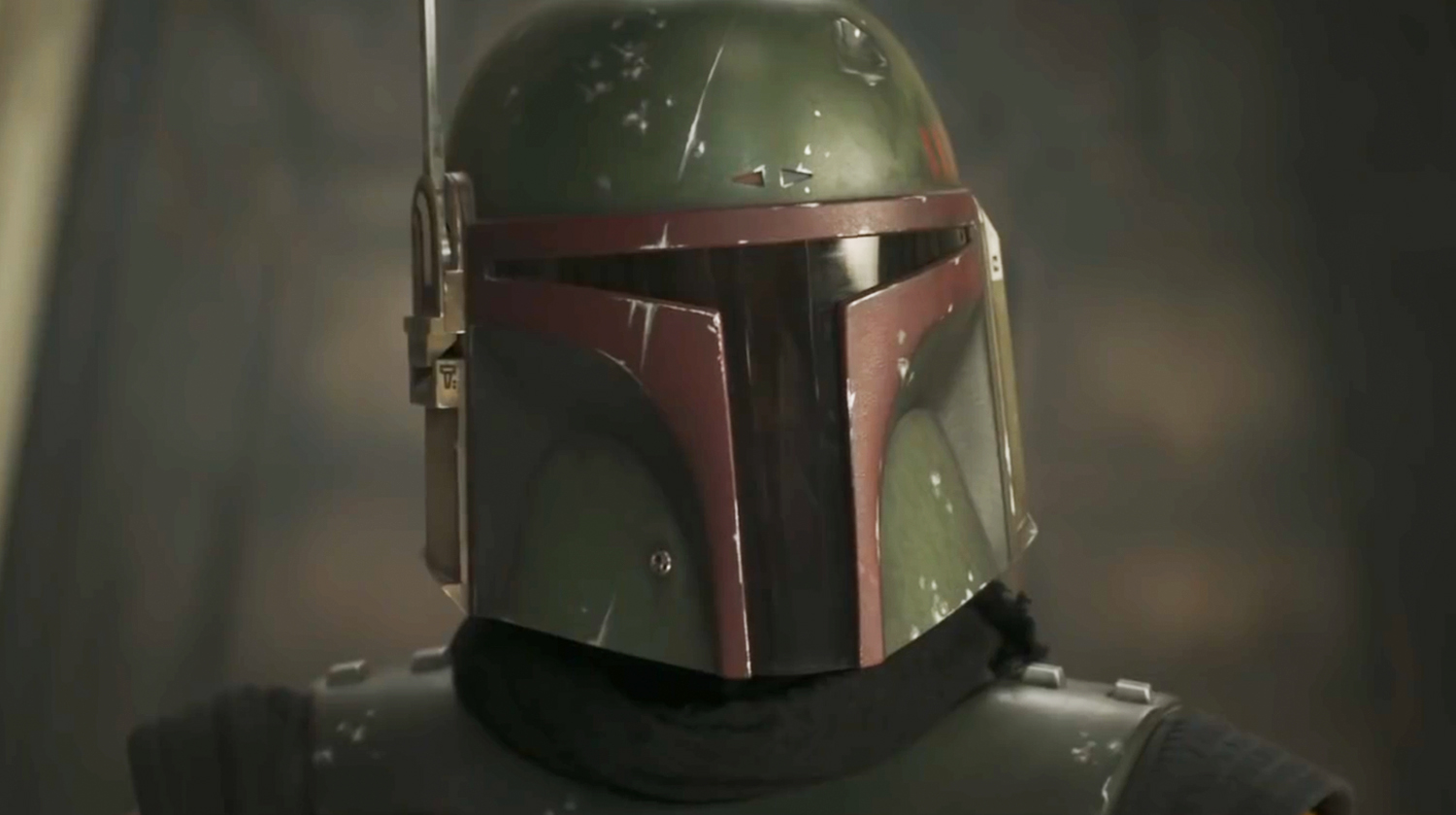
There was a time when things ended. When the stories on our screens had a beginning, middle, and end. A time when a trilogy was the longest series of films you could hope for, and when a show aired its final season, it was actually its final season.
That time is gone. Star Trek, Star Wars, Marvel, Godzilla, Stranger Things, Game of Thrones, Lord of the Rings, DC, Doctor Who… the list goes on and on. These franchises are no longer vehicles for structured stories, but instead sprawling universes in which stories build and collide and ramble on ad infinitum. If a successful film or show does end, the result is more of that thing, especially if it already has an established fan base.
This is hardly a new observation. We’ve all, at one time or another, discussed the fact that franchises and cinematic universes are out of control. The very fact that we now refer to these things as franchises should illuminate what they’ve become. We’re not here to bemoan that again.
Article continues below
Instead, we want to talk about what happens to something when it’s never allowed to end; the consequences of this endless treadmill of content. What happens to us, the audience (and maybe even society) when we’re no longer allowed to finish a story?
It’s the end of the world as we know it

Expanded universes are nothing new. Among the litany of sci-fi movies turning into sprawling franchises/universes, you probably have one that’s especially important to you, and most of them have a litany of comic books, novels, and video games under their umbrella. But these were always niche and hidden away from the main canon. Now, they’re multi-million dollar streaming shows and theatrical releases.
These worlds are now cultural touchpoints. They are the modern myths we tell, like Odysseus, but no one ever makes it home, because the franchise must continue. The footprint of film and television is just that much bigger than books or comics. Those previous expanded universes let beloved stories live on, but didn’t define the zeitgeist as franchises do now.
And perhaps most importantly, the internet wasn’t around for every aspect to be picked apart, and discussions of ever-expanding lore sat in friend groups, cons, or limited forums. When a series of Trek ended, that was the end of it (barring a few cameos), not the chance to spin off a closely related show or bring it back decades down the road.

By contrast, the last two live-action Star Trek shows — Strange New Worlds and Starfleet Academy — were both spun off from Discovery, because everything needs to be connected. And don’t even get us started on the mess that is the MCU, with its infinite roster of shows and movies that only make sense if you’ve seen the preceding five entries.
To be clear, the end result isn’t always — or even usually — bad. Releases like Andor, Lower Decks, and even Thunderbolts have shown that exploring lesser-known corners of established universes can be a gold mine. The problem is that these franchises are now living in an eternal nostalgia loop, with fans both wanting the past and constantly asking what is next. But without a chance to say goodbye to our heroes, we’re missing out on a core part of stories; their endings.
And the worst thing is, if we’re looking for someone to blame for this, we need only look into a mirror. We asked for this — sometimes directly, but often by voting with our wallets — and the corporations delivered, and delivered, and delivered, so that our modern-day myths never end.
But in the end, it doesn’t even matter

For many of us, watching that final poker game in Star Trek: The Next Generation’s now ironically titled “All Good Things” was a moment of profound reflection. Seeing Luke, Han, and Leia party with the Ewoks (sans digitally included Anakin Skywalker) brought the ground-breaking space opera to a culturally significant end, and watching or reading the ending(s) of The Return of the King was a tear-filled gut punch. These were stories that gave us closure.
Now Picard is zipping around the cosmos again, The Lord of the Rings is waylaid with prequels and spin-offs, and somehow, Palpatine returned. Those closures are no longer available to us. We never know when any story might be brought back, continued, redone, or retconned. There’s no end in sight, no closing lesson for us to learn, leaving everyone with ambiguity in what we’re supposed to take away from anything. On a sociological and philosophical level, we’re simply never allowed to stop caring.
That, counterintuitively, makes it all the harder to care. As our stories don’t give us the catharsis we’re psychologically built to need, we stop investing in them. We turn to those stories that did give us closure and wonder why we don’t feel the same way about the continuations. Without knowing anything will end, we’re stuck waiting for what’s next – be that prequel, sequel, or spin-off.

There’s also just too much of it. Eternal franchises require eternal, ever-expanding content. When stories ended, you could relive them over and over, experience them in different ways, and discover new things. Part of the incredible staying power of the original Star Wars movies was that they were the only Star Wars movies (apologies to the Christmas special).
That story wasn’t just important to the fandom, but society as a whole, as we watched, rewatched, referenced, and relived. It is nigh impossible for anything to do that now. Instead, our cinematic universes sprawl meanderingly, and so too does a franchise’s cultural impact. We’re spread too thin, needing to connect complex infrastructures of storytelling instead of engaging in-depth with a single tale.
We’re reaching a point, not just as individuals but as a whole, where we can’t let go, but we can’t keep up. Our stories must end somehow. And for many, the answer has just been to give up.
It’s something unpredictable, but in the end, it’s right

This all may sound a bit dramatic for some silly sci-fi movies and TV shows, but stories are how human beings learn, reflect, and advance. They’re cultural touchstones that give us hope and guidance, and help define who we are as a society. Our stories turning into never-ending content mills is no small thing, and the impact may not be understood for decades to come. This is important.
Now that we’re all thoroughly depressed (or confused), maybe there is some hope. While we may be suffering from a current inability to let anything end, it shouldn’t be said that an eternal story is always a bad thing. For a long time, Star Trek was very much a functioning never-ending story.
The answer is to embrace the new and stop clamoring for what was. It’s also for studios to experiment with new ideas instead of building everything off the old ones. Deep Space Nine worked because it was so drastically different from TNG. Godzilla’s best outing in decades was a full reimagining of his lore. Andor succeeds because it is so incredibly not a space opera, and there isn’t a Jedi within 12 parsecs. It’s fine to dip into the warm waters of nostalgia every now and then, but it can’t be the foundation that our future is built on.
Same universe, different story, new endings. Our favorite franchises don’t need to die; they just need to be built around stories that actually end.










Related Posts
Stay Informed With the Latest & Most Important News




Advertisement
-
 01Two Black Holes Observed Circling Each Other for the First Time
 -
 02From Polymerization-Enabled Folding and Assembly to Chemical Evolution: Key Processes for Emergence of Functional Polymers in the Origin of Life
 -
 03Astronomy 101: From the Sun and Moon to Wormholes and Warp Drive, Key Theories, Discoveries, and Facts about the Universe (The Adams 101 Series)
 -
 04True Anomaly hires former York Space executive as chief operating officer
 -
 05Φsat-2 begins science phase for AI Earth images
 -
 06Hurricane forecasters are losing 3 key satellites ahead of peak storm season − a meteorologist explains why it matters
 -
 07Binary star systems are complex astronomical objects − a new AI approach could pin down their properties quickly