
Now Reading: Space Force sets up ‘cislunar coordination’ office to focus beyond Earth orbit
-
01
Space Force sets up ‘cislunar coordination’ office to focus beyond Earth orbit

Space Force sets up ‘cislunar coordination’ office to focus beyond Earth orbit

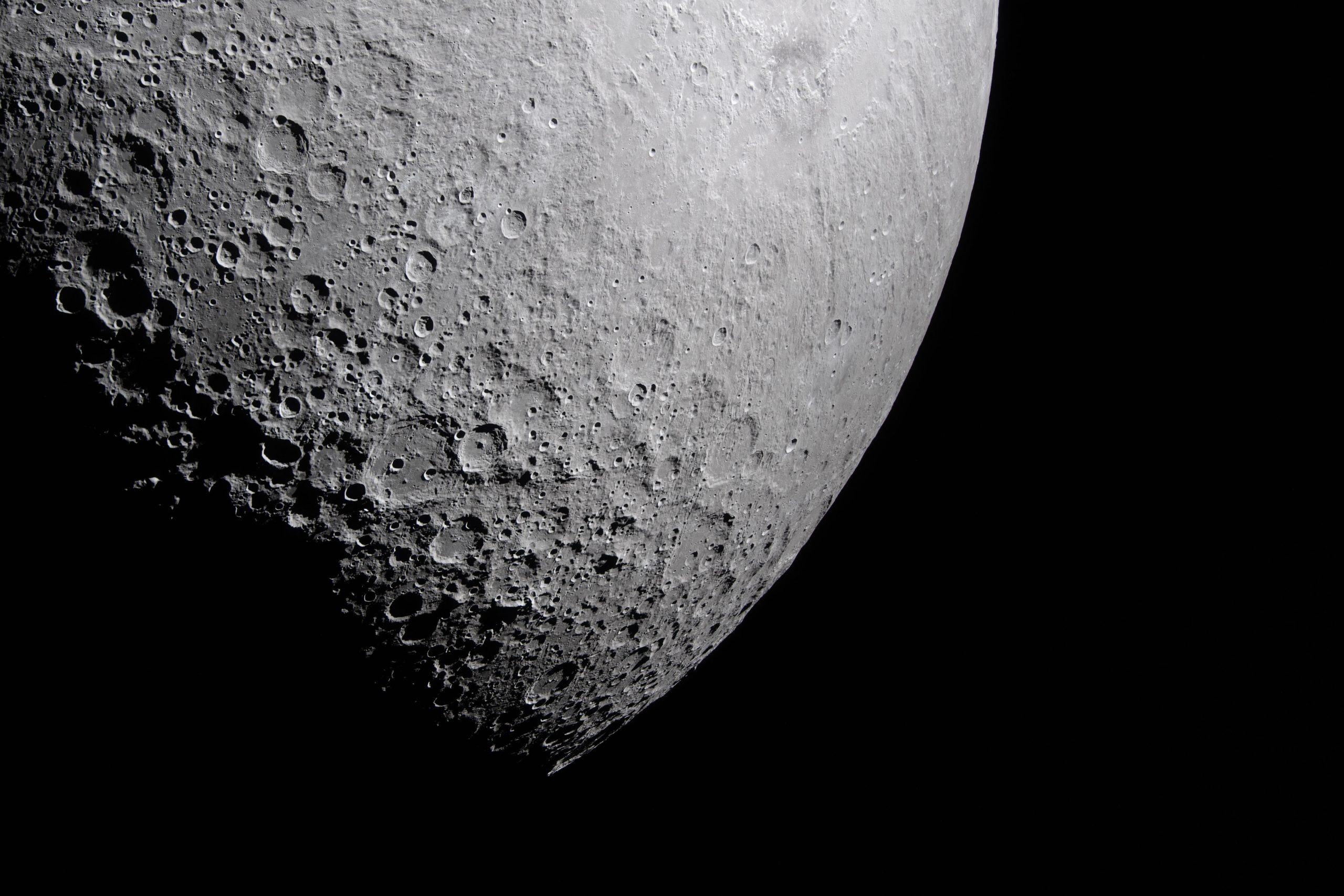

WASHINGTON — The U.S. Space Force is setting up a dedicated acquisition office focused on cislunar space, the region between Earth and the moon, as it begins to more formally assess requirements beyond traditional Earth orbit.
“We’re going to stand up a cislunar coordination office on the Space Force acquisition side to focus exactly on that,” Maj. Gen. Stephen Purdy, senior advisor to the secretary of the Air Force for space acquisition, said at the Space Symposium last week.
The move follows the Trump administration’s December 2025 executive order, Ensuring American Space Superiority, which has begun to translate broad policy direction into acquisition priorities. The guidance is pushing cislunar space from an abstract concept into what officials increasingly describe as a future operating environment for national security.
“We need to begin integrating cislunar capability into the Space Force,” Purdy said. “Certainly NASA’s Artemis 2 mission has captured our imagination, but we also need to understand the importance of the cislunar region for warfighting and national security.”
The office will be led by Jaime Stearns, a veteran program manager with experience at the Space Rapid Capabilities Office and the Air Force Research Laboratory. Its mandate is expected to mirror earlier Space Force efforts to stand up new mission areas, combining engineering and program management expertise to map existing activity across government and industry and identify where to direct funding.
“We built roadmaps, we built technology plans, we built schedules by documenting what everyone was doing in the government and in industry, and then figuring out where to apply dollars for maximum benefit,” Purdy said, describing the approach.
The effort will rely heavily on collaboration, particularly with NASA, which leads U.S. civil exploration beyond Earth orbit. Purdy said NASA would be the “biggest partner,” alongside organizations such as the Air Force Research Laboratory and the Defense Innovation Unit.
Senior military leadership has framed the initiative as a natural extension of U.S. activity in space. “Wherever U.S. interests go, so will go the US Space Force,” Chief of Space Operations Gen. Chance Saltzman told reporters last week.
Saltzman said the service’s role would center on enabling access and sustaining operations rather than deploying forces in the traditional sense. “If our interests go to a lunar base, the Space Force will have to make sure that it’s safe to get out there … And once they’re there, that it’s sustainable,” he said.
The executive order itself does not call for a military presence in cislunar space but directs the development of a sustained U.S. architecture beyond Earth orbit — transportation, communications and navigation systems — that inherently carries security implications. Those assets, once deployed, would require protection and continuous monitoring. The policy also reflects broader geopolitical considerations, with China’s lunar ambitions as a factor shaping planning assumptions.
The U.S. military’s space tracking network is concentrated in low Earth orbit and geosynchronous orbit, leaving limited visibility farther out. Cislunar space presents a more complex tracking problem, with less predictable orbital dynamics and far greater distances, complicating what operators refer to as custody, or maintaining continuous awareness of objects over time.
Objects operating in cislunar space could approach Earth orbit along trajectories that are difficult to detect with existing sensors, raising concerns about blind spots in space domain awareness.










Related Posts
Stay Informed With the Latest & Most Important News
Previous Post
Next Post


Advertisement
-
 01Two Black Holes Observed Circling Each Other for the First Time
 -
 02From Polymerization-Enabled Folding and Assembly to Chemical Evolution: Key Processes for Emergence of Functional Polymers in the Origin of Life
 -
 03Astronomy 101: From the Sun and Moon to Wormholes and Warp Drive, Key Theories, Discoveries, and Facts about the Universe (The Adams 101 Series)
 -
 04True Anomaly hires former York Space executive as chief operating officer
 -
 05Φsat-2 begins science phase for AI Earth images
 -
 06Hurricane forecasters are losing 3 key satellites ahead of peak storm season − a meteorologist explains why it matters
 -
 07Binary star systems are complex astronomical objects − a new AI approach could pin down their properties quickly