
Now Reading: In the wake of Artemis 2, America needs to consider the ‘why’ of its government space program
-
01
In the wake of Artemis 2, America needs to consider the ‘why’ of its government space program

In the wake of Artemis 2, America needs to consider the ‘why’ of its government space program

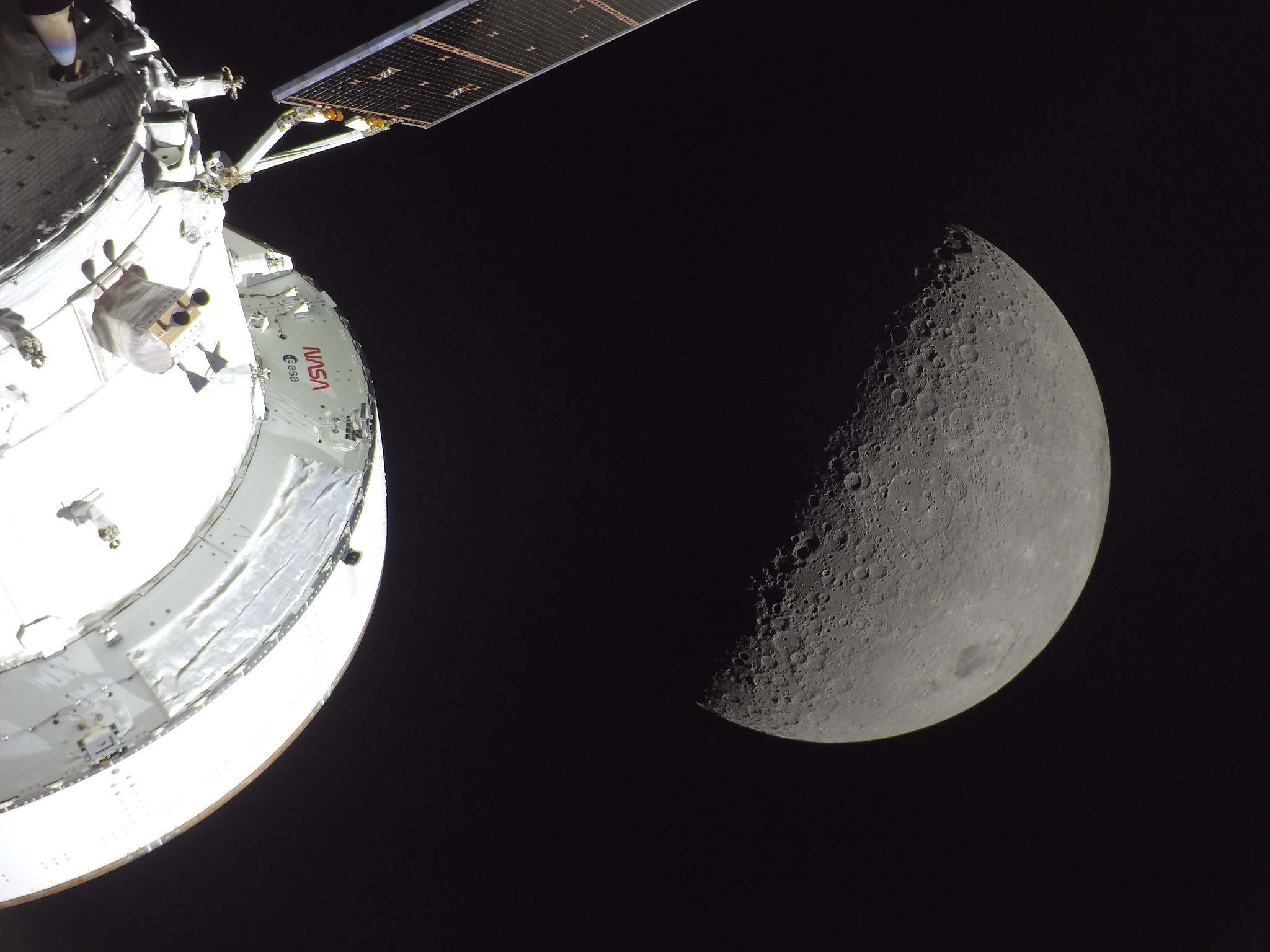

The moon itself does not wax and wane as frequently as American public opinion on its space program.
The Artemis 2 astronauts barely gulped their first taste of fresh Pacific air before a chorus of voices began criticizing the Artemis program as a waste of money for which the American people received little in return. The argument goes that SpaceX does it better so Americans ought to invest in SpaceX rather than have their tax dollars go toward the bumbling government and its old fuddy duddy contractors like Boeing and Northrop Grumman. While naked endorsement of SpaceX is notable for its timing and placement in a year when the company is rumored to pursue an IPO, the Artemis 2 criticism misses some important points about the reality of market demand for cislunar launch services. There are plenty of data points that point to SpaceX’s many innovations in space flight technology and its extremely important role in reducing launch cost per kilogram. These are real accomplishments for which SpaceX deserves credit. But a deeper dive illuminates an inconvenient and unpopular truth about market-driven commercial space flight:
Commercial space companies need the government to go first.
This was true in low Earth orbit (LEO) flights and is true for cislunar and future interplanetary missions. Writing off the Artemis 2 mission as a waste of taxpayer money shows a shocking misunderstanding of both how government funding works and the ultimate goals of government funded space programs. In 2026, the government’s role is to go first. To lay the groundwork, prove that missions can work and build the required infrastructure to de-risk economic activities in space just as it did for the LEO economy. Obstacles cleared, commercial space companies will follow once there is a market demand and the risk is sufficiently low. There was no economic profit in the Artemis 2 mission’s flight around the moon, but that was the point. Not everything must be profit-driven and real accomplishments in science, technology and geopolitical prestige often have no such prospect.
The waxing and waning of support for human space flight is a symptom of a tumor that has been present since 1961; Americans continue to struggle with the “why” of their space program. In a capitalist society, we naturally look for profit potential. Another unpopular truth is that the United States is only motivated to go to space when pushed by an adversary. It was true in the 1960s (with the Soviet Union) and is true today (with China). Arguments that NASA space programs have only yielded marginal consumer upgrades for taxpayers are really an outgrowth of something that’s been true for the entire existence of NASA and human space flight: Americans are only serious about space travel when there’s a possibility that another country we don’t like might go in our place. That’s not how we build a sustainable space program or commercial space economy no matter how much SpaceX innovates.
More data
A popular way to begin criticism of NASA and the Artemis program is to pull the heart strings of millions of Americans struggling with high prices as if to create a correlation between Artemis’s budget and inflation. The truth is that the Trump administration proposed significant cuts to NASA’s budget in its FY2026 budget request to Congress only to have all those reductions rejected during the debates and ultimate passage of the One Big Beautiful Bill Act. That legislation included $10.08 billion for programs to include Artemis 4 and 5, the Mars Telecommunications Orbiter and the International Space Station. Said another way, connecting a budget passed last year to inflation this year shows a profound misunderstanding of how the federal budget process connects to the consumer economy.
The technical accomplishments of SpaceX are many and the company should be recognized for the way it changed space flight. Using those innovations, a pure capitalist might note that SpaceX captured the majority of global space launch demand globally, but what is that demand?
In 2025, there were 193 LEO launches from the U.S., the most in the world by 100 launches (China had 93). Of those, 88% (170 launches) were SpaceX. Of the 170 launches by SpaceX, 77% (127 launches) were to launch Starlink satellites or simulators. So, yes, SpaceX has captured the majority of global space launch demand, but because it is creating that demand. Of the 170 times, SpaceX launched a rocket, only 43 of those launched something not related to Starlink.
In October 2025, then-Acting NASA Administrator Sean Duffy made a major announcement that did not catch headlines the way the reentry of Artemis 2 did. He said that the setbacks in the delivery of a lunar lander by SpaceX could result in the company’s exclusion from future lunar missions. SpaceX has a $2.9 billion government contract to deliver this lander, but Duffy said the government would not “wait for one company” to accomplish its mission. Setbacks are part of such large engineering projects but to hold up SpaceX as the one company that knows how to get to the moon ignores inconvenient data.
SpaceX is exceptionally good at launching satellites into LEO. It has yet to prove it can get to the moon. The Space Launch System rockets were delivered by Aerojet Rocketdyne, Boeing, Northrop Grumman and Teledyne Brown Engineering. The Orion spacecraft was delivered by Northrop Grumman and Aerojet Rocketdyne. Not SpaceX.
Some may also point out that SpaceX created a revenue model in Starlink that will allow it to go to cislunar space for cheaper than the government. The implication of this statement is that the company will turn those profits toward missions that may not return high economic yields rather than back to their investors. This, too, shows a profound misunderstanding of how private, for-profit companies work. We cannot leave it to the altruism of billionaires and investors to create the necessary conditions for a sustained presence in space.
Going first
The commercial space industry took off once two conditions were fulfilled: One, launch cost per kilogram dropped to a reasonable level, and two, risk dropped to an acceptable level. The economic value of LEO is clear because earthlings with disposable income can pay for services. The economic drivers to go to the moon and Mars are less clear. Economic projections of value in cislunar and interplanetary space stretch into the trillions, yet no commercial company has taken the risk to bring that value to earth. The technology exists to get there, so what is the hold up?
Government missions do not seek profit. They seek to prove concepts, demonstrate success and, hopefully in the future, build the infrastructure in space required to bring down the risk of commercial space activities beyond LEO. Trying to classify government space programs against for-profit companies, particularly those seeking an IPO, misses the point. We may not like it, but the truth is that these space companies, for as innovative as they are, still need the government to go first.
The debate around the Artemis program is not about whether SpaceX can do it better. It’s about a country struggling with the “why” of its space program. Are we going to the moon only because China might get there first? Or are we going to the moon to create the necessary conditions and infrastructure for a sustained presence in cislunar space? SpaceX may well be the primary company that generates economic value in cislunar space, but they are struggling to fulfill an almost $3 billion government contract to do just that as of this writing. There is value in going first, even at a higher price. But before we can make that value judgement, we need to decide why we are doing this. Just to beat an adversary will not be sufficient.
Nick Reese is the COO of Optica Labs, an artificial intelligence assurance company based in Washington DC. He was the director of emerging technology policy at the U.S. Department of Homeland Security from 2019 to 2023 and is a professor of emerging technology at the NYU Center for Global Affairs.
SpaceNews is committed to publishing our community’s diverse perspectives. Whether you’re an academic, executive, engineer or even just a concerned citizen of the cosmos, send your arguments and viewpoints to opinion (at) spacenews.com to be considered for publication online or in our next magazine. If you have something to submit, read some of our recent opinion articles and our submission guidelines to get a sense of what we’re looking for. The perspectives shared in these opinion articles are solely those of the authors and do not necessarily represent their employers or professional affiliations.










Related Posts
Stay Informed With the Latest & Most Important News
Previous Post
Next Post






Advertisement
-
 01Two Black Holes Observed Circling Each Other for the First Time
 -
 02From Polymerization-Enabled Folding and Assembly to Chemical Evolution: Key Processes for Emergence of Functional Polymers in the Origin of Life
 -
 03Astronomy 101: From the Sun and Moon to Wormholes and Warp Drive, Key Theories, Discoveries, and Facts about the Universe (The Adams 101 Series)
 -
 04True Anomaly hires former York Space executive as chief operating officer
 -
 05Φsat-2 begins science phase for AI Earth images
 -
 06Hurricane forecasters are losing 3 key satellites ahead of peak storm season − a meteorologist explains why it matters
 -
 07Binary star systems are complex astronomical objects − a new AI approach could pin down their properties quickly