
Now Reading: Space Force faces surge in demand for heavy-lift launches
-
01
Space Force faces surge in demand for heavy-lift launches


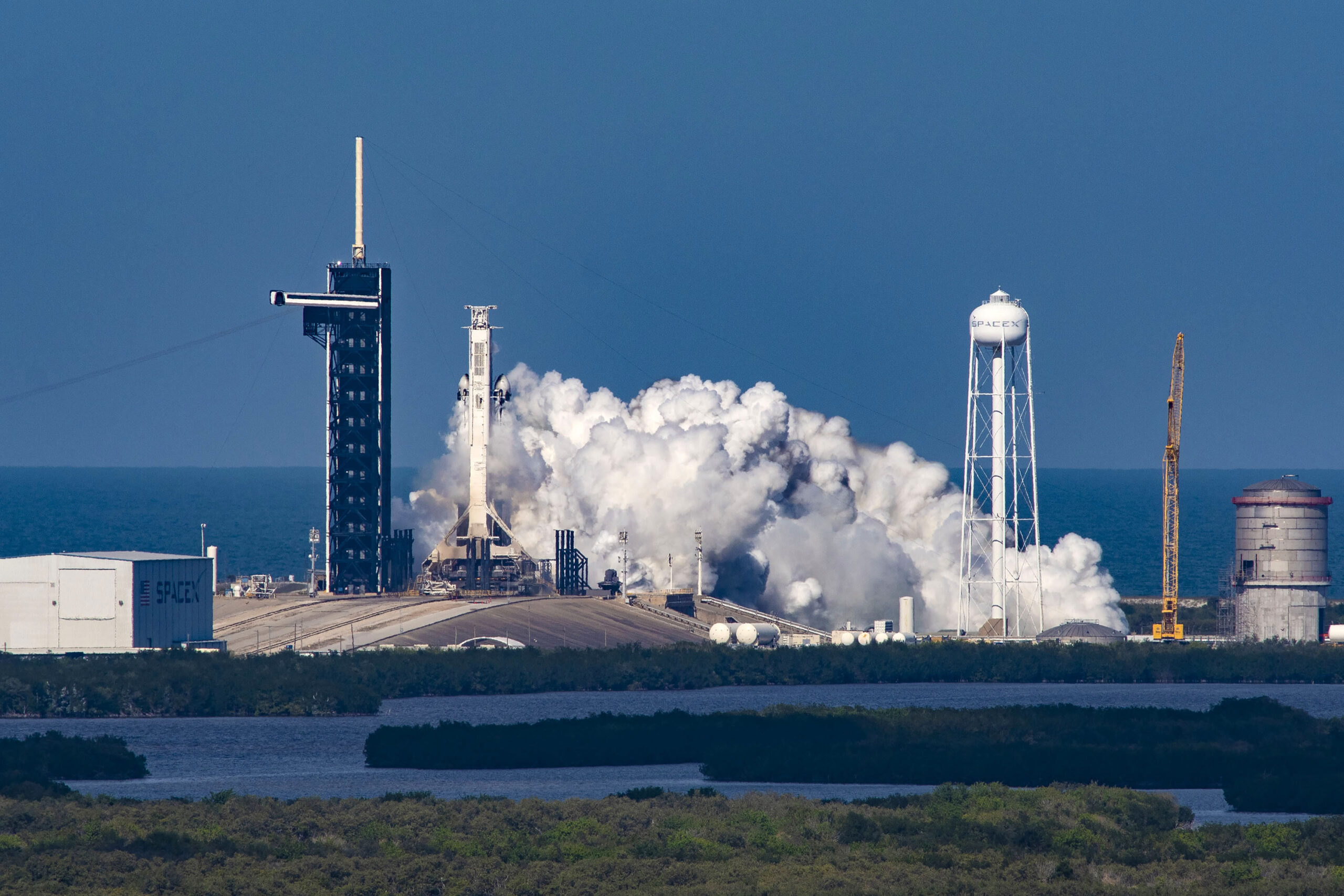

WASHINGTON — The U.S. Space Force is sharply increasing its demand for the most capable rocket launches, adding pressure to a market currently limited to two certified providers.
Compared with its projections a year ago, the Space Force is now forecasting significantly higher demand to launch satellites into what it calls ‘highly stressing orbits.’ These missions require proven heavy-lift launch vehicles because of the energy involved, the precision of orbital insertion and the value of the payloads.
When the Space Force awarded contracts last year for the National Security Space Launch Phase 3 program, the most complex launches that require the highest levels of reliability were assigned to a segment known as Lane 2. Three companies were selected: SpaceX, United Launch Alliance and Blue Origin. Only SpaceX and United Launch Alliance, however, have rockets certified to carry out these missions.
The original plan for the Lane 2 program called for 54 missions over five years. That total is now increasing by nearly 50%,
According to a “sources sought” notice published this month by the Space Systems Command, the Space Force intends to add 25 more launches, all classified as high-energy missions requiring heavy-lift rockets. The additional missions are scheduled over the next three fiscal years: six in 2027, nine in 2028 and 10 in 2029.
“These missions are deemed critical to national security and carry the highest priority for mission success and low risk posture,” the command said, adding they require “nothing less than a NSSL-certified launch service provider.”
Representative missions include direct insertion of an 8,000-pound satellite into geosynchronous orbit and a 20,000-pound payload into medium Earth orbit, as well as multi-manifest launches that carry and deploy multiple high-value spacecraft on a single rocket.
The expansion is reflected in the Pentagon’s fiscal 2027 budget request that includes about $5 billion for 31 national security launches, more than double the roughly $2 billion enacted for 2026.
In the “sources sought” notice, a standard tool used to gauge market capability, the Space Systems Command said it plans to procure the additional 25 missions through the existing Lane 2 contract vehicle. That effectively limits near-term awards to the two certified providers, though only SpaceX is currently flying NSSL missions. United Launch Alliance’s Vulcan rocket remains grounded as the company investigates a solid-rocket booster anomaly. ULA also faces a backlog of launches from earlier National Security Space Launch Phase 2 contracts.
While the Space Force said it does not plan to add new providers to Lane 2, the notice appears aimed at gauging whether Blue Origin could certify its New Glenn rocket in time to compete for some of the additional missions.
“This sources-sought notice is intended to determine if any other responsible sources exist that can meet the requirement,” the command said, inviting firms to submit statements of capability by May 5 if they believe they can support launches on the required timeline.
Blue Origin is working toward New Glenn certification, which requires four successful orbital launches, but a setback during its third flight on April 19 has added uncertainty to that timeline.
A spokesperson for Space Systems Command’s launch procurement office, known as System Delta 80, said in a statement to SpaceNews that there is no plan to select any new providers for NSSL Phase 3 Lane 2. The implication is that any near-term increase in capacity would depend on Blue Origin’s progress.
The additional 25 missions are “emergent requirements” that were not anticipated when the Lane 2 contracts were awarded last April, Space Delta 80 said.










Related Posts
Stay Informed With the Latest & Most Important News
Previous Post
Next Post

Advertisement
-
 01Two Black Holes Observed Circling Each Other for the First Time
 -
 02From Polymerization-Enabled Folding and Assembly to Chemical Evolution: Key Processes for Emergence of Functional Polymers in the Origin of Life
 -
 03Astronomy 101: From the Sun and Moon to Wormholes and Warp Drive, Key Theories, Discoveries, and Facts about the Universe (The Adams 101 Series)
 -
 04True Anomaly hires former York Space executive as chief operating officer
 -
 05Φsat-2 begins science phase for AI Earth images
 -
 06Hurricane forecasters are losing 3 key satellites ahead of peak storm season − a meteorologist explains why it matters
 -
 07Binary star systems are complex astronomical objects − a new AI approach could pin down their properties quickly