
Now Reading: Ancient lake on Mars? Rover finds strong new evidence
-
01
Ancient lake on Mars? Rover finds strong new evidence


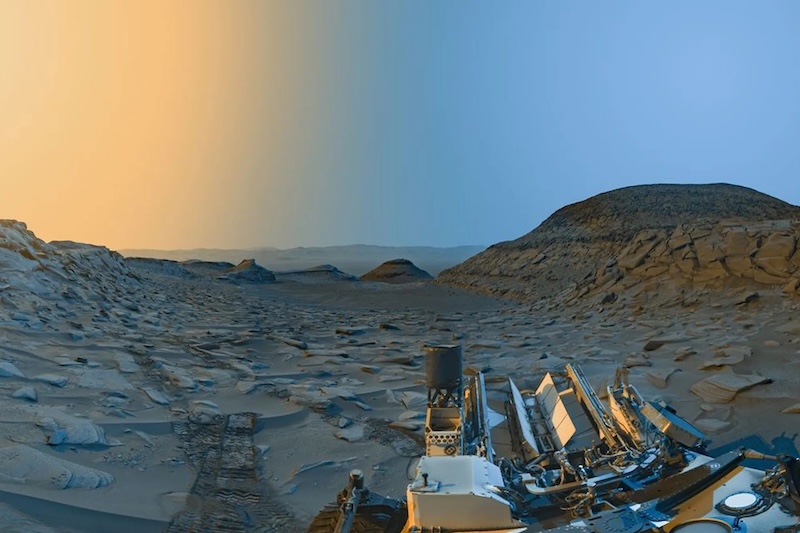
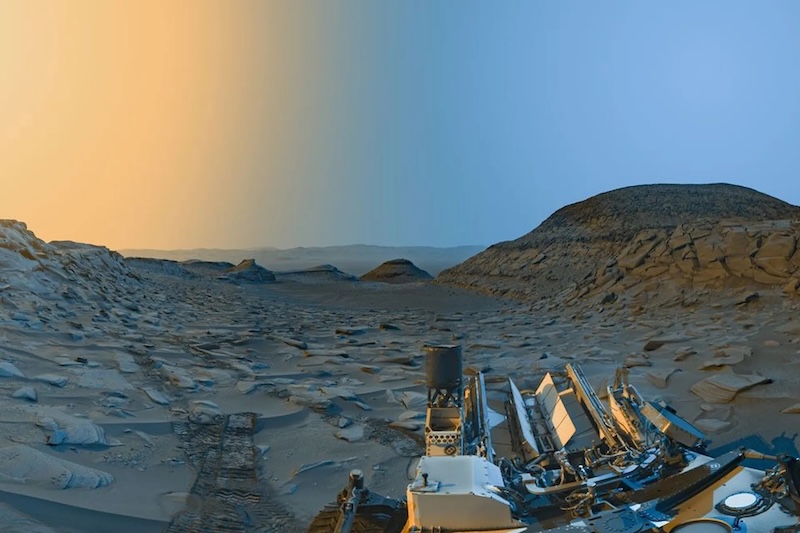
- For years, evidence has grown for an ancient lake once existing in Gale crater on Mars. Now NASA’s Curiosity rover has found yet more clues.
- The rover found the highest concentrations of iron, manganese and zinc ever seen in one place on Mars. The metal minerals are in well-preserved ripples in rocks.
- The chemistry and location of the minerals strongly support the presence of a former shallow lake at this location.
Ancient lake on Mars
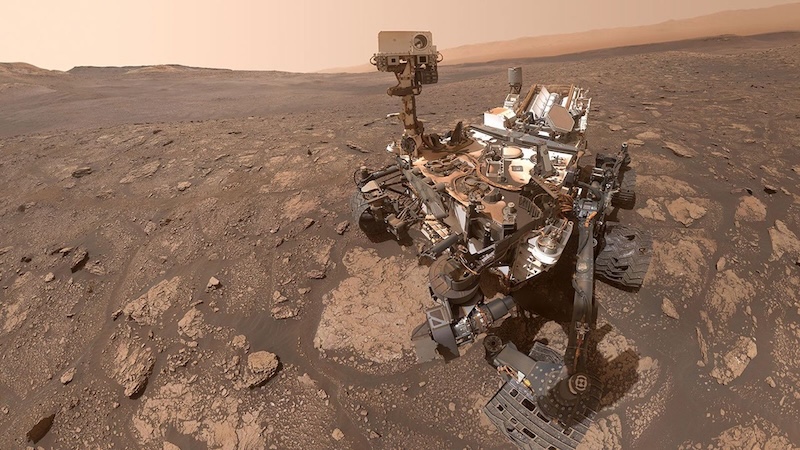
Scientists have long thought that there was once a lake, or series of lakes, in Gale crater, where the Curiosity rover has been exploring since 2012. Now, Curiosity has found even more evidence for that ancient lake.
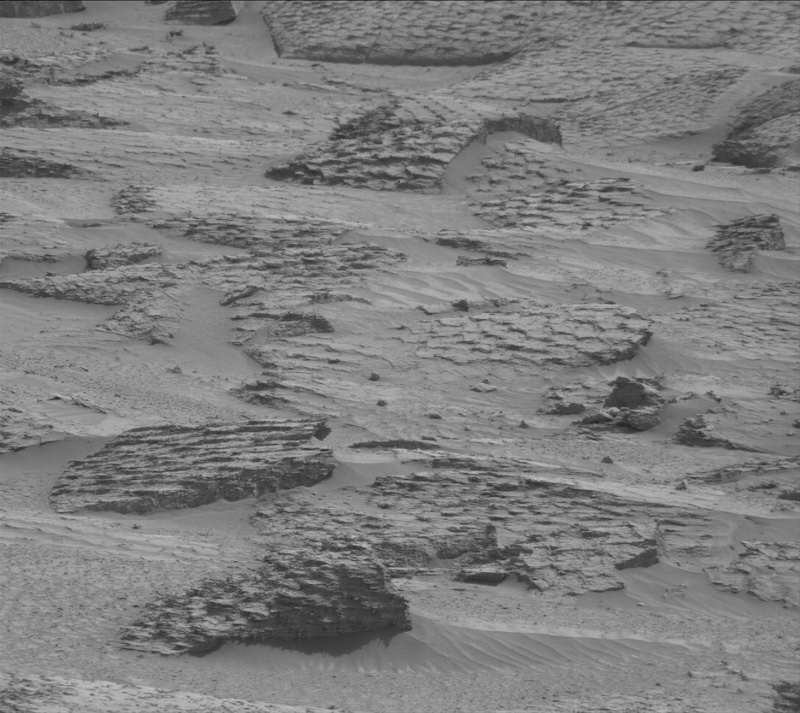
Researchers led by the Los Alamos National Laboratory said on April 21, 2026, that the rover has discovered the highest concentration of iron, manganese and zinc ever found together on Mars. This deposit of metals is similar to deposits formed by chemical reactions in lakes on Earth. Plus, Curiosity found the metals within ripples in rocks. It seems an ancient shallow lake produced these ripples, and deposited these metals within them.
Intriguingly, on Earth, deposits like this are almost always inhabited by microbial life. This isn’t proof of ancient life on Mars, but the similarities are striking.
The researchers published their peer-reviewed findings in the journal JGR Planets on April 13, 2026.

Curiosity found a treasure trove of minerals
Curiosity found the minerals in late 2022 in a dark section of exposed rock called the Amapari Marker Band. Using its Chemistry & Camera (ChemCam) instrument, the rover detected the iron, manganese and zinc in preserved ripples in the rocks.
Patrick Gasda, the lead author of the study, explained:
The metals were found in preserved ripples, which is the clearest evidence we have that a lake was present in Gale crater.

Evidence for past life?
On Earth, some microbes use these very same metal minerals as food and energy sources. The mineral deposits by themselves don’t prove past microbial life. But they do show that conditions were suitable for life on Mars to thrive, if it ever existed.
Gasda said:
Given the exciting astrobiological implications raised by the Amapari Marker Band, these types of materials should be prioritized for future Curiosity chemistry analysis.
Interestingly, the deposits are high up on the slopes of Mount Sharp. As the former lake dried out over time, the remaining pockets of water could still have supported life.
The paper explains:
What is most surprising about this discovery is that the rover was exploring rocks that were deposited during this time period on Mars where the climate was changing from wet to dry. The rocks just below the layers with preserved ripples are indicative of drier conditions persisting on the surface of Mars. This shallow lake formed as at least part of a deposit that spans most of the sedimentary rock mound within the crater, that became deeper over time. A deep lake such as this one can have chemical gradients and would have favorable conditions for life.

Zapping rocks with a laser
Wondering how Curiosity analyzes the rocks? It zaps them with a laser. The technique, called laser-induced breakdown spectroscopy, works by vaporizing a small portion of the sample into plasma, or an incredibly hot cloud of exited, broken-apart atoms. ChemCam then analyses the light coming from this cloud to determine what elements are in the rock. In this case, it discovered a collection of metals that, on Earth, are found together in lakes.
Most diverse organic molecules ever seen on Mars
Just a few days ago, NASA also reported that Curiosity has found the most diverse collection of organic molecules ever seen on Mars. Overall, it found 21 types of organics in a rock called Mary Anning. Seven of those had never been seen before, until now.
And last year, Curiosity also discovered the most complex organic molecules ever found on Mars so far. Scientists think they are the remains of fatty acids.
‘Dragon scales’ in Gale crater
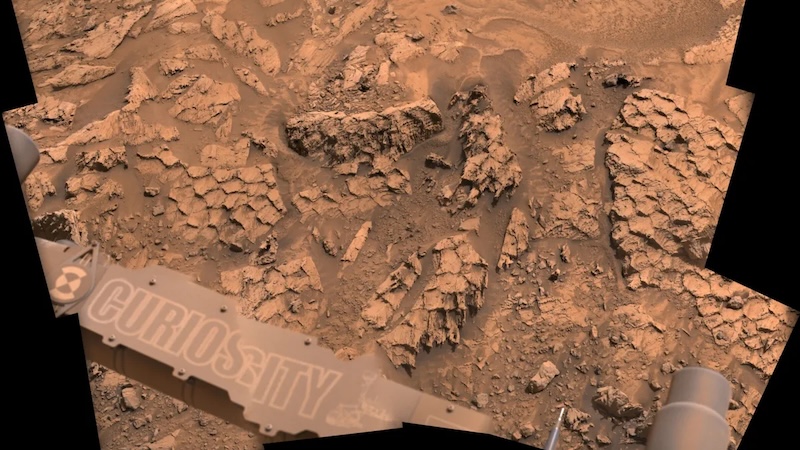
Curiosity also recently found some unusual dragon scales formations in Gale crater. The rover has seen similar ones before, but not this many in one location. This is the largest amount of these scales ever seen so far. Curiosity came across them near Antofagasta, a relatively young, 33-foot (10-meter) wide impact crater located on the slopes of Mount Sharp.
Abigail Fraeman, a planetary scientist at the Jet Propulsion Laboratory, said:
Many of the rocks we’ve driven over have these incredible textures, thousands of honeycomb-shaped polygons crisscross their surface. We’ve seen polygon-patterned rocks like these before, but they didn’t seem quite this dramatically abundant.
Scientists don’t yet know exactly how these features formed. But similar ones seen before were most likely created by drying mud. So they could have formed as the lake or other small bodies of water dried up billions of years ago in a wet-dry cycle.
Bottom line: NASA’s Curiosity rover has found yet more evidence for an ancient lake on Mars. Metallic minerals in preserved rock ripples provide the clues.
Via Los Alamos National Laboratory
Read more: New organics on Mars raise questions about ancient life
Read more: Curiosity rover spots signs of ancient megafloods on Mars
The post Ancient lake on Mars? Rover finds strong new evidence first appeared on EarthSky.










Related Posts

Stay Informed With the Latest & Most Important News
Previous Post
Next Post





Advertisement
-
 01Two Black Holes Observed Circling Each Other for the First Time
 -
 02From Polymerization-Enabled Folding and Assembly to Chemical Evolution: Key Processes for Emergence of Functional Polymers in the Origin of Life
 -
 03Astronomy 101: From the Sun and Moon to Wormholes and Warp Drive, Key Theories, Discoveries, and Facts about the Universe (The Adams 101 Series)
 -
 04True Anomaly hires former York Space executive as chief operating officer
 -
 05Φsat-2 begins science phase for AI Earth images
 -
 06Hurricane forecasters are losing 3 key satellites ahead of peak storm season − a meteorologist explains why it matters
 -
 07Binary star systems are complex astronomical objects − a new AI approach could pin down their properties quickly