
Now Reading: Artemis 2 is a benchmark in our space exploration program — and it depends on steady NASA funding
-
01
Artemis 2 is a benchmark in our space exploration program — and it depends on steady NASA funding

Artemis 2 is a benchmark in our space exploration program — and it depends on steady NASA funding

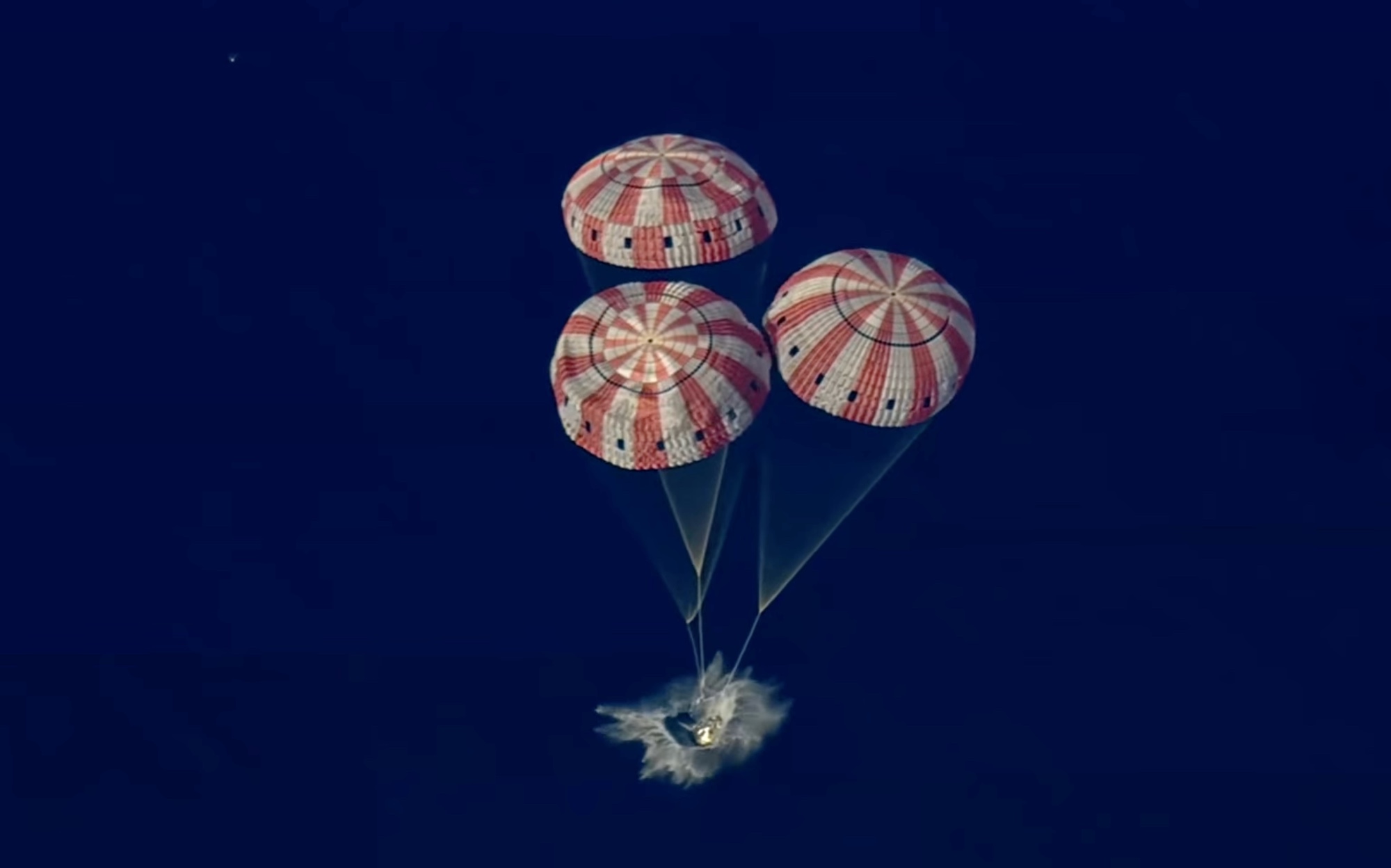

Now that the Artemis 2 mission has been successfully completed, it’s worth taking a look at where NASA stands on the role of humans in exploring space and what its path forward should be. Doing this is especially important today, with some people questioning on line whether we can afford the cost of sending humans to the moon. At the same time, the president’s recently released proposed budget would cut NASA by 25% and NASA science by almost 50%, while still trying to maintain the program of sending humans to the moon and beginning planning for Mars.
NASA’s stated goals for having humans in space form the three legs of a stool — carrying out science, inspiring the public and especially the youth and raising our standing on the international stage.
I’m an active space scientist, and I tend to focus on the science that humans can do on the moon or Mars. The top-level science goals today focus largely on life in the universe — finding out whether there is life elsewhere and how common (or rare) it might be, and understanding what makes a planet habitable, whether by microbes or other life. This involves understanding life on Earth, exploring our own solar system in detail and learning about the thousands of exoplanets that have been discovered orbiting other stars.
Exploring the moon helps us understand how the solar system formed, what it formed from, and what its history has been. Beyond the moon, Mars is the closest planet to us that could harbor life; it meets all of the environmental conditions for supporting life today in isolated niches or having supported life on the surface in the past. But the questions that we’re asking today about both objects almost certainly will require the kind of detailed geologic investigation that can only be done on the surface by people — after all, we have the most sophisticated remote-sensing capabilities (our eyes) and the most-capable computer (our brain) that far outstrip anything we could design and build today.
There are practical applications in what NASA does as well. These range from developing new fuels and airplane concepts in aeronautics to observing, understanding and predicting space weather that can have a major deleterious effect on orbiting satellites and on the surface power grid.
I haven’t seen polls that specifically address inspiration. But it’s clear that people are inspired by space. Missions like Artemis 2 — and robotic missions like the Hubble Space Telescope, James Webb Space Telescope, the Mars rovers, the New Horizons Pluto flyby — engage and excite the public and encourage people to go into STEM fields to maintain our international leadership there. Carl Sagan’s COSMOS TV series that explored our universe in 1980 was the most-watched documentary in PBS history and was seen by more than 500 million people, and Neil deGrasse Tyson’s version of it in 2014 was seen by more than 135 million people in 171 countries and in 45 different languages. Even the people questioning whether we should continue Artemis talk about how awe-inspiring it was to them personally to see people going out past the moon and to see the images they beamed back of the Earth and moon.
At a time when the country is so divided politically, and our international standing is taking such a big hit worldwide, it helps to have something as positive as the Artemis program.
NASA is doing exactly what federally funded research and development should be doing — investing in areas where there is not a viable business case yet and developing technology that will get significant use in the future. Although many have suggested that we could now turn these activities over to commercial entities like SpaceX or Blue Origins, it’s unlikely that they would make the investments necessary to continue the development needed by the country. It’s hard, for example, to imagine them carrying out science exploration that doesn’t specifically move their own agendas forward.
Are we spending too much on space exploration? NASA’s budget is only about 0.3% of the federal budget. Compare this with our annual federal deficit which is 20-30% of the budget; even the service of our debt takes another 10-15%. If we weren’t spending money on NASA, it wouldn’t free up money to spend on things that we currently aren’t doing, and it wouldn’t make a significant dent in the annual deficit. I’m not going to make the argument that, without NASA, we wouldn’t have things like Tang; however, there is roughly a 7-to-1 payback on investments made in NASA. But that’s not why we are exploring space — the payback is not one of the legs of NASA’s three-legged stool.
Should NASA stop doing robotic exploration of our solar system and beyond and focus entirely on human exploration? Human exploration stands on the shoulders of the robotic program. The robotic program allows us to understand the environments on the planets and enables us to carry out the human program. And it allows us to define the science goals for human missions and, after the missions, to interpret the scientific results that come from them. Each approach clearly has its own advantages, and if they work together we can have a truly compelling exploration program.
Going forward, we will look for NASA to maintain steady progress in the Artemis program to lead to a safe landing on the lunar surface and, in the hopefully not-too-distant future, trips to Mars. We’ll also look to see a continuation of a robust robotic space exploration program, both for its own science and in support of human missions. These activities will require that NASA’s budget continue at its current level. NASA also should work to develop an appropriate partnership with commercial entities, with each doing what they’re best at, rather than turning over some activities exclusively to industry.
Exploring the universe around us — our own planet, the Sun and solar system and planets, stars and galaxies beyond our solar system — takes advantage of the innate curiosity that makes us human. NASA — alone and in collaboration with commercial and international partners — can make great strides in doing this, but only if we do not shortchange that effort.
Bruce Jakosky is a senior research scientist in space science at the University of Colorado Boulder and the University of Washington in Seattle. He has 50 years of experience in exploring Mars and was the principal investigator for the MAVEN spacecraft mission to Mars from initial concept through seven years of on-orbit operations.










Related Posts

Stay Informed With the Latest & Most Important News
Previous Post
Next Post



Advertisement
-
 01Two Black Holes Observed Circling Each Other for the First Time
 -
 02From Polymerization-Enabled Folding and Assembly to Chemical Evolution: Key Processes for Emergence of Functional Polymers in the Origin of Life
 -
 03Astronomy 101: From the Sun and Moon to Wormholes and Warp Drive, Key Theories, Discoveries, and Facts about the Universe (The Adams 101 Series)
 -
 04True Anomaly hires former York Space executive as chief operating officer
 -
 05Φsat-2 begins science phase for AI Earth images
 -
 06Hurricane forecasters are losing 3 key satellites ahead of peak storm season − a meteorologist explains why it matters
 -
 07Binary star systems are complex astronomical objects − a new AI approach could pin down their properties quickly