
Now Reading: Comet PanSTARRS approaches Earth on April 26. Here’s how to catch it in satellite imagery this weekend
-
01
Comet PanSTARRS approaches Earth on April 26. Here’s how to catch it in satellite imagery this weekend

Comet PanSTARRS approaches Earth on April 26. Here’s how to catch it in satellite imagery this weekend

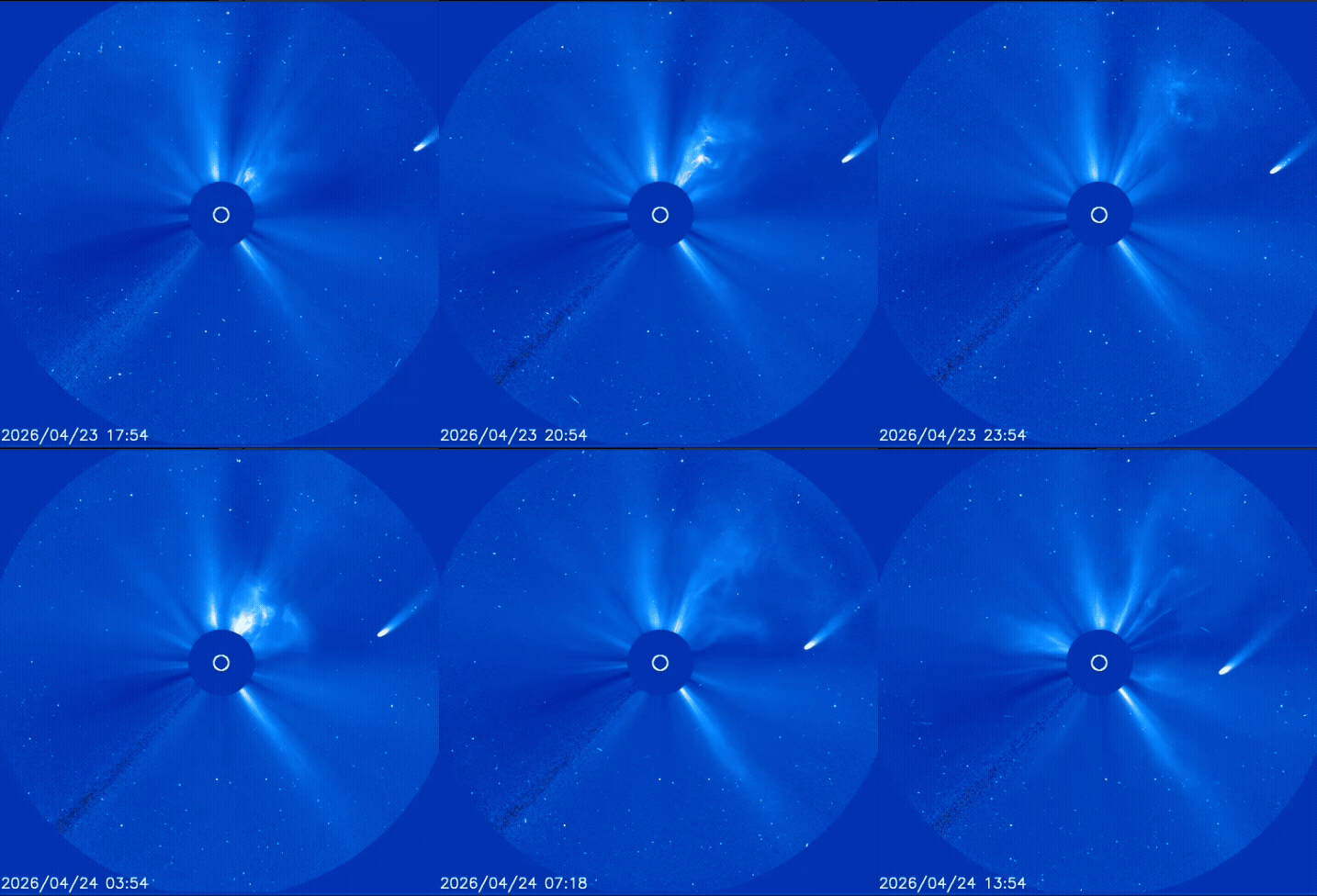
Comet C/2025 R3 (PanSTARRS) continues to brighten ahead of its closest approach to Earth on April 26, and you can watch it fly between the sun and Earth through the eyes of an orbiting spacecraft this weekend.
Having survived its closest pass to the sun during perihelion on April 19, Comet PanSTARRS is now en route to its nearest brush with Earth, which will see it travel a little over 45 million miles (72 million kilometers) from our planet on April 26, according to NASA.
You can follow Comet PanSTARRS progress by keeping up to date with LASCO’s latest imagery on the SOHO website and via the NOAA Space Weather Prediction Center, which provides additional imagery captured by the agency’s GOES-19 satellite.
The coming days will see the comet blaze a path from the upper right quadrant to the lower half of the LASCO instrument’s field of view, as SOHO watches on with an uninterrupted vantage point 930,000 miles (1.5 million kilometers) from Earth at the First Lagrangian Point (L1), a gravitationally stable point between our planet and the sun.
LASCO’s field of view encompasses a sun-facing region 32 times the diameter of our parent star, which itself occupies the center of the frame, hidden behind the instrument’s occulter disk that appears black in the instrument’s images.
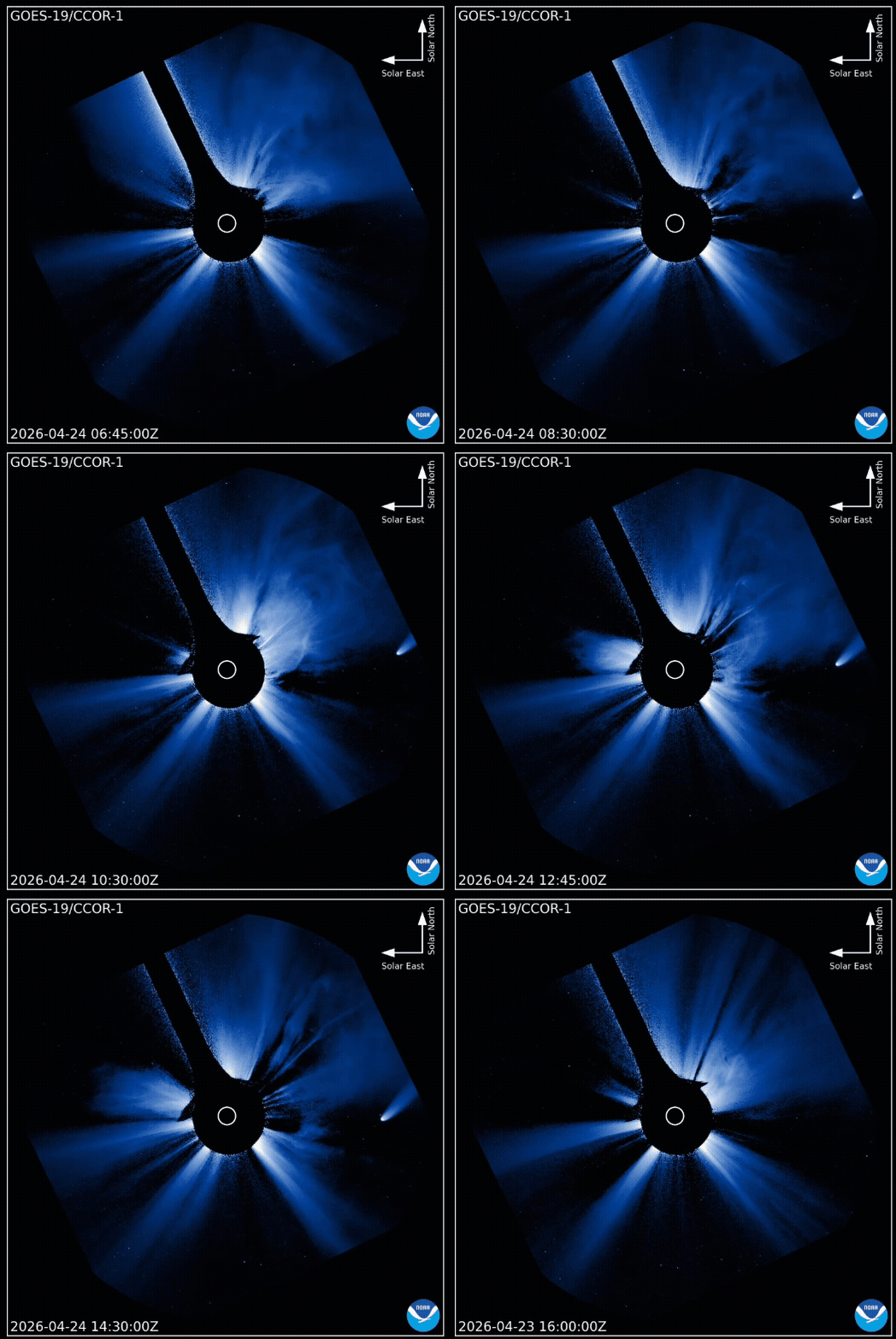
The past day has seen the sun unleash a series of powerful solar flares, including two X-class flares and corresponding eruptions from a sunspot region located on the western limb that caused radio blackouts on Earth, while casting masses of plasma into space known as coronal mass ejections.
Comet Pan-STARRS currently has a brightness, or magnitude of around +4.5 according to the Comet Observation Database run by the Crni Vrh Observatory in Slovenia, which would make it visible to the naked eye as a hazy patch of light that becomes easier to define through binoculars. The comet is only visible from the southern hemisphere following its perihelion passage.
Editor’s Note: If you capture an image of Comet PanSTARRS and want to share it with Space.com’s readers, then please send your photo(s), comments, and your name and location to spacephotos@space.com.










Related Posts
Stay Informed With the Latest & Most Important News
Previous Post
Next Post




Advertisement
-
 01Two Black Holes Observed Circling Each Other for the First Time
 -
 02From Polymerization-Enabled Folding and Assembly to Chemical Evolution: Key Processes for Emergence of Functional Polymers in the Origin of Life
 -
 03Astronomy 101: From the Sun and Moon to Wormholes and Warp Drive, Key Theories, Discoveries, and Facts about the Universe (The Adams 101 Series)
 -
 04True Anomaly hires former York Space executive as chief operating officer
 -
 05Φsat-2 begins science phase for AI Earth images
 -
 06Hurricane forecasters are losing 3 key satellites ahead of peak storm season − a meteorologist explains why it matters
 -
 07Binary star systems are complex astronomical objects − a new AI approach could pin down their properties quickly