
Now Reading: Lunar Outpost raises $30 million
-
01
Lunar Outpost raises $30 million



WASHINGTON — Lunar Outpost, a developer of lunar rovers, has raised $30 million as it works to revamp designs to meet NASA’s revised Artemis architecture.
The Colorado-based company announced May 7 it closed a $30 million oversubscribed Series B round, led by Industrious Ventures with participation from Type One Ventures, Eniac Ventures, Promus Ventures, Reliable Equity and others.
“Lunar Outpost is moving beyond early missions to scaled, repeatable deployment,” Taylor Sargent, partner at Industrious Ventures, said in a statement. “They’ve proven they can build for one of the most challenging environments imaginable, with significant demand across government programs and commercial customers.”
The round came together quickly. The company’s earlier seed and Series A rounds took four to six months to complete, Justin Cyrus, founder and chief executive of Lunar Outpost, said in an interview. “This fundraising round came together in less than five weeks,” he said.
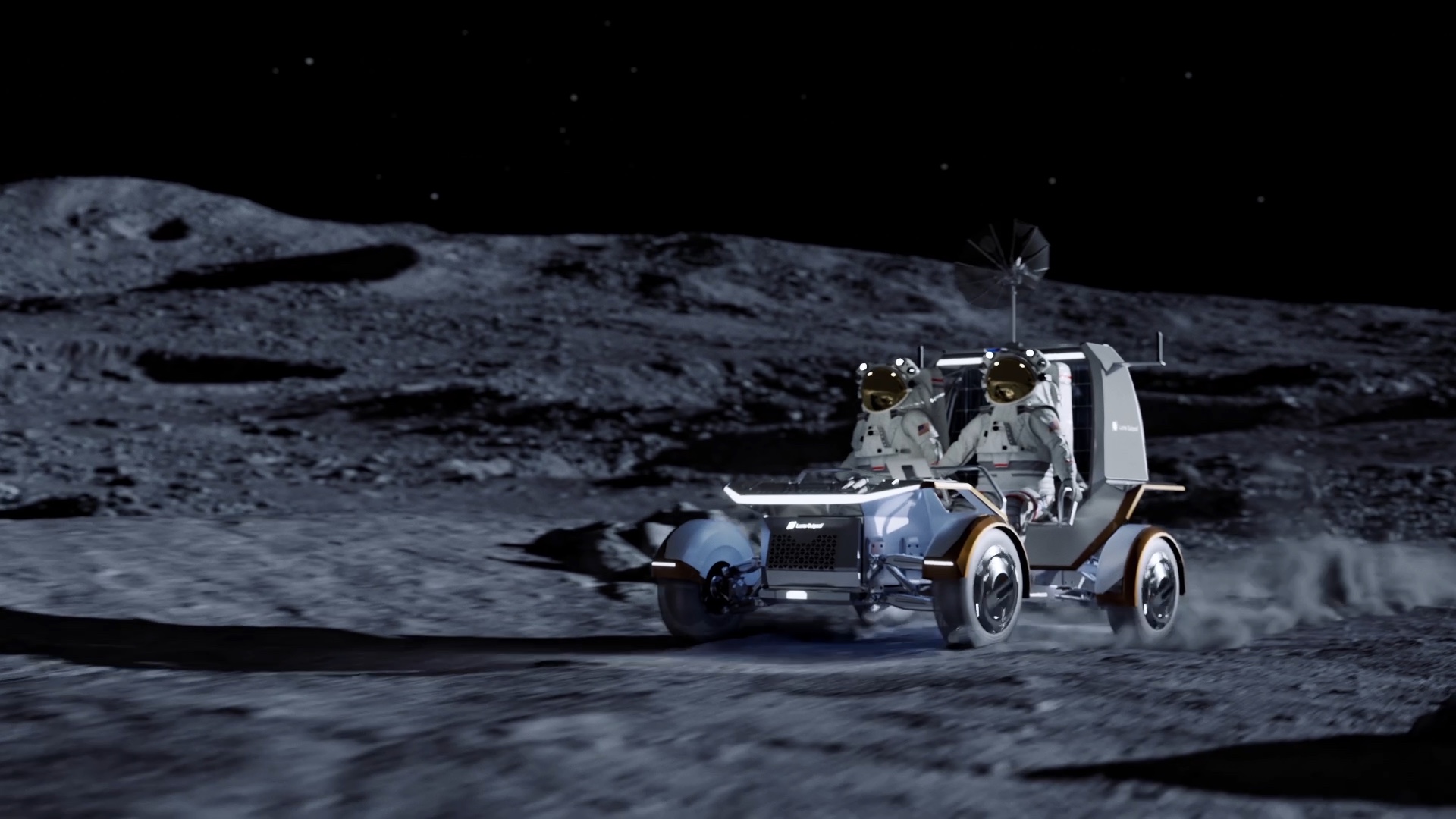
Lunar Outpost is best known for its line of lunar rovers. That includes Eagle, a design it developed for NASA’s Lunar Terrain Vehicle (LTV) program. That program planned to acquire services from one or more companies for advanced lunar rovers for later Artemis missions.
However, at NASA’s Ignition event March 24, where the agency shifted its focus to a lunar base, the agency said it would not select the rover designs submitted by Lunar Outpost and two other competitors, Astrolab and Intuitive Machines. Instead, it asked the three companies to propose simpler designs that could be ready by 2028.
“NASA, at the Ignition event, basically said you have to have a rover ready to go at the end of 2027,” Cyrus said. “So, we said, ‘Understood. We’re going to do everything in our power to make that happen.’”
The company had been talking to investors about a new round leading up to the Ignition event, but didn’t start fundraising until after it. “Once Ignition happened, we kicked off the round in response to it, and the response was fantastic,” he said.
“It does help that there are beautiful photos coming back from Artemis 2 while we’re fundraising. It does help that real missions are happening around the moon,” he said. “I think that really got investors excited.”
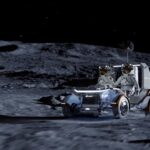
The company, in addition to the fundraising, has been working on a new rover design called Pegasus to respond to NASA’s revised requirements. “It’s safe, reliable human mobility that can livestream back to Earth, that can provide the scouting, the site selection, do a little bit of surface site preparation,” he said.
The company has not gone into details about Pegasus, but Cyrus said the new design uses 72% of the elements of Eagle, its LTV rover, ranging from sensors and avionics to tires. The company also borrowed designs from the Apollo-era lunar rover as well as the Mobile Autonomous Prospecting Platform (MAPP), the company’s small robotic lunar rover.
Since Ignition, the company has worked through designs and built a “human-in-the-loop” mockup tested by former NASA astronaut John Grunsfeld. Cyrus said the company has submitted its proposal to NASA for Pegasus and expects a response later this month.
The funding is helping Lunar Outpost procure long-lead items for Pegasus and expand its facilities. “It allows us to derisk the program,” he said, “and it allows us to accelerate our timelines to hopefully contribute to NASA’s moon base initiative in a big way.”
It also supports other robotics work for both NASA and the Pentagon. “This fundraise positions us well to go meet the rapidly expanding market,” he said. “It accelerates Pegasus, but it also allows us to take on larger programs.”
While the current focus is on Pegasus as well as its smaller MAPP rovers, Cyrus said the company was not shelving Eagle. “Eagle is still our long-term goal to build out the large-scale industrial base in space,” supporting work on habitats, power systems and other infrastructure on the moon NASA plans for later phases of the lunar base. “It’s not dead. It just got moved to phase two.”










Related Posts

Stay Informed With the Latest & Most Important News
Previous Post
Next Post


Advertisement
-
 01Two Black Holes Observed Circling Each Other for the First Time
 -
 02From Polymerization-Enabled Folding and Assembly to Chemical Evolution: Key Processes for Emergence of Functional Polymers in the Origin of Life
 -
 03Astronomy 101: From the Sun and Moon to Wormholes and Warp Drive, Key Theories, Discoveries, and Facts about the Universe (The Adams 101 Series)
 -
 04True Anomaly hires former York Space executive as chief operating officer
 -
 05Φsat-2 begins science phase for AI Earth images
 -
 06Hurricane forecasters are losing 3 key satellites ahead of peak storm season − a meteorologist explains why it matters
 -
 07Binary star systems are complex astronomical objects − a new AI approach could pin down their properties quickly