
Now Reading: SatVu zooms in energy facilities in Cuba, India and Australia
-
01
SatVu zooms in energy facilities in Cuba, India and Australia


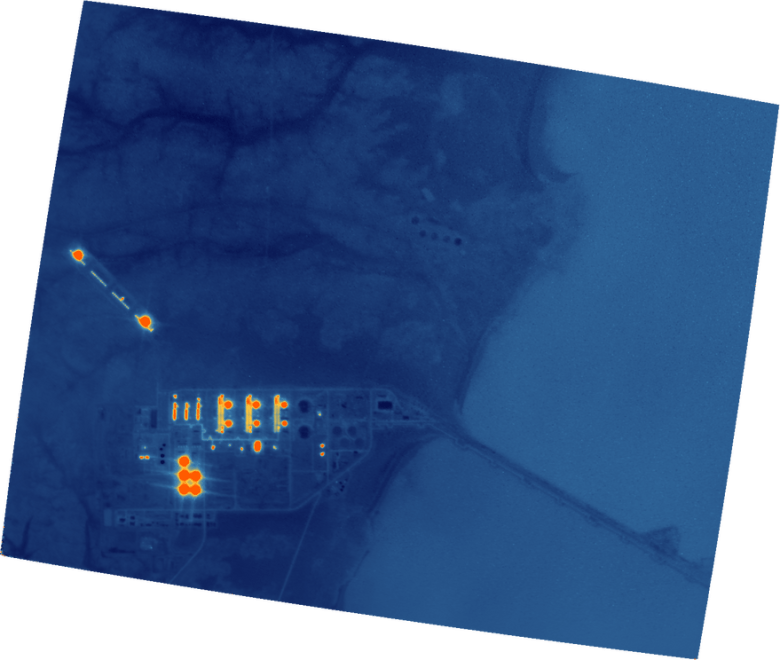
SAN FRANCISCO – British startup SatVu released imagery from HotSat-2, a thermal satellite built to keep tabs on energy infrastructure.
HotSat-2, built by Surrey Satellite Technology Ltd., is the second satellite in SatVu’s commercial high-resolution thermal-imaging constellation. The first, HotSat-1, failed six months after launch.
HotSat-2 images released May 7 show refining of domestic crude oil in Cuba, reduced operational capacity in India at the world’s largest refinery during the disruption in the Strait of Hormuz, and continuous production at one of the world’s largest liquid natural gas facilities in Australia.
SatVu was founded in 2016 to provide thermal data that reveals utilization and operational status of energy facilities. A SpaceX Transporter rideshare sent HotSat-2 aloft in late March.
“With HotSat-2 in orbit, that capability is operational,” Anthony Baker, SatVu co-founder and CEO, said in a statement. “These images show what independent thermal data delivers in the markets that need it most – sanctions monitoring, energy security, and the operational state of the assets moving global commodities.”

Baker added that SatVu sees a strong global appetite for thermal data given its applications for national and economic security and environmental monitoring.
The HotSat-2 image of Cuba’s Hermanos Díaz refinery was captured on April 25, two days before the Cuban government announced refinement of domestic crude amid tightening of U.S. sanctions.
“The Cuba image – captured before public acknowledgment of the refinery’s restart – illustrates exactly what thermal intelligence makes possible: independent verification of activity in places that are otherwise difficult to monitor,” Scott Herman, SatVu chief technology officer, said in a statement. “This new data layer enables a higher level of operational understanding and validation: confirming what is running, when, and at what intensity.”

Commodity traders, energy operators, intelligence agencies and environmental regulators can use thermal imagery to better understand the market, assess risk and make strategic decisions, Herman added.
HotSat-2’s successor, HotSat-3, is scheduled to launch on a SpaceX Transporter rideshare by the end of the year. A SatVu investment round completed in February provided funding for satellite launches and operations.










Related Posts

Stay Informed With the Latest & Most Important News
Previous Post
Next Post





Advertisement
-
 01Two Black Holes Observed Circling Each Other for the First Time
 -
 02From Polymerization-Enabled Folding and Assembly to Chemical Evolution: Key Processes for Emergence of Functional Polymers in the Origin of Life
 -
 03Astronomy 101: From the Sun and Moon to Wormholes and Warp Drive, Key Theories, Discoveries, and Facts about the Universe (The Adams 101 Series)
 -
 04True Anomaly hires former York Space executive as chief operating officer
 -
 05Φsat-2 begins science phase for AI Earth images
 -
 06Hurricane forecasters are losing 3 key satellites ahead of peak storm season − a meteorologist explains why it matters
 -
 07Binary star systems are complex astronomical objects − a new AI approach could pin down their properties quickly