
Now Reading: Lunar Robots: NASA Spotlights Moon Base at 2026 FIRST Robotics Competition
-
01
Lunar Robots: NASA Spotlights Moon Base at 2026 FIRST Robotics Competition


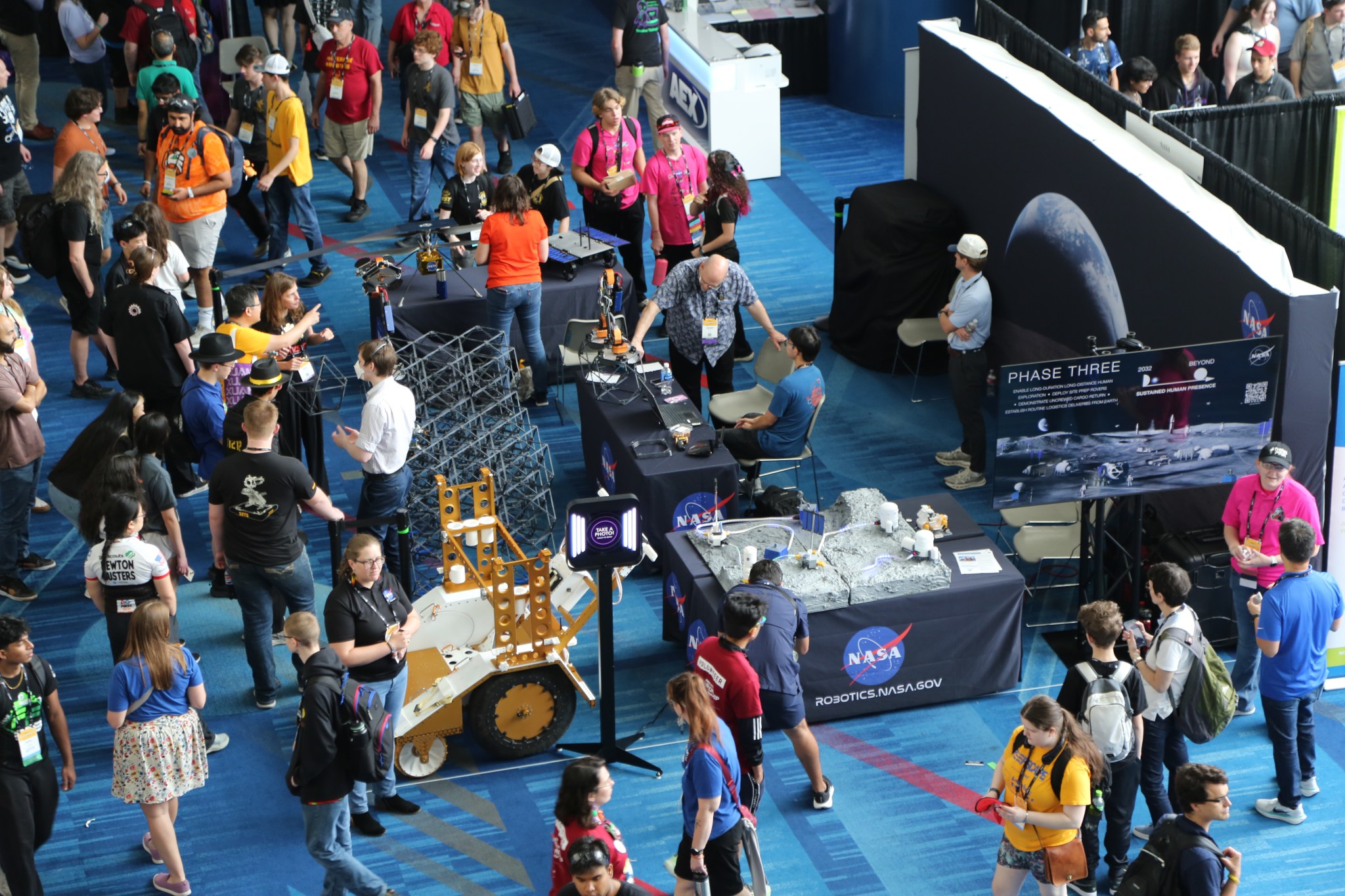
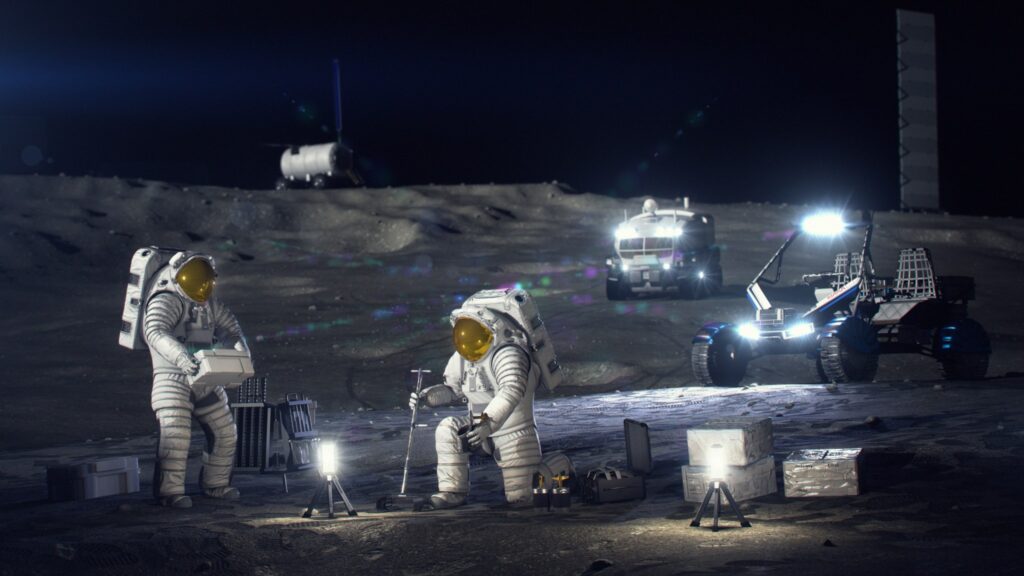
Robotics will play a critical role in NASA’s ambitious plan to establish a long-term presence on the Moon, presenting opportunities for the next generation of engineers, technologists, and innovators to contribute to a bold vision for the future.
That was the agency’s message to students, partners, and industry leaders at the 2026 FIRST Robotics World Championship in Houston, where more than 1,000 student teams convened for exciting competitions and hands-on experiences.
NASA connected directly with the future workforce at the event, engaging more than 51,000 students, parents, and mentors through interactive exhibits and discussions. The agency highlighted its plan to construct a permanent lunar outpost – Moon Base – that will serve as a hub for lunar exploration, scientific research, and technology demonstration, laying the foundation for future missions to Mars and beyond. Phase 1 of NASA’s Moon Base plan centers around a rapid series of robotic and early uncrewed missions to scout, experiment, and prepare for surface operations ahead of crewed Artemis missions. That includes an accelerated cadence of CLPS (Commercial Lunar Payload Services) flights, with up to 30 robotic lunar landings targeted for 2027, to expedite the delivery of science and technology payloads including rovers, hoppers, and drones.

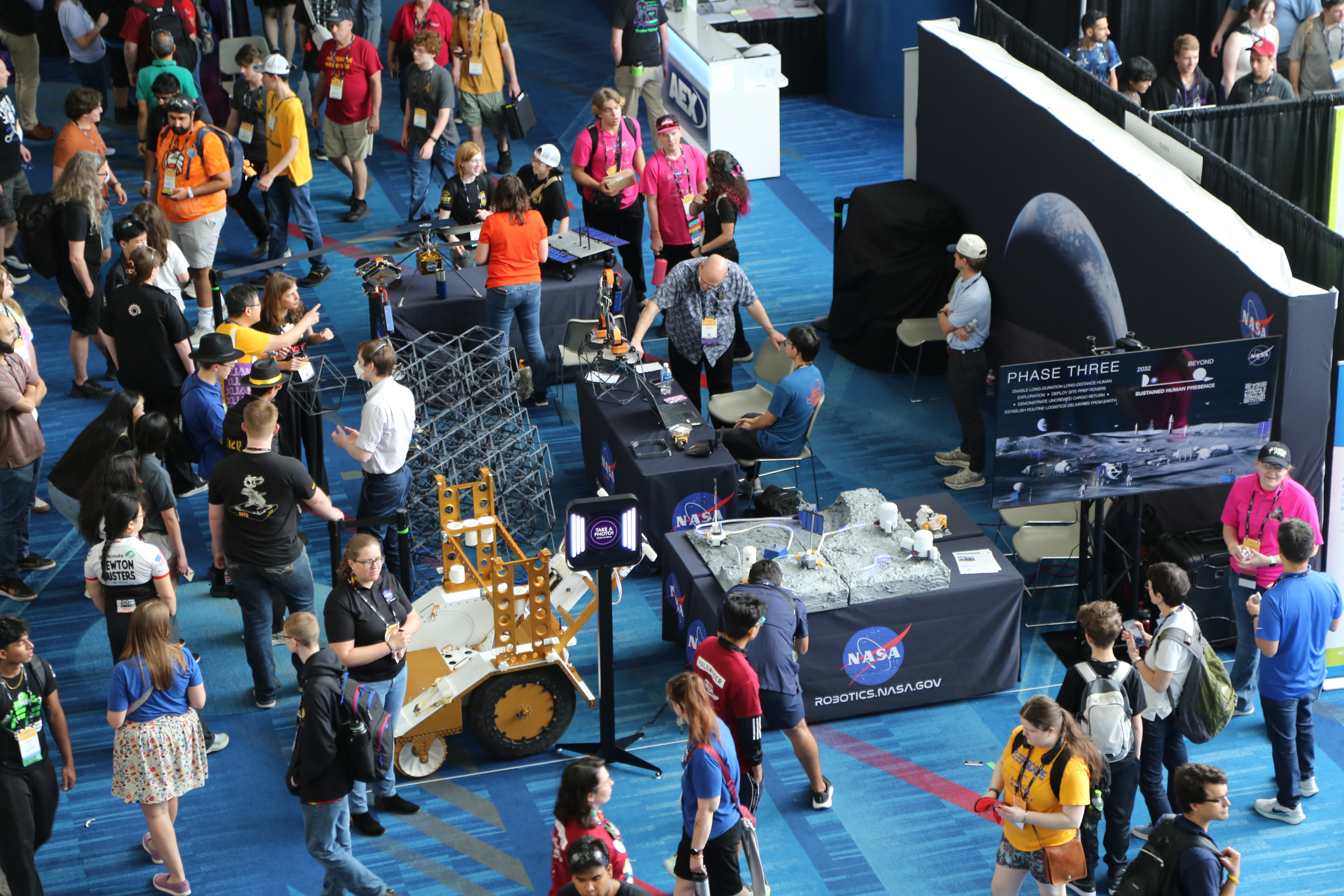
A Moon Base model was a focal point of NASA’s exhibit. Other displays highlighted key innovations such as:
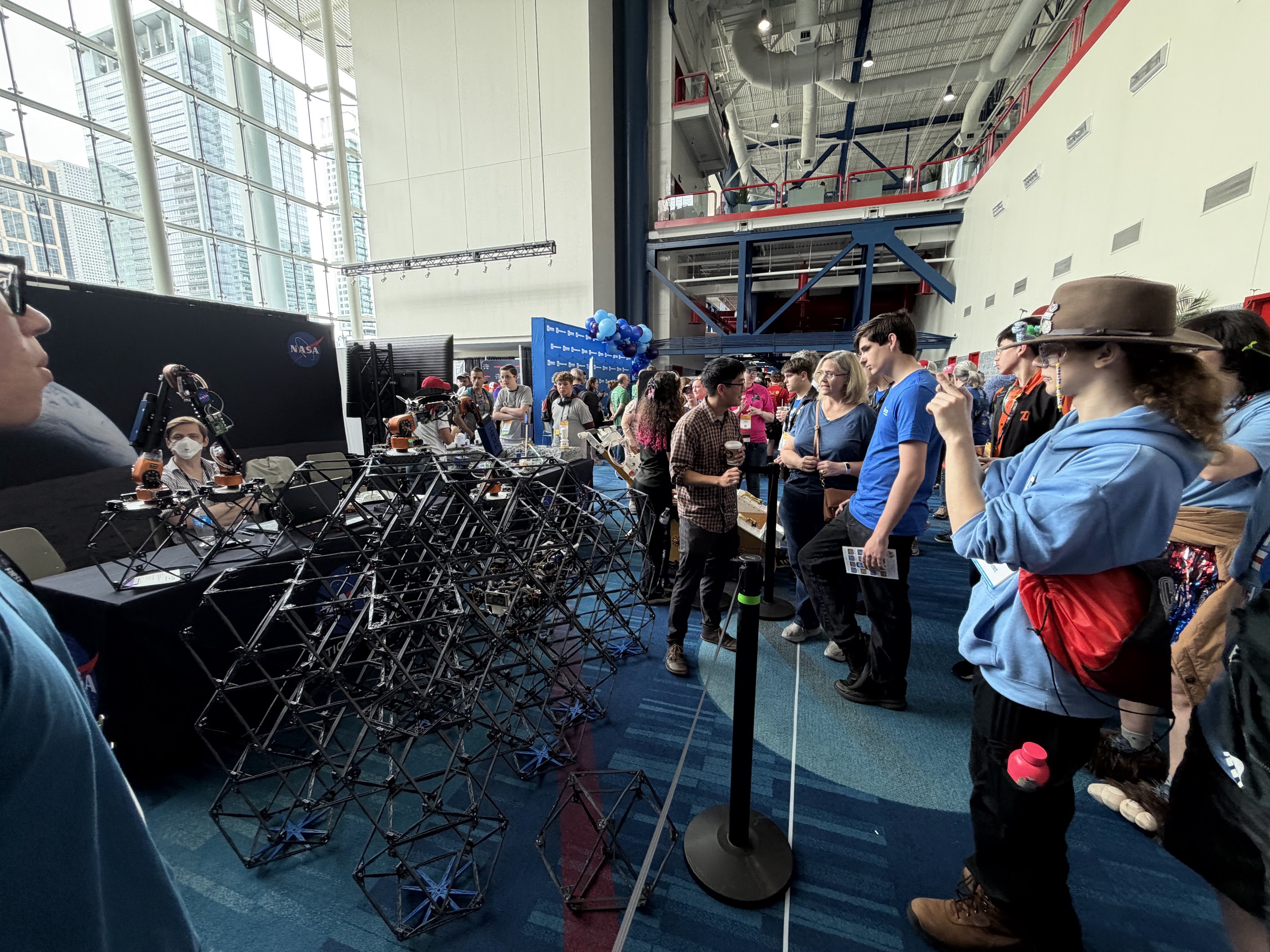
- Automated Reconfigurable Mission Adaptive Digital Assembly Systems: A modular construction system of small robots and smart algorithms that can autonomously assemble large-scale infrastructure in space, such as solar power, communications, and habitat systems. This system could reduce reliance on launching fully assembled hardware from Earth, supporting sustainable deep space exploration.
- Cooperative Autonomous Distributed Robotic Exploration: A trio of small lunar rovers designed to explore together autonomously, collecting data that would be impossible for a single robot to gather. Their success could pave the way for multirobot missions that can help inform future science objectives, navigate hazardous terrain, and support astronaut activities.
- Skyfall Mars Helicopters: Building on the success of the Ingenuity Mars Helicopter, which completed 72 historic flights at Mars’ Jezero Crater, the SkyFall helicopters would also serve as aerial scouts for scientists and mission planners, paving the way for human exploration of the Red Planet.
Multiple NASA centers participated in the event, including Johnson Space Center in Houston; Kennedy Space Center in Florida; Langley Research Center in Virginia; Ames Research Center in California; Michoud Assembly Facility in New Orleans; Armstrong Flight Research Center in Edwards, California; Glenn Research Center in Cleveland; Goddard Space Flight Center in Greenbelt, Maryland; White Sands Test Facility in Las Cruces, New Mexico; and Wallops Flight Facility in Wallops Island, Virginia. Each brought unique technologies and expertise to the exhibit floor.
Since 1996, NASA has supported and mentored FIRST Robotics teams across the country. This year, NASA sponsored more than 160 FIRST Robotics Teams – 50 of which also had a NASA mentor. NASA Johnson directly mentored six teams, with two of them making it all the way to the FIRST Championship. Additionally, NASA supported the FIRST Championship with a Mobile Machine Shop where teams could bring broken parts and have NASA machinists help them with repairs. The shop completed over 600 jobs for the teams during the event.
NASA’s presence at the championship not only provides a platform for sharing its ambitious plans but also inspires students to envision themselves as part of the NASA team, working to achieve the near-impossible.










Related Posts

Stay Informed With the Latest & Most Important News
Previous Post
Next Post


Advertisement
-
 01Two Black Holes Observed Circling Each Other for the First Time
 -
 02From Polymerization-Enabled Folding and Assembly to Chemical Evolution: Key Processes for Emergence of Functional Polymers in the Origin of Life
 -
 03Astronomy 101: From the Sun and Moon to Wormholes and Warp Drive, Key Theories, Discoveries, and Facts about the Universe (The Adams 101 Series)
 -
 04True Anomaly hires former York Space executive as chief operating officer
 -
 05Φsat-2 begins science phase for AI Earth images
 -
 06Hurricane forecasters are losing 3 key satellites ahead of peak storm season − a meteorologist explains why it matters
 -
 07Binary star systems are complex astronomical objects − a new AI approach could pin down their properties quickly