
Now Reading: Next Cargo Mission Progress MS-34 Set to Launch with Supplies and New Spacesuit for ISS
-
01
Next Cargo Mission Progress MS-34 Set to Launch with Supplies and New Spacesuit for ISS

Next Cargo Mission Progress MS-34 Set to Launch with Supplies and New Spacesuit for ISS

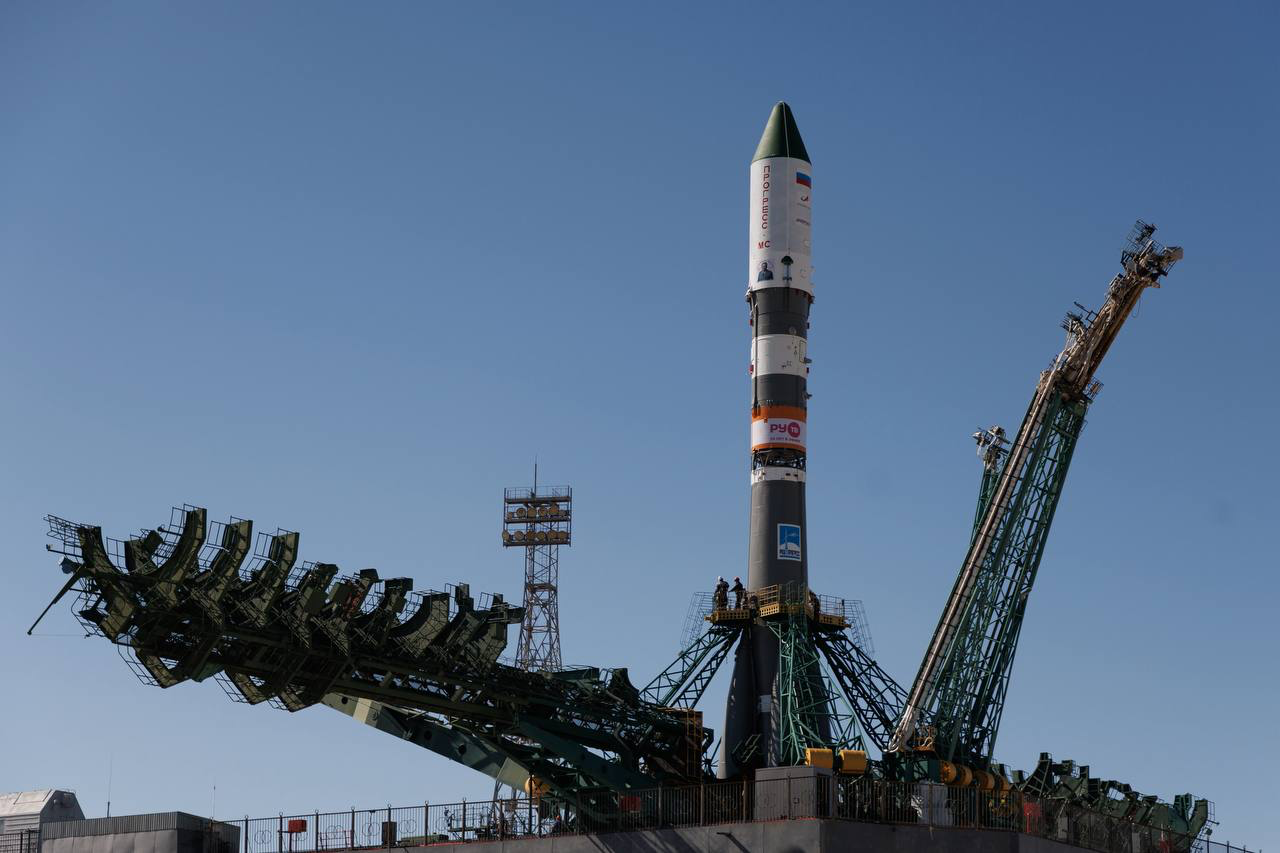

Just two weeks after the successful CRS NG-24 cargo mission to the International Space Station (ISS), another significant delivery is on the horizon. The Progress MS-34 spacecraft, also referred to as Progress 95 by NASA, is slated for launch on Saturday, April 25, at 22:21 UTC. It will take off from Site 31/6 at Baikonur Cosmodrome aboard a Soyuz 2.1a rocket.
Progress MS-34 is set to follow a northeastern trajectory, entering a low-Earth orbit that matches the ISS’s 51.6-degree inclination to the equator. The spacecraft is expected to reach the ISS after a carefully choreographed journey lasting around 48 hours, with docking anticipated on Tuesday, April 28, at 00:00 UTC. The planned docking point is the aft port of the Zvezda module on the Russian section of the space station.
Before MS-34 embarks on its mission, the previous cargo ship, Progress MS-32, successfully undocked from the Zvezda module on April 20 at 22:08 UTC. This mission had previously facilitated the disposal of waste from the ISS, marking a routine step in maintaining the station’s cleanliness and functionality.
The upcoming Progress MS-34 mission will deliver an impressive 2,500 kilograms of supplies, including essential food, fuel, water, sanitary products, oxygen, equipment, and scientific experiments. Notably, the spacecraft will transport a new Orlan spacesuit, which very important for astronauts conducting spacewalks from the Russian segment of the ISS.
Spacewalks, or extravehicular activities (EVA), play an essential role in the assembly and upkeep of the station. To date, the only EVA conducted aboard the ISS in 2026 was a U.S. operation, while the last Russian segment EVA occurred in October 2025. The Orlan spacesuit, a design with roots dating back to the late 1970s, has evolved through several versions and continues to be a vital component of space missions, with the current model debuting in 2017.
In addition to the suit, Progress MS-34 will also facilitate several research initiatives. These include using virtual reality technology to assess how microgravity impacts human vision and spatial orientation, examining stress effects on the immune and nervous systems, and studying bone density loss in space. Other experiments will explore how microorganisms interact with materials aboard the ISS and advance water regeneration techniques.
While docked, Progress MS-34 will also carry out orbital reboost maneuvers, a necessary function to maintain the ISS’s altitude and prepare for future arrivals. The spacecraft is designed to remain attached to the station for approximately seven months before being loaded with waste and undocked for its eventual reentry and destruction upon reentering Earth’s atmosphere.
This launch marks the second Progress mission in 2026 and continues a busy year for Soyuz 2.1a launches. It also represents a noteworthy moment as it follows repairs made to Site 31/6 after damage sustained during the Soyuz MS-28 launch in late November 2025. Following Progress MS-34, the next cargo delivery to the ISS is the CRS-34 mission, scheduled for May 12 from Cape Canaveral, while a further Progress mission, MS-35, is slated for June 16.










Related Posts
Stay Informed With the Latest & Most Important News
Previous Post
Next Post


Advertisement
-
 01Two Black Holes Observed Circling Each Other for the First Time
 -
 02From Polymerization-Enabled Folding and Assembly to Chemical Evolution: Key Processes for Emergence of Functional Polymers in the Origin of Life
 -
 03Astronomy 101: From the Sun and Moon to Wormholes and Warp Drive, Key Theories, Discoveries, and Facts about the Universe (The Adams 101 Series)
 -
 04True Anomaly hires former York Space executive as chief operating officer
 -
 05Φsat-2 begins science phase for AI Earth images
 -
 06Hurricane forecasters are losing 3 key satellites ahead of peak storm season − a meteorologist explains why it matters
 -
 07Binary star systems are complex astronomical objects − a new AI approach could pin down their properties quickly