
Now Reading: Russia launches new Soyuz-5 rocket in pivotal step for space exploration
-
01
Russia launches new Soyuz-5 rocket in pivotal step for space exploration


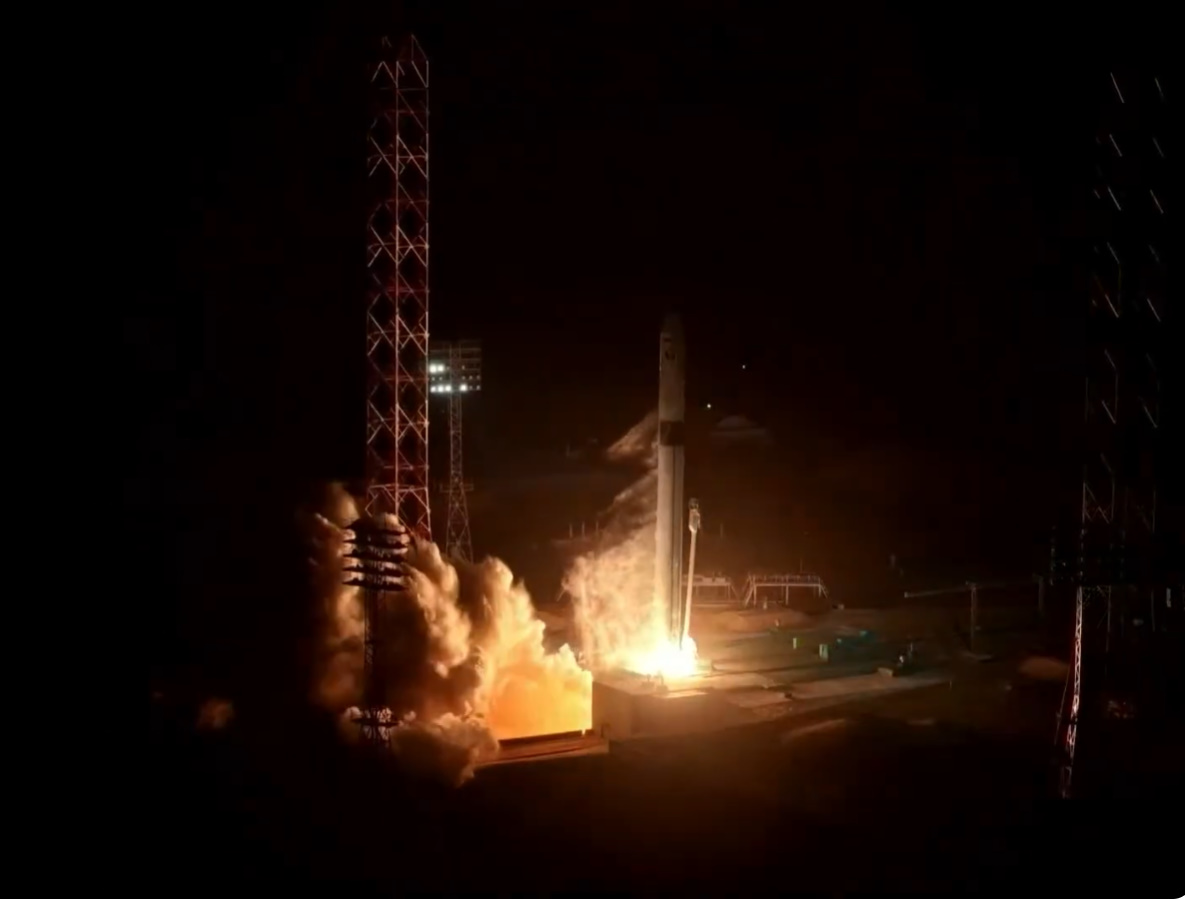

Russia successfully launched its new Soyuz-5 rocket on a suborbital demonstration mission from the Baikonur Cosmodrome on Saturday, marking the craft’s inaugural flight and the first new rocket to debut at the site in several decades. This mission serves as a pivotal step toward the rocket’s future operational capacity.
Unlike many of the country’s current launch vehicles, which are primarily modifications of established designs, Soyuz-5 embarks on a fresh chapter for Russian aerospace. While the modern Angara rocket exists, it is not launched from Baikonur. The introduction of Soyuz-5 signifies a vital component of Russia’s long-term aspirations in space exploration.
Despite its name, which ties it to the storied Soyuz lineage developed from Sergei Korolev’s historic R-7 missile, Soyuz-5 represents a distinct development with no direct relation to earlier models. The existing Soyuz-2 rockets play an important role in Russia’s space operations, facilitating everything from crewed missions to the International Space Station to difficult military and scientific satellite deployments.
Soyuz-5’s project began in 2015 under the codename Fenix, later adopting additional names, Irtysh and Sunkar, each with its own significance—Irtysh being named after a river and Sunkar translating to Falcon in Kazakh. The rocket underwent significant design evolution, becoming essential for Russia to replace the Zenit family of rockets, which lost viability following a decline in relations with Ukraine after the annexation of Crimea in 2014. The last Zenit launch occurred in 2017.
The Zenit rocket, which debuted in 1985, once filled an important role in Russia’s launch portfolio but faced challenges, particularly in government missions compared to successes in commercial sectors. The Soyuz-5 aims to fill a critical gap left by the Zenit’s retirement, using existing launch facilities at Baikonur while minimizing the need for extensive construction.
Soyuz-5 was constructed by RKTs Progress in Samara, and its first assembly commenced in 2019. The rocket stands at 62.5 meters tall and has a diameter of approximately 4.1 meters, slightly larger than Zenit. It’s powered by an RD-171MV engine, known for its high thrust performance, and its second stage equipped with a RD-0124MS engine. The mission, which involved carrying a dummy payload, was anticipated to complete various milestones, including stage separations.
Pre-launch notices indicated that parts of the rocket and payload were expected to re-enter Earth’s atmosphere over the Pacific Ocean following the flight. The successful launch of Soyuz-5 marks a notable achievement for Russia’s space program as it endeavors to solidify its capabilities and ambitions for the future.










Related Posts

Stay Informed With the Latest & Most Important News



Advertisement
-
 01Two Black Holes Observed Circling Each Other for the First Time
 -
 02From Polymerization-Enabled Folding and Assembly to Chemical Evolution: Key Processes for Emergence of Functional Polymers in the Origin of Life
 -
 03Astronomy 101: From the Sun and Moon to Wormholes and Warp Drive, Key Theories, Discoveries, and Facts about the Universe (The Adams 101 Series)
 -
 04True Anomaly hires former York Space executive as chief operating officer
 -
 05Φsat-2 begins science phase for AI Earth images
 -
 06Hurricane forecasters are losing 3 key satellites ahead of peak storm season − a meteorologist explains why it matters
 -
 07Binary star systems are complex astronomical objects − a new AI approach could pin down their properties quickly