
Now Reading: Space Rider set for historic debut as Europe’s first reusable spacecraft with advanced reentry technology
-
01
Space Rider set for historic debut as Europe’s first reusable spacecraft with advanced reentry technology

Space Rider set for historic debut as Europe’s first reusable spacecraft with advanced reentry technology

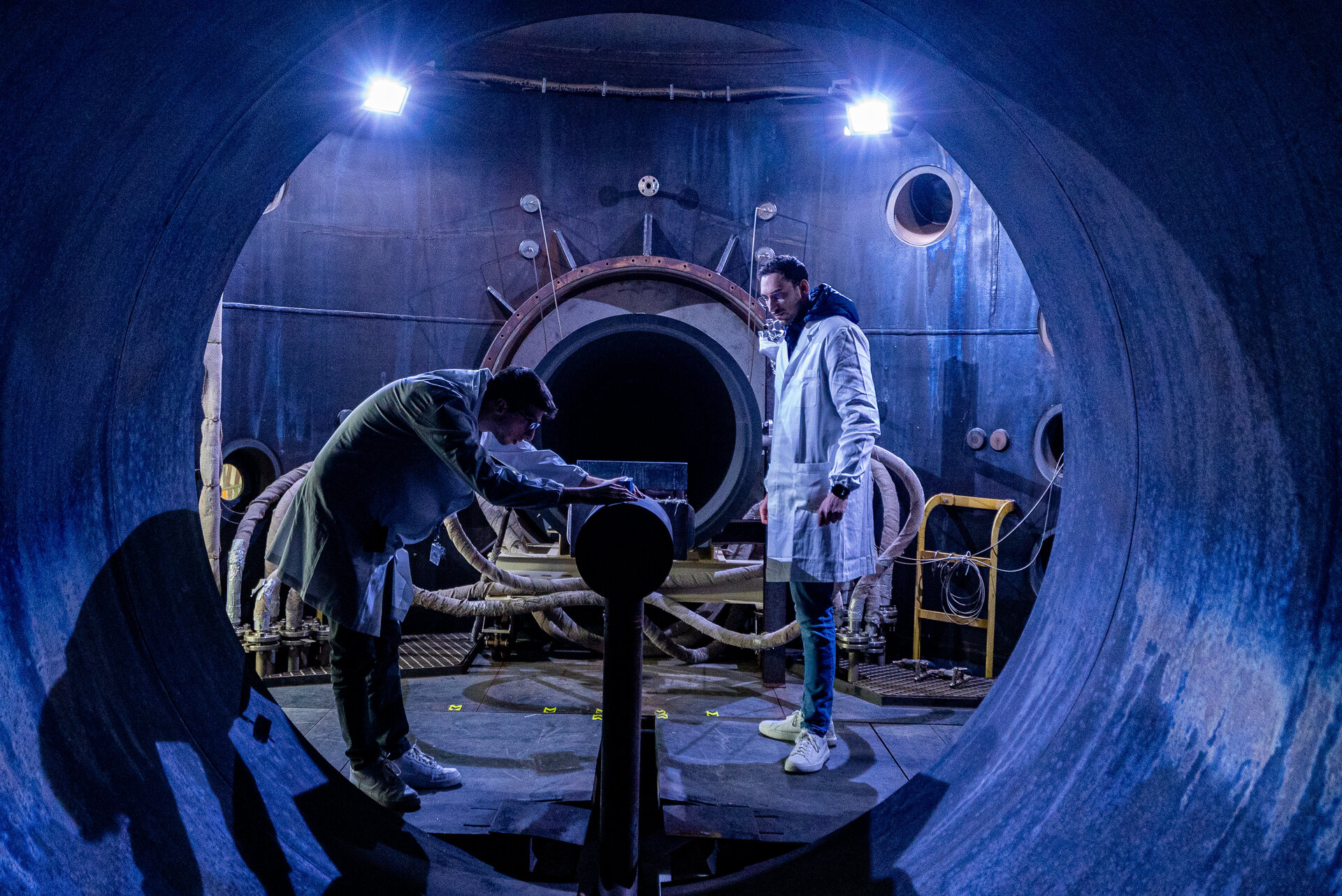

Space Rider, poised to become the inaugural reusable spacecraft developed by Europe, is set to embark on its mission as an uncrewed robotic laboratory, maintaining a low Earth orbit for approximately two months. The vehicle’s cargo bay is designed to accommodate a variety of scientific experiments and operational tasks. At the conclusion of its mission, Space Rider’s reentry module will return to Earth, employing an automated parafoil glide for a controlled landing.
Returning from space presents significant challenges, particularly due to the extreme speeds at which spacecraft re-enter Earth’s atmosphere, often exceeding 27,000 kilometers per hour. At such velocities, friction generates intense heat, ionizing surrounding gases and enveloping the spacecraft in a high-temperature plasma, with temperatures that can surpass 1,600 degrees Celsius. To withstand these conditions, Space Rider is equipped with reusable ceramic tiles on its underside and nose, designed specifically to provide thermal insulation. Comprising 21 tiles crafted from the innovative ISiComp ceramic material, developed by the Italian Aerospace Research Centre (CIRA) in collaboration with Petroceramics, the tiles form a lightweight and durable facade.
In February, these ceramic tiles underwent rigorous testing to evaluate their resilience against the strong vibrations produced by the Vega-C rocket’s engines, employing a 200 kN shaker for simulation. Space Rider’s reentry module is notable for its ability to generate lift akin to an aircraft, facilitating precise landing maneuvers. Instead of traditional wings, the spacecraft’s overall structure itself serves to create lift during descent. To aid in steering, the module is fitted with two flaps, which weigh just 10 kilograms and measure 90 x 70 centimeters, effectively guiding the 3,000-kilogram craft as it navigates the atmosphere at hypersonic speeds. Constructed from the same ISiComp ceramic material, these flaps are reinforced with titanium alloy supports that are manufactured using additive printing techniques.
Testing of the flaps was conducted in CIRA’s plasma wind tunnel, reputed to be the largest in the world. During testing, the flaps were subjected to an arc jet of gas traveling at ten times the speed of sound, simulating reentry conditions. Space Rider’s preparations have thus far shown promising results, having successfully endured simulations that replicate the extreme conditions of reentry, including scenarios involving purposefully damaged tiles—preparing for potential impacts from micro-meteoroids while in orbit.
Further evaluations of Space Rider’s thermal protection system and guidance system are on the horizon as the team gears up for the spacecraft’s qualification for future spaceflights and subsequent reentries.










Related Posts


Stay Informed With the Latest & Most Important News
Previous Post
Next Post



Advertisement
-
 01Two Black Holes Observed Circling Each Other for the First Time
 -
 02From Polymerization-Enabled Folding and Assembly to Chemical Evolution: Key Processes for Emergence of Functional Polymers in the Origin of Life
 -
 03Astronomy 101: From the Sun and Moon to Wormholes and Warp Drive, Key Theories, Discoveries, and Facts about the Universe (The Adams 101 Series)
 -
 04True Anomaly hires former York Space executive as chief operating officer
 -
 05Φsat-2 begins science phase for AI Earth images
 -
 06Hurricane forecasters are losing 3 key satellites ahead of peak storm season − a meteorologist explains why it matters
 -
 07Binary star systems are complex astronomical objects − a new AI approach could pin down their properties quickly