
Now Reading: European Space Agency Boosts Research with Successful 4DSpace-Daedalus Mission Launch
-
01
European Space Agency Boosts Research with Successful 4DSpace-Daedalus Mission Launch

European Space Agency Boosts Research with Successful 4DSpace-Daedalus Mission Launch

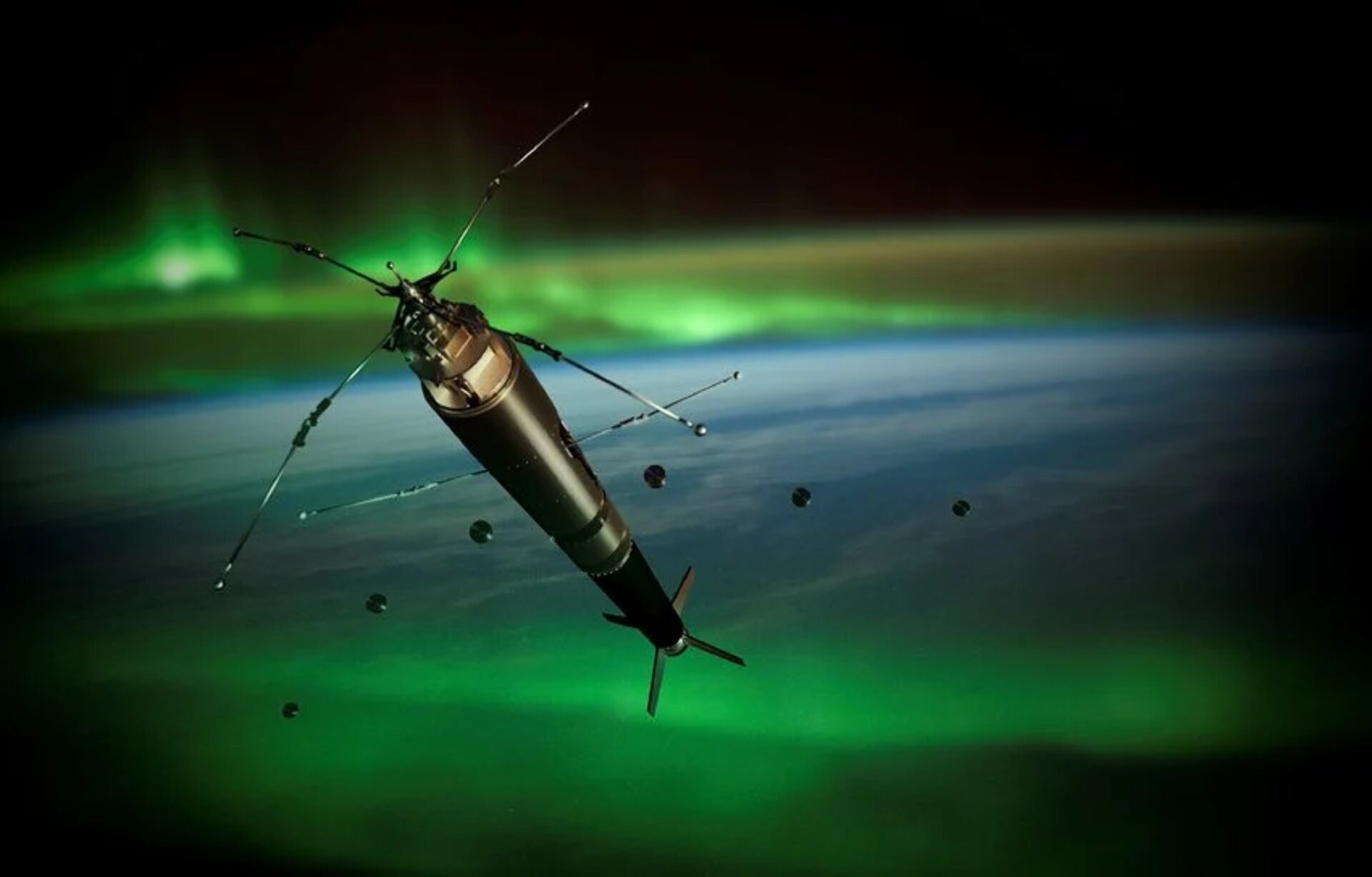

The 4DSpace-Daedalus mission launched from Norway marks a significant achievement for the European Space Agency’s Prodex program, which facilitates collaboration between skilled research institutions and European space science endeavors. This mission reflects ESA’s management of over 400 contracts with both industry and academic institutions, designed to foster the advancement of sophisticated scientific instruments and experiments across various domains, including Earth observation and microgravity.
Michel Lazerges, the head of the Prodex Office at ESA, highlighted the importance of the program, stating that it not only supports the development of scientific tools for ESA missions, like Smile, Plato, and Exomars, but also extends to missions spearheaded by other organizations, such as CLPS and Solar-C. At the recent Ministerial Council in 2025, 17 ESA Member States committed €327.52 million to Prodex, representing a 38% increase from the previous funding commitment in 2022. This financial backing allows nations to leverage their scientific expertise while enhancing collaboration and competitiveness within the space sector.
The mission involved the 12-meter tall 4DSpace-Daedalus sounding rocket, coordinated by Oslo University and partially funded by Prodex. It launched on March 11 from the Andøya Space Centre, within the backdrop of an auroral substorm, collecting crucial data on turbulence in the upper atmosphere’s charged plasma. The valuable information gathered will contribute to ongoing research in space weather and the fundamental energy transfer processes within the polar atmosphere.
Additionally, Prodex is instrumental in the development of comet interceptor instruments, with Poland and Estonia contributing the DFP-B2 and OPIC instruments, respectively, to the ESA’s Comet Interceptor spacecraft. Other countries, including Switzerland and Belgium, are also involved in creating additional instruments for this mission and the upcoming ESA Envision mission, which includes the VenSpec-H infrared spectrometer aimed at studying Venus’s atmospheric composition.
Meanwhile, the Smile mission, which launched on May 19, 2026, is expected to enhance our understanding of solar storms and space weather, featuring instruments developed under the Prodex initiative.
As Prodex approaches its 40th anniversary, a celebration is planned in Switzerland, welcoming delegates from participating nations, including Austria, Belgium, and Norway, with approximately 200 attendees expected to commemorate this significant milestone in advancing space science cooperation in Europe.










Related Posts


Stay Informed With the Latest & Most Important News
Previous Post
Next Post


Advertisement
-
 01Two Black Holes Observed Circling Each Other for the First Time
 -
 02From Polymerization-Enabled Folding and Assembly to Chemical Evolution: Key Processes for Emergence of Functional Polymers in the Origin of Life
 -
 03Astronomy 101: From the Sun and Moon to Wormholes and Warp Drive, Key Theories, Discoveries, and Facts about the Universe (The Adams 101 Series)
 -
 04True Anomaly hires former York Space executive as chief operating officer
 -
 05Φsat-2 begins science phase for AI Earth images
 -
 06Hurricane forecasters are losing 3 key satellites ahead of peak storm season − a meteorologist explains why it matters
 -
 07Binary star systems are complex astronomical objects − a new AI approach could pin down their properties quickly