
Now Reading: The path to $50 billion in new space investment
-
01
The path to $50 billion in new space investment


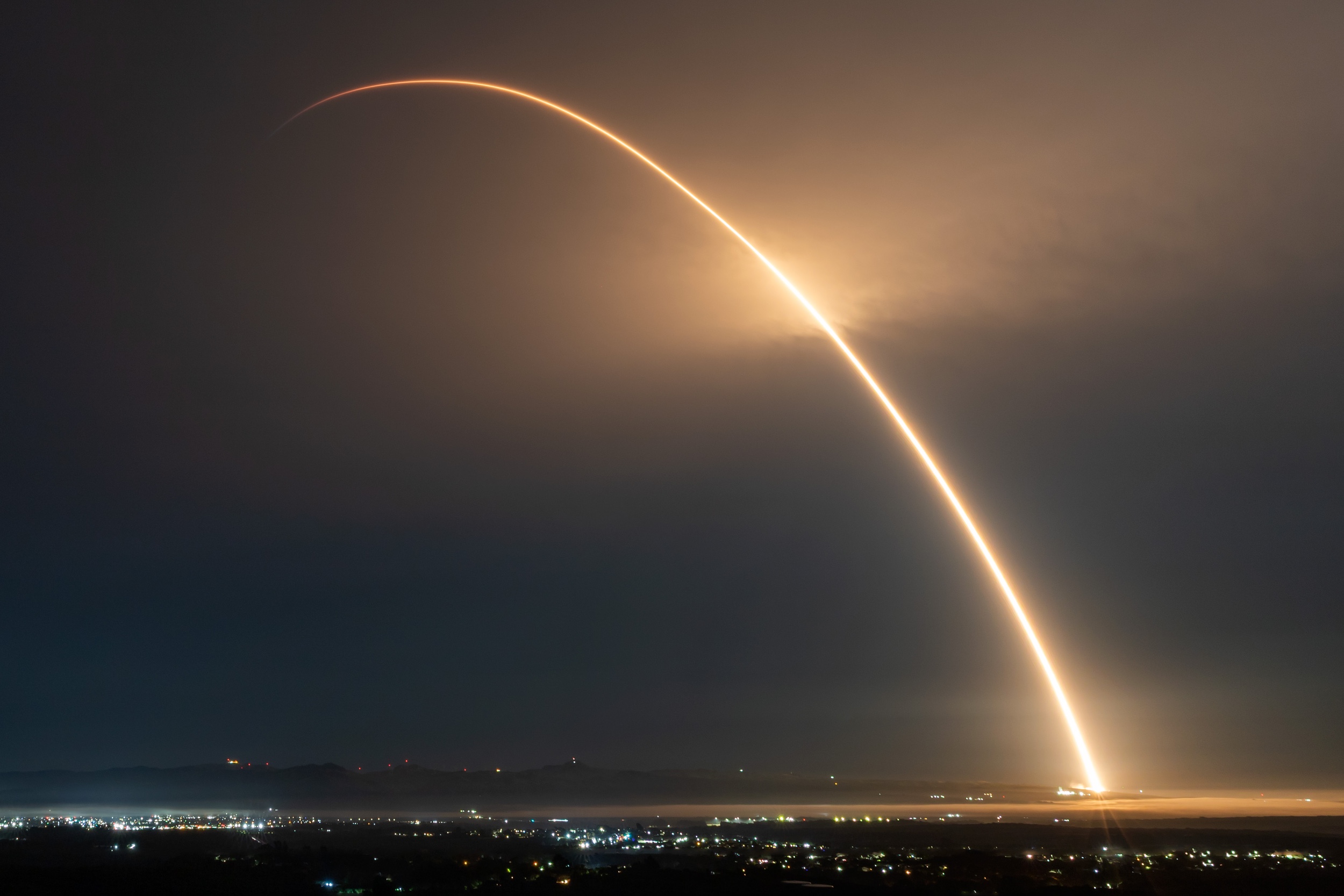

The future of space is commercial, with American companies critical to establishing a moon base and developing a vibrant economy in low Earth orbit (LEO) and beyond. The Trump administration has set a goal to attract at least $50 billion of new investment in American space markets by 2028. Sure, $50 billion is a big number. But we are going to beat it.
Why am I so confident?
A year ago, I wrote about the uncertainty facing companies seeking government approval of activities in space.
These companies faced a loophole that left no federal agency with clear authority to authorize commercial space operations such as in-space manufacturing, orbital data centers or space-based power generation. When companies seek to push the boundaries of what was once thought possible in space, they must navigate an ad hoc, cumbersome interagency process that lacks any guardrails or set timelines for approval.
This byzantine process naturally chills investment, as the lack of regulatory certainty increases risk for investors beyond the operational challenges of spaceflight.
The recent mission authorization proposal from the Department of Commerce closes that loophole by setting up a voluntary framework bound by deadlines for the United States government to approve or deny an activity. This plan would ensure that companies, particularly startups, have a voluntary, predictable and repeatable pathway toward receiving a seal of approval — if they choose to seek one — from the U.S. government. It would unlock the space economy and greenlight investment through a clear framework for U.S. authorization for space missions.
Importantly, the Department of Commerce plan would designate the Office of Space Commerce as the lead agency in interagency discussions, empowering the agency to promote growth in the commercial space industry. It would also cover non-governmental space activities not currently licensed through federal agencies, providing a pathway for U.S. certification under a presumption of approval; serve as a voluntary process that could satisfy or waive certain regulatory requirements imposed through current regulatory or licensing frameworks; and set firm timelines for certification as well as for providing transparency to operators.
The commercial space industry has long advocated for a mission authorization plan that includes these principles and characteristics, with the hope that the government would establish a one-stop shop for space companies seeking authorization.
The Department of Commerce proposal is an important step toward that goal, and increased economic activity will likely follow.
It should be noted that America’s competitors do not impose such regulatory obstacles on their space companies. China, in seeking to overtake the U.S. as the world leader in space, is not creating additional red tape to slow down their space operations. In fact, the Chinese space industry is growing rapidly, as we noted in our Redshift report last year.
The Department of Commerce proposal streamlines U.S. approval processes to allow American space companies to do what they do best — innovate.
Furthermore, the Trump administration has taken several other actions that will unlock new investment in space. Space financiers closely follow government signals, and NASA and the Department of Defense are increasingly pivoting to commercial space solutions for government missions.
It makes sense — space threats and activities are only growing, and commercial space offers faster deployment at a fraction of the cost. In addition, the Federal Aviation Administration and Federal Communications Commission are streamlining regulations and removing red tape, making it easier for solutions to get from an industry clean room to orbit.
And now, the administration is providing a pathway for space operators to deploy cutting-edge capabilities with a proposal from the Department of Commerce to greenlight new space activities.
It is clear that this administration and leaders across the federal agencies understand the critical role of commercial space capabilities to the U.S. economy, national security, and civil space exploration.
The Commercial Space Federation endorses the Department of Commerce proposal and respectfully requests that the administration implement it quickly as possible. This, together with other regulatory reforms, will unlock the $50 billion in new investments sought by the administration.
Dave Cavossa is president of the Commercial Space Federation.
SpaceNews is committed to publishing our community’s diverse perspectives. Whether you’re an academic, executive, engineer or even just a concerned citizen of the cosmos, send your arguments and viewpoints to opinion (at) spacenews.com to be considered for publication online or in our next magazine. If you have something to submit, read some of our recent opinion articles and our submission guidelines to get a sense of what we’re looking for. The perspectives shared in these opinion articles are solely those of the authors and do not necessarily represent their employers or professional affiliations.










Related Posts



Stay Informed With the Latest & Most Important News
Previous Post
Next Post





Advertisement
-
 01Two Black Holes Observed Circling Each Other for the First Time
 -
 02From Polymerization-Enabled Folding and Assembly to Chemical Evolution: Key Processes for Emergence of Functional Polymers in the Origin of Life
 -
 03Astronomy 101: From the Sun and Moon to Wormholes and Warp Drive, Key Theories, Discoveries, and Facts about the Universe (The Adams 101 Series)
 -
 04True Anomaly hires former York Space executive as chief operating officer
 -
 05Φsat-2 begins science phase for AI Earth images
 -
 06Hurricane forecasters are losing 3 key satellites ahead of peak storm season − a meteorologist explains why it matters
 -
 07Binary star systems are complex astronomical objects − a new AI approach could pin down their properties quickly