
Now Reading: ‘The show goes on:’ NASA looks beyond Artemis 2
-
01
‘The show goes on:’ NASA looks beyond Artemis 2


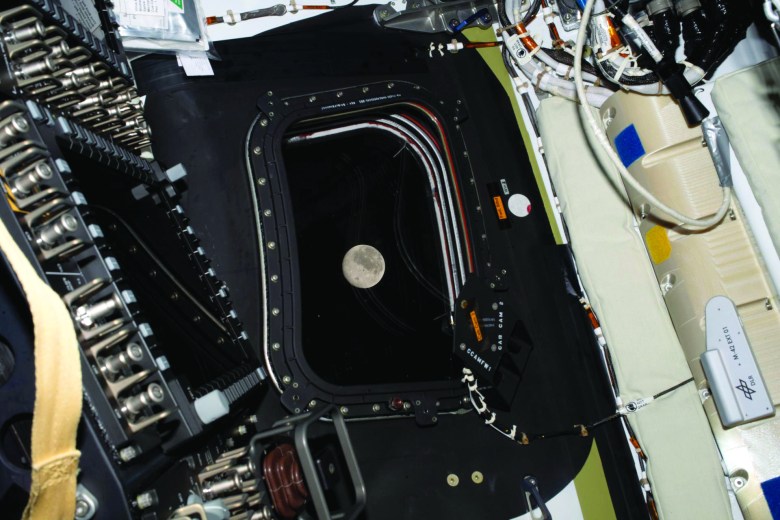
NASA’s Artemis 2 mission returned safely to Earth the evening of April 10, completing a critical early step in the agency’s effort to send astronauts back to the moon.
The Orion spacecraft Integrity splashed down in the Pacific Ocean near San Diego at 8:07 p.m. Eastern, nine days and roughly 90 minutes after lifting off atop a Space Launch System rocket from the Kennedy Space Center in Florida.
The four astronauts on the spacecraft — Reid Wiseman, Victor Glover, Christina Koch and Jeremy Hansen — were in good condition as they were taken to the recovery ship, the U.S. Navy’s USS John P. Murtha, two hours after splashdown. By the afternoon of April 11, they were home in Houston.
“What a journey,” Wiseman, the Artemis 2 commander, said moments after splashdown.
The final phases of the mission went largely as planned, starting with the separation of Orion’s crew capsule from its service module about 35 minutes before splashdown. The spacecraft reached a peak speed of nearly 39,700 kilometers per hour as it entered the atmosphere.
The reentry was closely watched after issues with the same heat shield design on the Artemis 1 mission in 2022. That shield suffered more erosion than expected, which an investigation linked to heat buildup in Avcoat material that created gases that, in turn, caused cracks.
NASA modified the heat shield design for Artemis 3 and beyond, but modified the reentry trajectory for Artemis 2 to limit that heat buildup.
“I’ve actually been thinking about entry since April 3, 2023,” said Glover during an April 8 press conference, referring to the day the crew was announced. “Riding a fireball through the atmosphere is profound.”
NASA gathered data on the heat shield in several ways, from aircraft imaging the reentry to divers who took photos of the heat shield shortly after splashdown, before the capsule was loaded onto the recovery ship.
In a social media post April 11, NASA Administrator Jared Isaacman said the heat shield appeared to avoid the erosion seen on Artemis 1. “No unexpected conditions were observed,” he wrote. “I suspect when the images are released, it will be pretty obvious the stark difference between Artemis 1 and Artemis 2 heat shield performance.”
Nonetheless, the planned six-minute blackout during reentry made mission controllers nervous. “It’s a difficult time because the flight control team wants to see data,” said Rick Henfling, entry flight director, at a post-splashdown press conference April 10.
“When we don’t have data, we’re trying to figure out what to do with ourselves.”
The blackout started and ended right on the timeline. “That gave us the trust that the spaceship was flying itself correctly,” he said.

‘The long wait is over’
The splashdown was the culmination of years of planning for Artemis 2, the first crewed flight of Orion and SLS. It was also the first flight of humans beyond low Earth orbit since Apollo 17 in December 1972.
“The long wait is over,” Isaacman said April 11 at a ceremony at Houston’s Ellington Field to welcome home the Artemis 2 crew. “After a brief 53-year intermission, the show goes on, and NASA is back in the business of sending astronauts to the moon and bringing them home safely.”
But as the mission neared launch, NASA revamped the plans for later Artemis missions.
In late February, NASA announced Artemis 3, which was to be the first crewed landing, will instead be a mission in Earth orbit in 2027 where Orion will rendezvous with lunar lander prototypes that Blue Origin and SpaceX are developing. Lunar landing attempts will follow on Artemis 4 in early 2028 and Artemis 5 in late 2028.
Those future missions, as well as plans NASA announced March 24 to develop a lunar base over the next decade, hinged on the success of Artemis 2. After splashdown, agency officials said Artemis 2 gave them confidence about moving ahead.
“The path to the lunar surface is open, but the work ahead is greater than the work behind us,” NASA Associate Administrator Amit Kshatriya said after splashdown.
That work starts with preparations for Artemis 3. NASA has offered few specifics about that mission since announcing in February that it would be a test of Orion and lunar landers in Earth orbit.
Those plans will need to take shape quickly. Kent Chojnacki, deputy program manager for NASA’s Human Landing System (HLS) program, said in an interview before the Artemis 2 launch that his program has been directed to be ready for Artemis 3 between March and June 2027.
NASA is considering options from Orion flying in the vicinity of the Blue Origin and SpaceX landers to docking with them and entering the landers. Attempting to meet with both landers on the same mission poses significant coordination challenges.
“We have to find a common orbit. We have to find a common launch opportunity, and orchestrating a launch of an SLS and two HLS’s will be some kind of feat,” he said. “So, we’re working on what the art of the possible is there.”

Separately, work is underway to incorporate lessons learned from Artemis 2 into Artemis 3, particularly with Orion. There were several minor issues with the spacecraft on Artemis 2, from a wastewater vent line that became clogged during the flight to leaking helium valves in the service module’s propulsion system that will likely need to be redesigned.
Howard Hu, NASA Orion program manager, said after splashdown that spacecraft teams will prepare an initial report in 30 days as the capsule returns to the Kennedy Space Center for further study. “There’s a lot of work to learn from this mission and carry forward for Artemis 3 and beyond,” he said.
NASA has yet to name a crew for Artemis 3. Asked when NASA will announce the astronauts for the mission, Kshatriya replied: “Soon.”
When NASA selects those astronauts, the Artemis 2 astronauts will hand them the baton — literally. “This is a relay race,” Koch said April 8. “In fact, we have batons that we bought to symbolize physically that, and we plan to hand them to the next crew. Every single thing we do is with them in mind.”










Related Posts


Stay Informed With the Latest & Most Important News
Previous Post
Next Post

Advertisement
-
 01Two Black Holes Observed Circling Each Other for the First Time
 -
 02From Polymerization-Enabled Folding and Assembly to Chemical Evolution: Key Processes for Emergence of Functional Polymers in the Origin of Life
 -
 03Astronomy 101: From the Sun and Moon to Wormholes and Warp Drive, Key Theories, Discoveries, and Facts about the Universe (The Adams 101 Series)
 -
 04True Anomaly hires former York Space executive as chief operating officer
 -
 05Φsat-2 begins science phase for AI Earth images
 -
 06Hurricane forecasters are losing 3 key satellites ahead of peak storm season − a meteorologist explains why it matters
 -
 07Binary star systems are complex astronomical objects − a new AI approach could pin down their properties quickly