
Now Reading: Voyager wins DARPA contract for solid rocket propellant technology
-
01
Voyager wins DARPA contract for solid rocket propellant technology


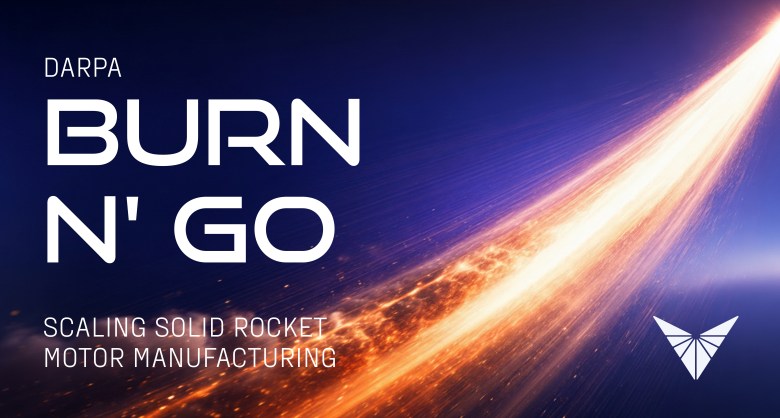

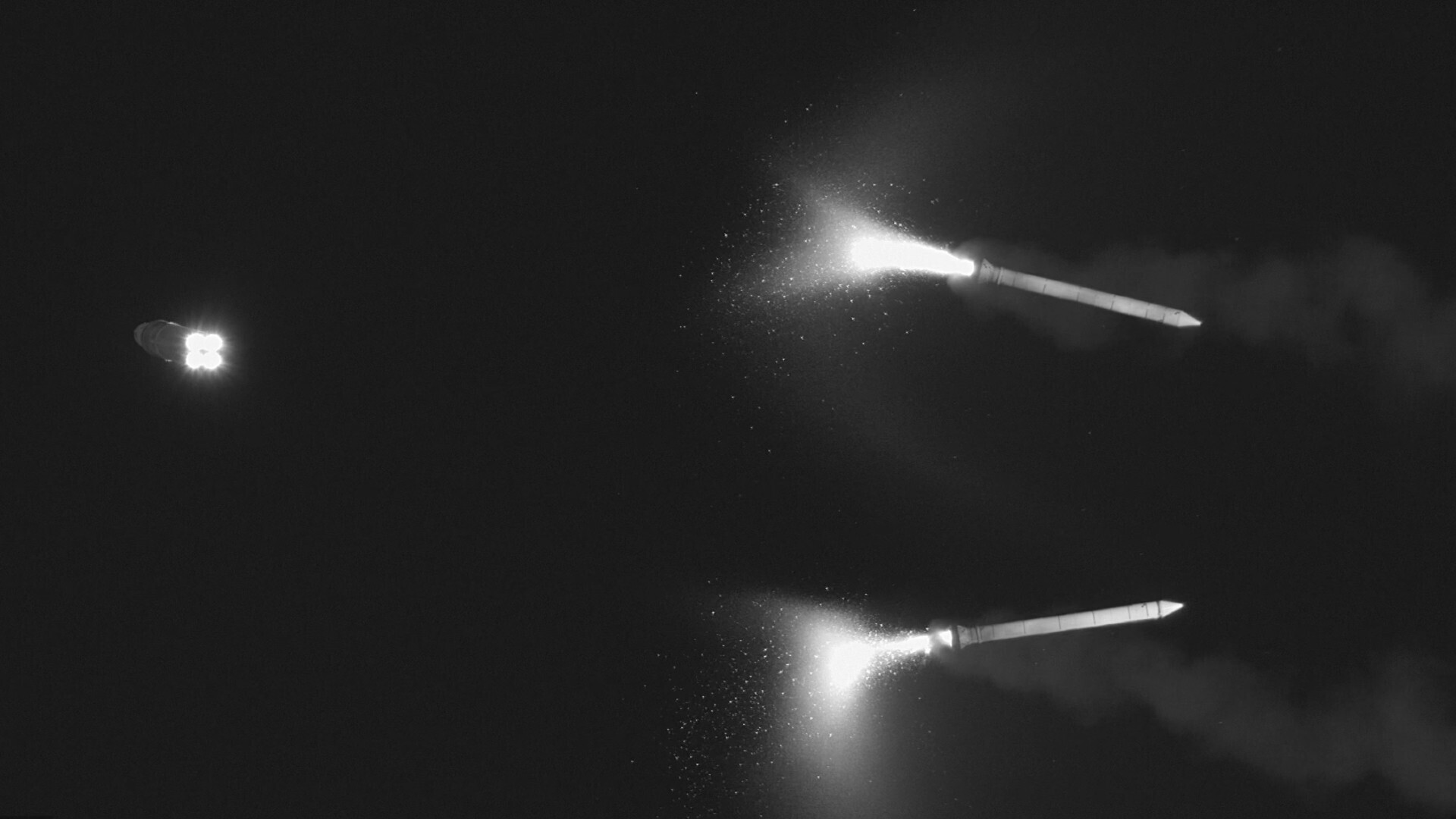
WASHINGTON — The Defense Advanced Research Projects Agency awarded Voyager Technologies a $16.5 million contract to continue development of a solid rocket motor thrust-control technology designed to make missile propulsion systems more adaptable across different missions and weapons programs.
The award, announced May 26, funds Phase 2 of DARPA’s Burn n’ Go program, an effort launched last year to develop what the agency describes as a “propellant-embedded control technology” that would give solid rocket motors tailorable, post-manufacturing thrust control.
Traditional solid rocket motors are largely fixed once they are built. Their thrust output, burn duration and other performance characteristics are determined during manufacturing by the composition and geometry of the propellant inside the motor casing. While that approach supports large-scale production, it limits flexibility because different weapons or missions often require different motor designs.
DARPA’s program is aimed at changing that model by enabling aspects of a motor’s performance to be modified after production rather than requiring entirely separate propulsion systems for different applications.
The effort comes as the Pentagon pushes to expand missile production amid growing demand for air defense interceptors, long-range strike weapons and other munitions.
Voyager, a space and defense technology company, expanded into the propulsion sector last year through its acquisition of Estes Energetics, a manufacturer of solid rocket motors and energetic materials.
“This award reflects confidence in our ability to translate advanced propulsion technologies into field-ready capabilities that support U.S. national readiness and deterrence,” Matt Magaña, Voyager’s president of space, defense and national security, said in a statement.
During the first phase of the Burn n’ Go program, Voyager developed a conceptual system architecture and preliminary designs for the technology, the company said. The second phase is a 20-month effort focused on validating the concept and conducting “tailorable SRM hot-fire demonstrations,” referring to live tests of solid rocket motors under operational conditions.










Related Posts
Stay Informed With the Latest & Most Important News
Previous Post
Next Post


Advertisement
-
 01Two Black Holes Observed Circling Each Other for the First Time
 -
 02From Polymerization-Enabled Folding and Assembly to Chemical Evolution: Key Processes for Emergence of Functional Polymers in the Origin of Life
 -
 03Astronomy 101: From the Sun and Moon to Wormholes and Warp Drive, Key Theories, Discoveries, and Facts about the Universe (The Adams 101 Series)
 -
 04True Anomaly hires former York Space executive as chief operating officer
 -
 05Φsat-2 begins science phase for AI Earth images
 -
 06Hurricane forecasters are losing 3 key satellites ahead of peak storm season − a meteorologist explains why it matters
 -
 07Binary star systems are complex astronomical objects − a new AI approach could pin down their properties quickly