
Now Reading: Why Earth observation data is getting stuck in orbit
-
01
Why Earth observation data is getting stuck in orbit


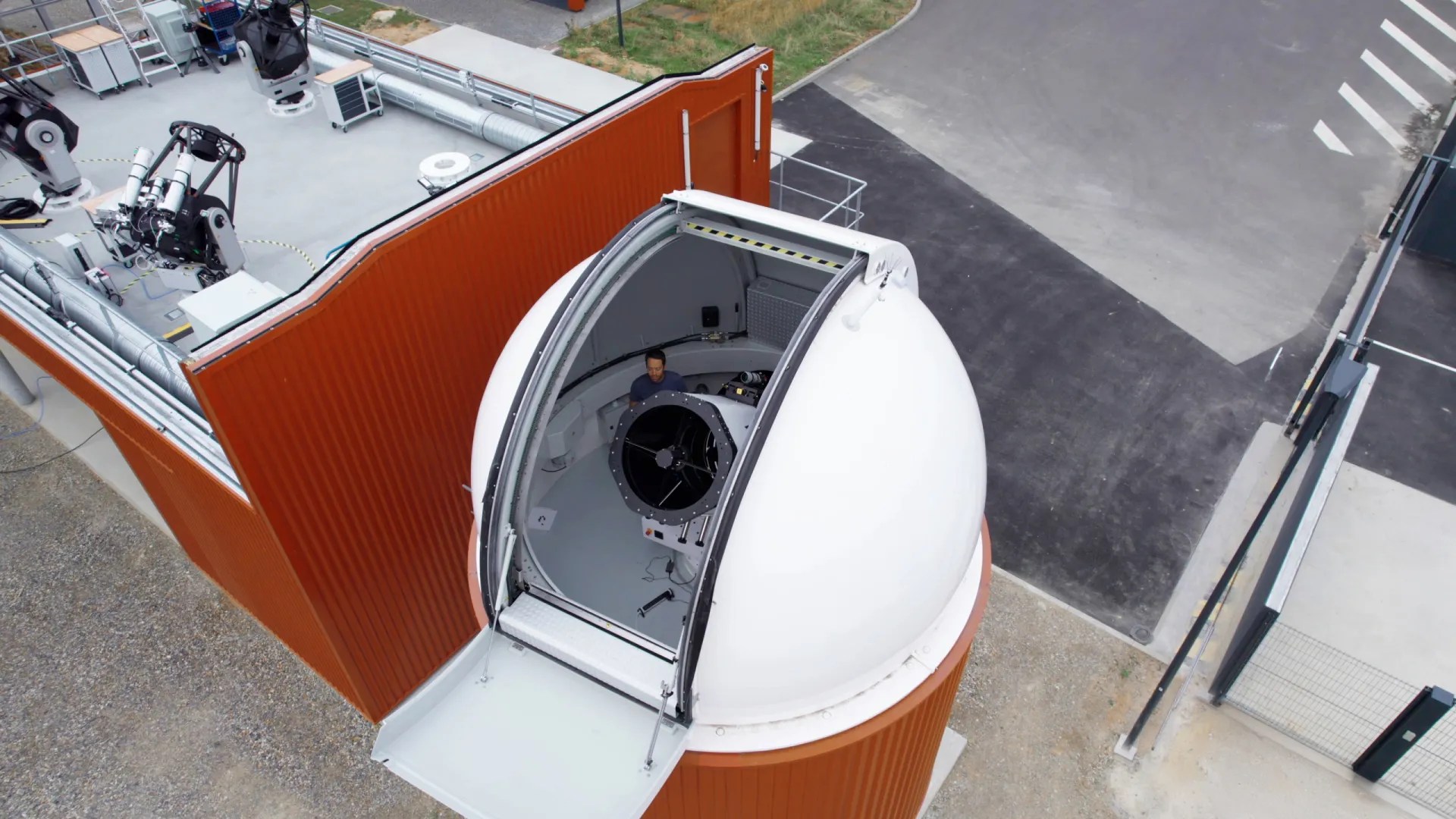

With the proliferation of Earth observation satellites in orbit, the increasing sophistication of sensors and surging demand for imagery and geospatial intelligence across a growing number of sectors, it is no surprise that more data is now collected than ever before. But what is perhaps surprising is that the main obstacle to the smooth operation and development of this system lies not in space, but on the ground. Indeed, Earth observation data is taking so long to be received, processed and distributed that it is degrading, losing its value and, in some cases, becoming unusable.
In certain fields, the speed at which data can be sent and received is vital. One obvious example is Intelligence, Surveillance, and Reconnaissance (ISR) and wider high-resolution Earth observation. In these and many other areas, the quality of the data is bound up with its timeliness. You might have crystal-clear images of an incoming storm, but they’re not much use to the relevant agencies or emergency response units if they come a day late. The same holds for defense and security operations, where decisions depend on current, not historical or near-historical, information.
For this reason, ground communications can matter more than in-orbit links when discussing Earth observation data downlink. High-capacity optical ground stations can receive data at far greater speeds than many conventional radio-frequency systems, helping satellites transmit imagery and sensor data to Earth more quickly. A stronger network of such stations, combined with better routing and processing on the ground, would reduce delays, preserve the value of time-sensitive data and ensure information reaches users when it is still useful.
The problem lies on the ground. Less than about 10% of the optical ground infrastructure needed to support these systems exists. In other words, we are building satellites capable of gathering vast quantities of Earth observation data, yet we lack the means to bring that data down to Earth at the speed required. So the data has to wait its turn. It sits in a queue, degrading in value and, in some cases, becoming obsolete. Limited site availability, poor weather and gaps in geographic coverage all contribute.
Radio frequency communication has long been the backbone of satellite downlink and will remain essential. But Earth observation constellations now generate volumes of data that increasingly strain available spectrum and downlink windows, particularly for synthetic aperture radar and persistent infrared sensors. Optical systems can ease that bottleneck by moving larger quantities of data more quickly. Yet many operators hesitate to deploy optical terminals in space until enough ground stations exist to receive the data.
It’s worth noting that the consequences of this go beyond the commercial world. Civil protection, border monitoring, maritime awareness and military ISR increasingly depend on rapid access to Earth observation data. Whether the task is tracking floods, identifying illegal activity at sea or supporting operational planning, delayed downlink means delayed decisions.
This illustrates why the lack of adequate ground infrastructure is no minor detail, but critical to the whole system of data collection and transmission. A strong space segment cannot compensate for a weak ground segment. Satellite operators, infrastructure providers and public agencies must bring themselves into alignment to close the gap before it becomes a chasm.
This is the problem; is there a solution? The hard truth is that there is no one body, or company, that can address the ground infrastructure issue all by itself. Many different players will have to act their part. Private companies, for example, will have to build, deploy and operate ground stations. Governments, too, will need to write rules and define requirements, then steady demand by procuring the ground stations for civil and defense purposes. Policymakers across the borders must establish a set of shared standards so that duplication is avoided and systems can operate together. If this happens, then things will change.
I have every confidence that this gap will be closed; the space sector has solved harder problems before. In just the last decade, launch has ceased to be the industry’s chief obstacle, while vulnerable standalone satellites have given way to more resilient constellations. The next task is simpler to state: connect space to Earth fast enough for the data to matter.
Jean-François Morizur is the CEO of Cailabs.
SpaceNews is committed to publishing our community’s diverse perspectives. Whether you’re an academic, executive, engineer or even just a concerned citizen of the cosmos, send your arguments and viewpoints to opinion (at) spacenews.com to be considered for publication online or in our next magazine. If you have something to submit, read some of our recent opinion articles and our submission guidelines to get a sense of what we’re looking for. The perspectives shared in these opinion articles are solely those of the authors and do not necessarily represent their employers or professional affiliations.










Related Posts

Stay Informed With the Latest & Most Important News
Previous Post
Next Post




Advertisement
-
 01Two Black Holes Observed Circling Each Other for the First Time
 -
 02From Polymerization-Enabled Folding and Assembly to Chemical Evolution: Key Processes for Emergence of Functional Polymers in the Origin of Life
 -
 03Astronomy 101: From the Sun and Moon to Wormholes and Warp Drive, Key Theories, Discoveries, and Facts about the Universe (The Adams 101 Series)
 -
 04True Anomaly hires former York Space executive as chief operating officer
 -
 05Φsat-2 begins science phase for AI Earth images
 -
 06Hurricane forecasters are losing 3 key satellites ahead of peak storm season − a meteorologist explains why it matters
 -
 07Binary star systems are complex astronomical objects − a new AI approach could pin down their properties quickly