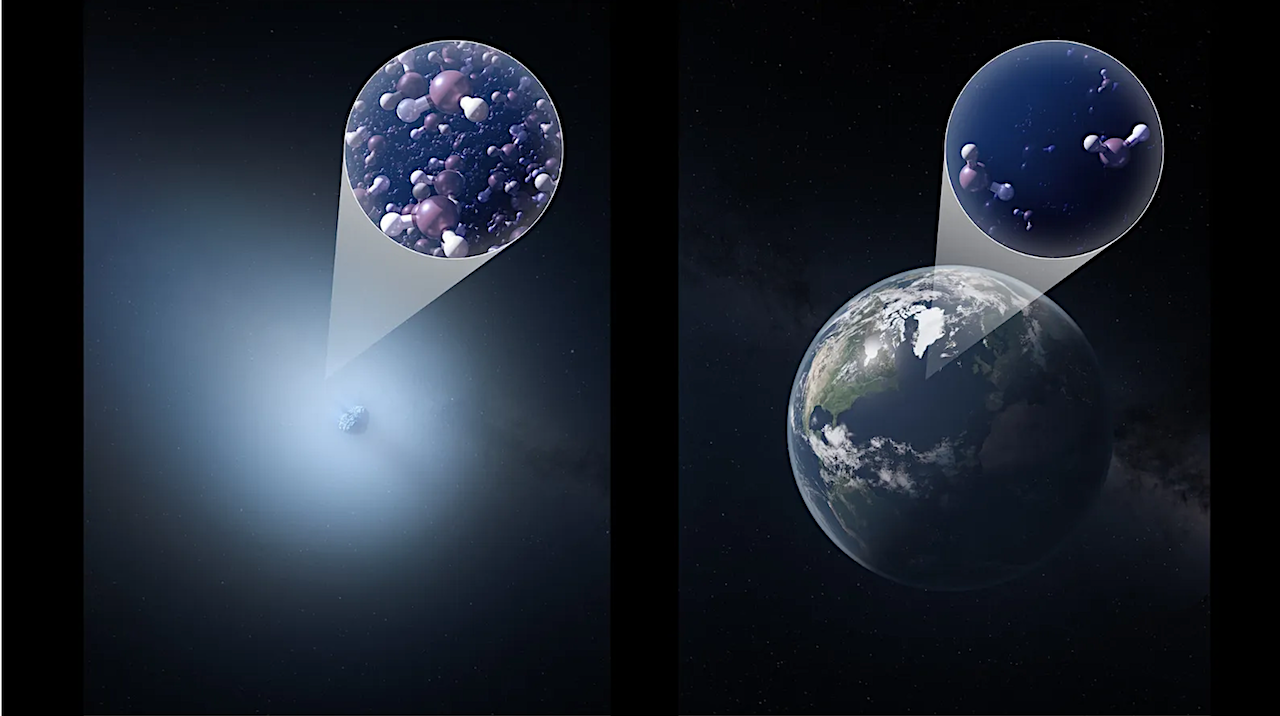
This artist’s impression compares the semi-heavy water content of the interstellar comet 3I/ATLAS (left) and Earth (right). Insets illustrate the relative abundance of deuterated water (HDO) molecules, showing that 3I/ATLAS

This artist’s impression compares the semi-heavy water content of the interstellar comet 3I/ATLAS (left) and Earth (right). Insets illustrate the relative abundance of deuterated water (HDO) molecules, showing that 3I/ATLAS
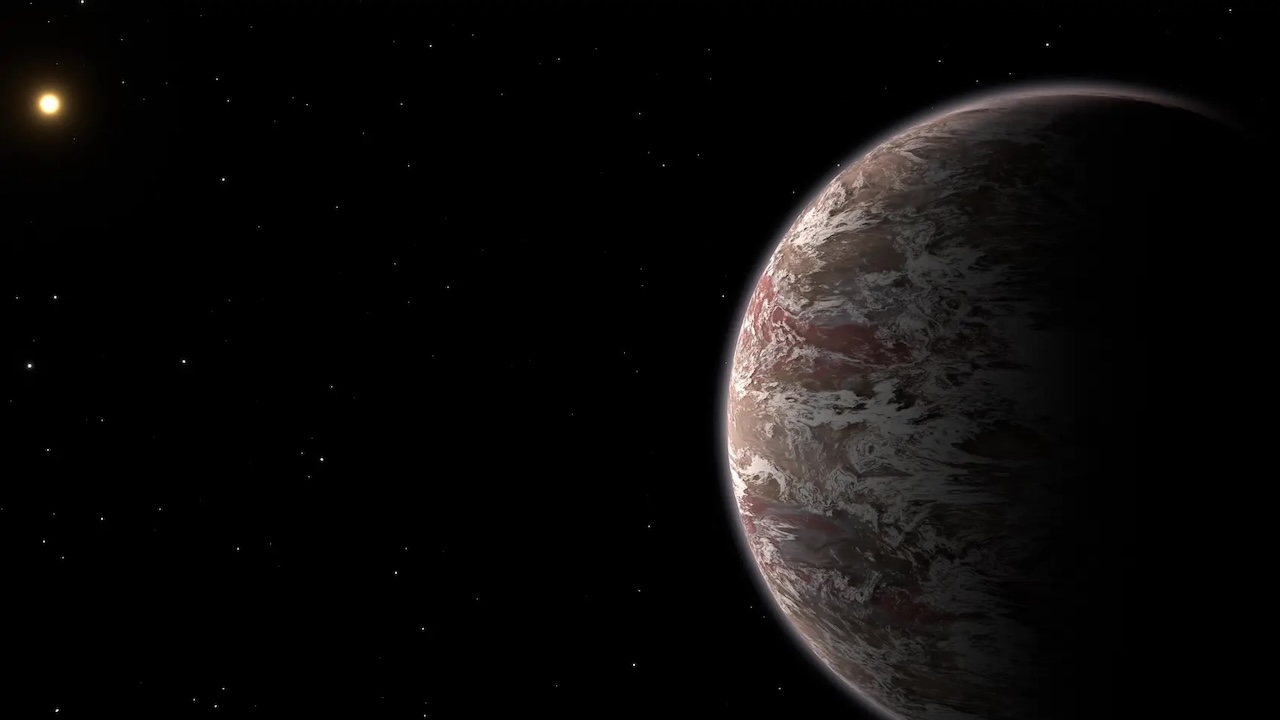
Artist’s impression of the planet Epsilon Indi Ab, with water clouds atop its ammonia-dominated atmosphere. Credit E. C. Matthews, MPIA / T. Müller, HdA A team of astronomers led by
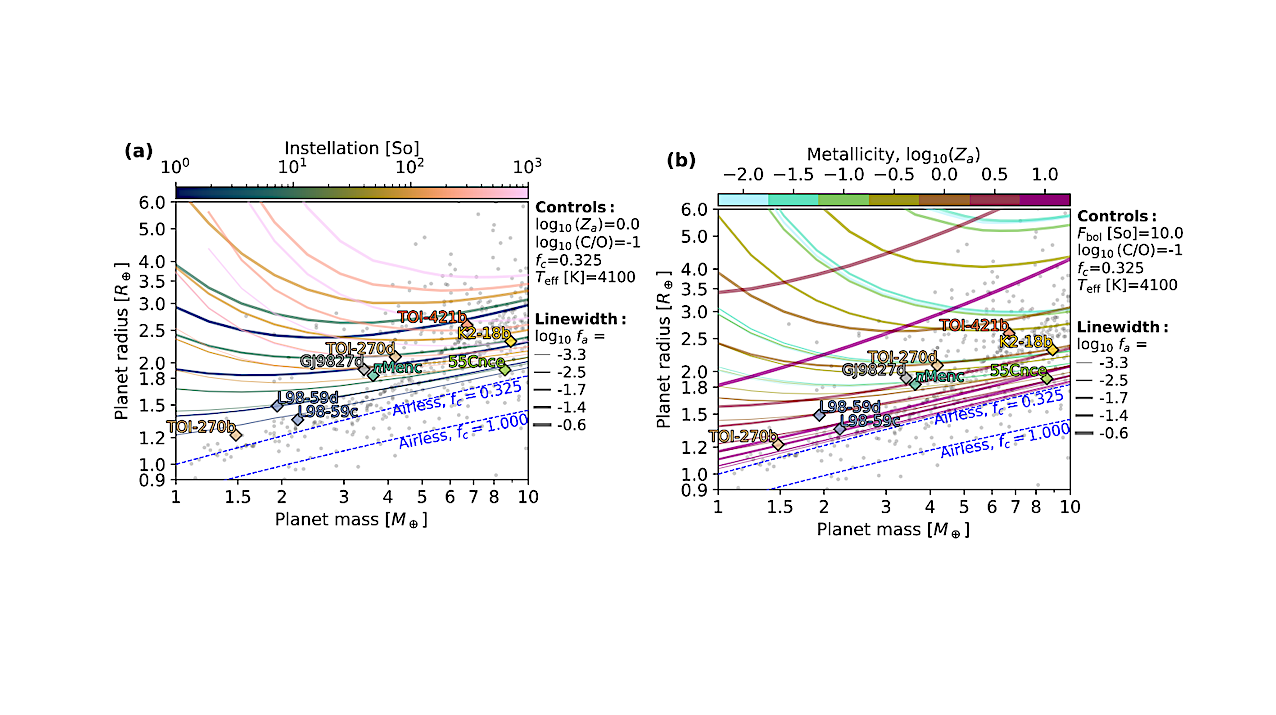
Isolines of planet radius versus mass, extracting cross-sections from our grid of models by holding other variables constant (top-right text box). Top (a): sensitivity to instellation (colour) and atmosphere mass
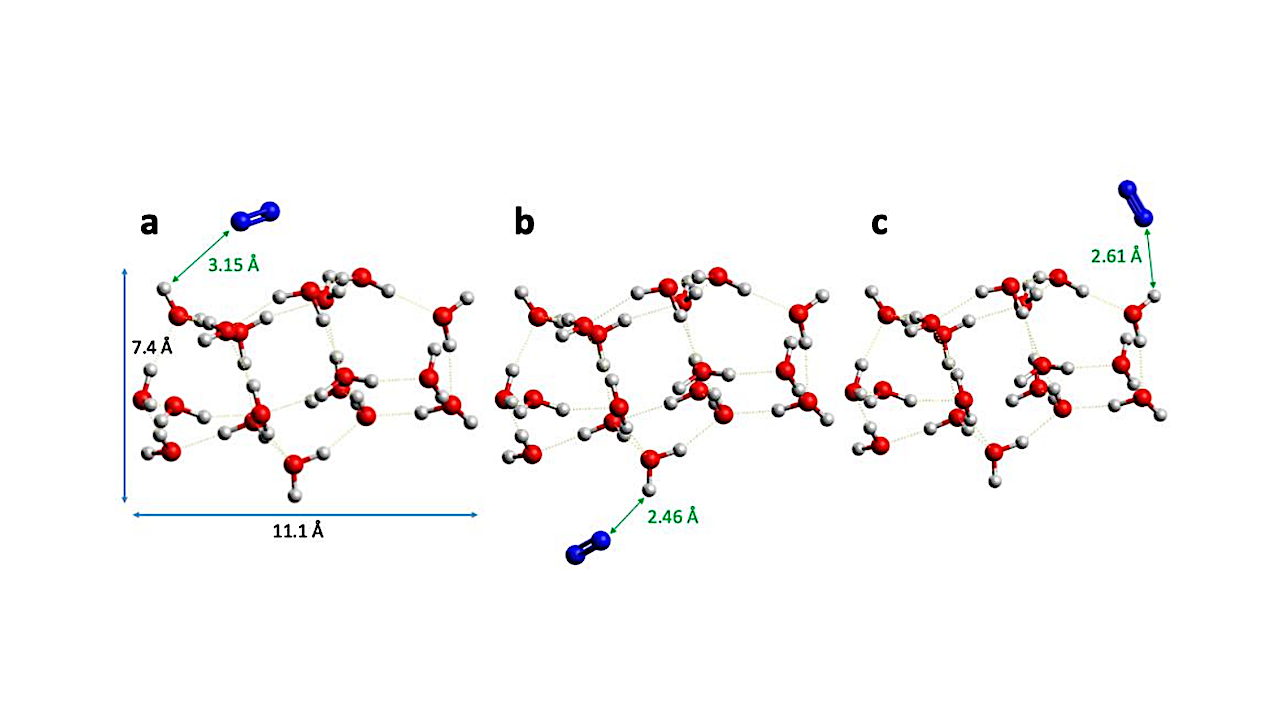
The (H2O)18 cluster used in the present work, optimized at the B97X-D3/def2-TZVP level. Panels a, b, and c represent the three different initial N2 adsorption sites. — astro-ph.GA Reactions occurring
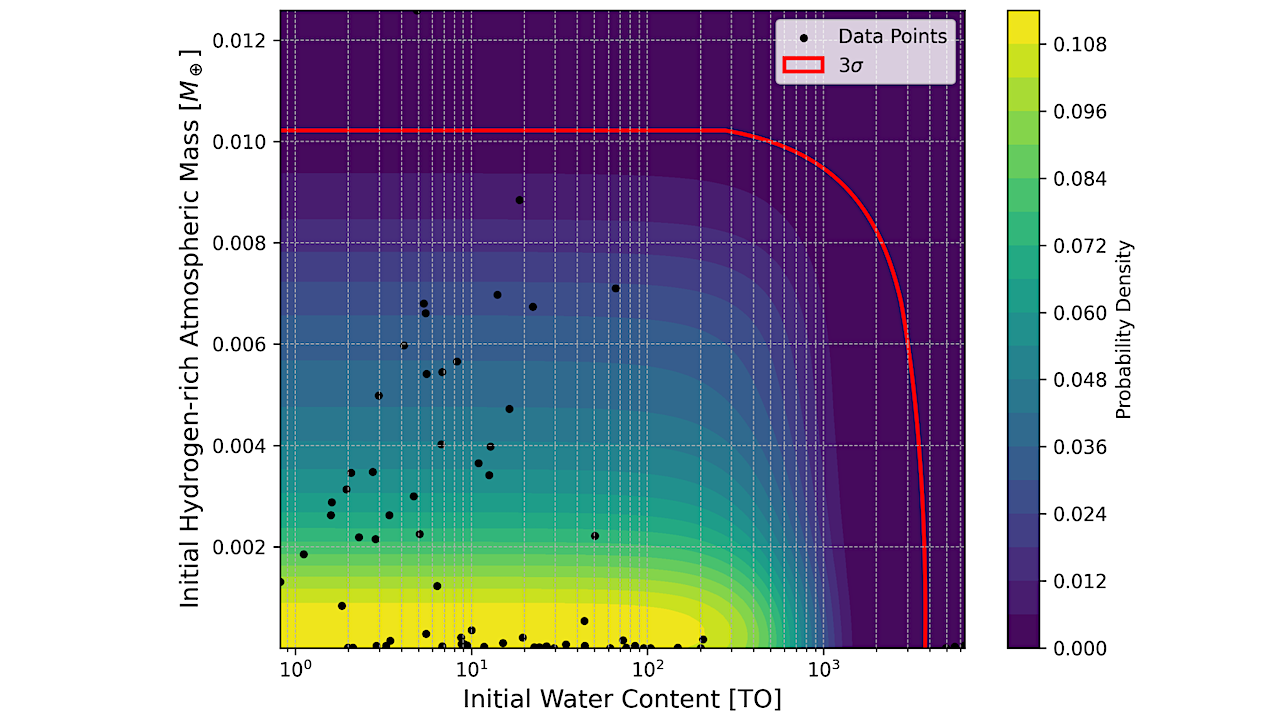
Black points are the sample of the planetary formation dataset provided by Kimura & Ikoma (2022) in the phase space of ∆a = 0.005AU, ∆Mp = 0.5M⊕. Two-dimensional probability density
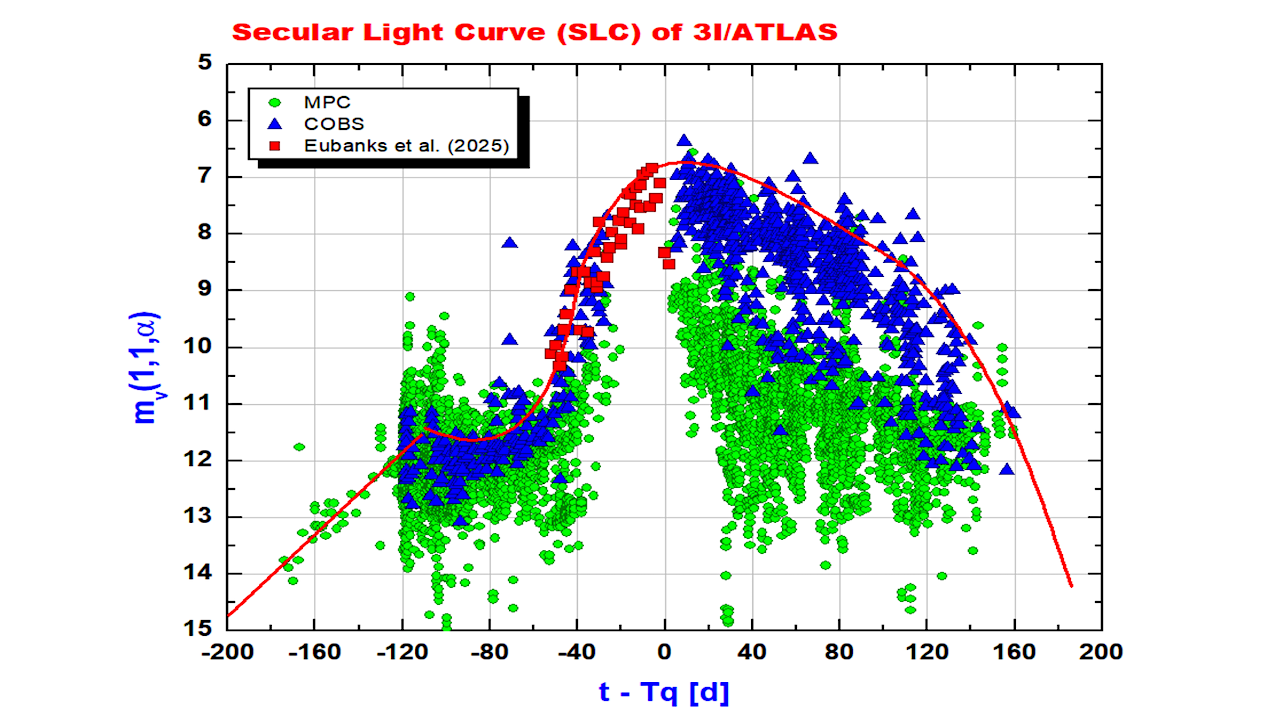
SLC of comet 3I/ATLAS. The MPC observations show a much larger dispersion of the data than the COBS observations. There is a significant increase in brightness starting at -45 days
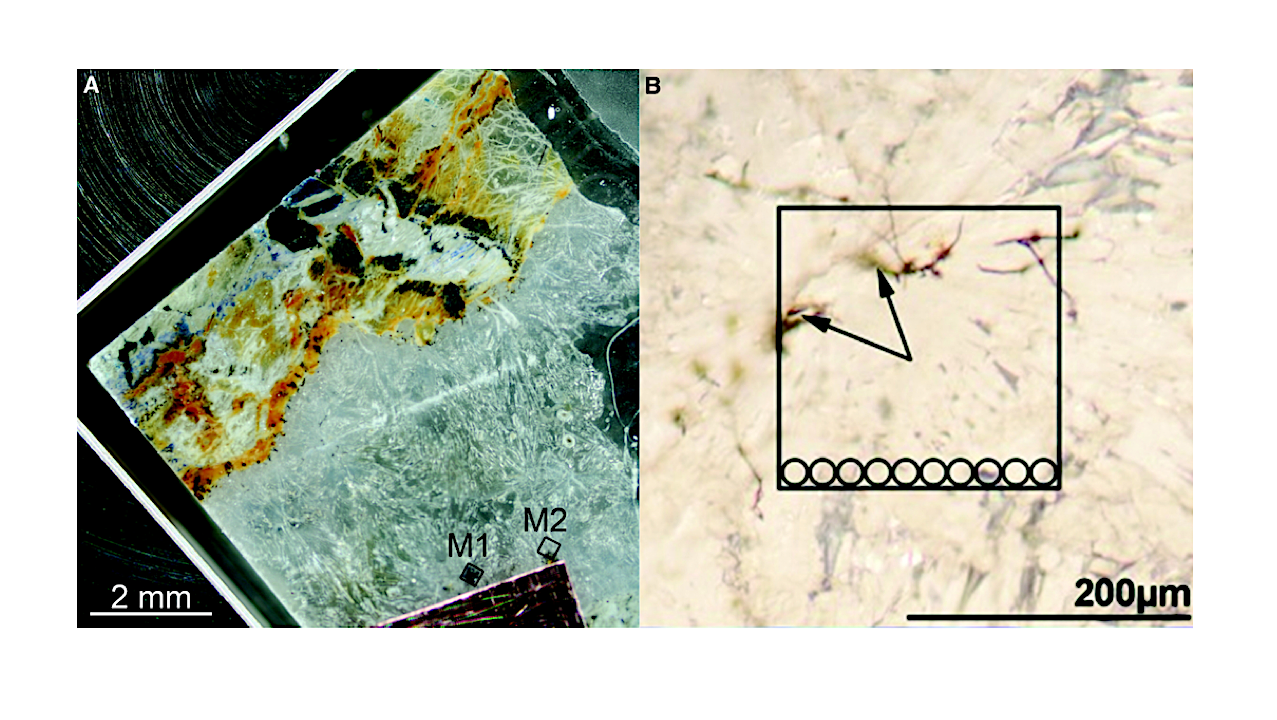
A: Microscope images of the aragonite host showing two survey areas (M1 and M2). B: Area M1 showing micrometer-sized fossil structures in more detail. Figure adapted from Tulej et al.,
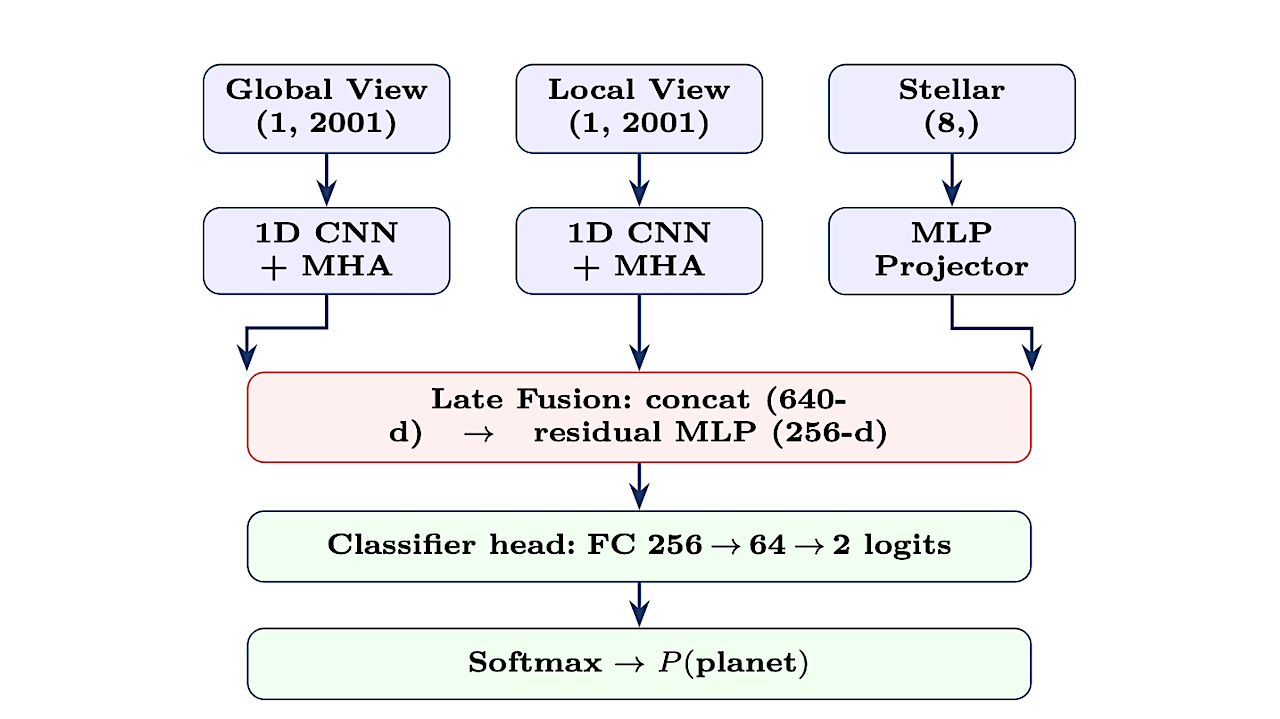
Exoplanets, -moons, -comets Status Report astro-ph.EP April 22, 2026 ExoNet architecture. Global and local CNN encoders each produce a 256-d embedding; the stellar MLP produces 128-d. All three are concatenated
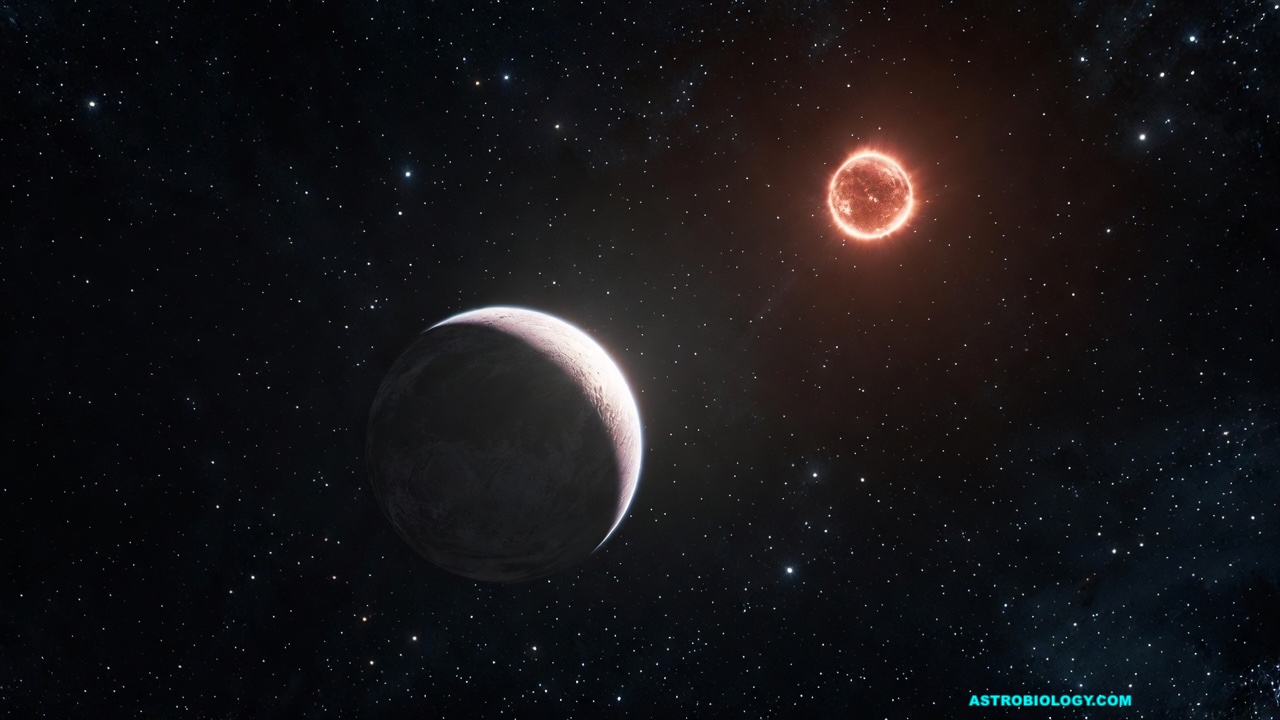
Planet orbiting a red dwarf — Grok via Astrobiology.com Stellar rotation is closely linked to both age and magnetic activity. Through gyrochronology, it provides a means to estimate stellar ages
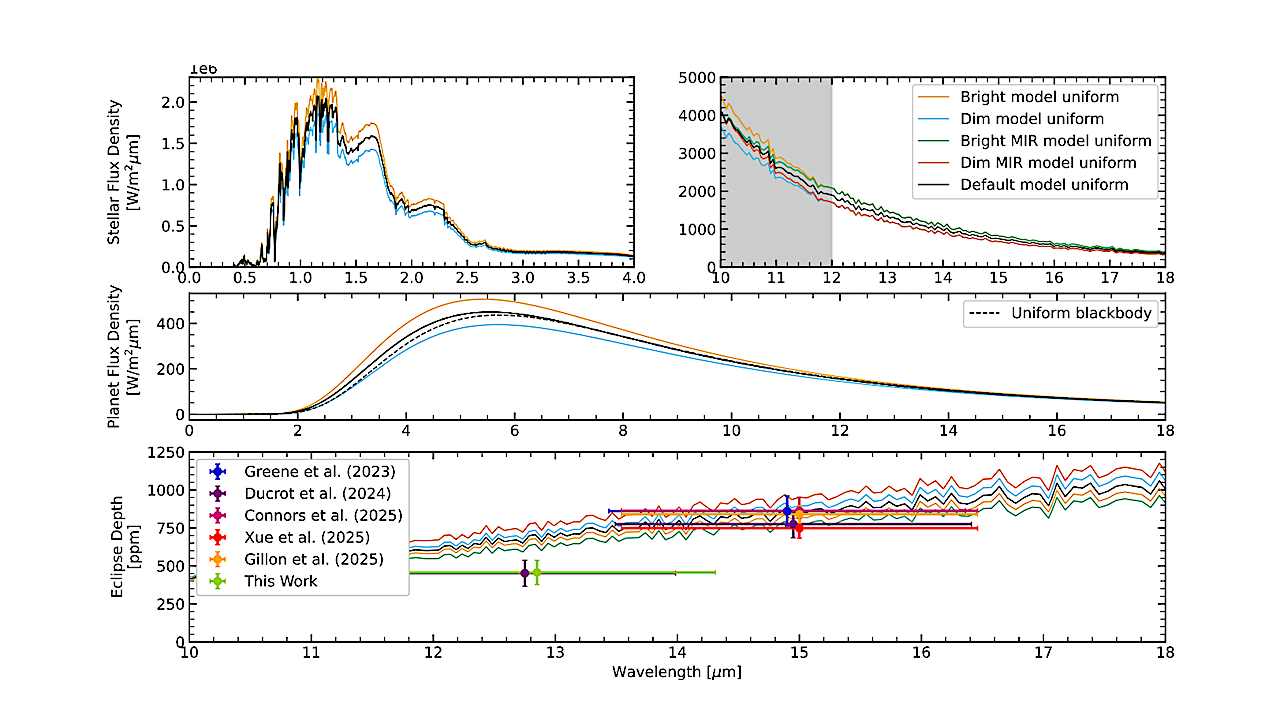
Eclipse spectra of various surface models from Paragas et al. (2025) as simulated by JESTER, compared to the observed eclipse spectra LTT 1445 A b (Wachiraphan et al. 2024) and