
Now Reading: Diverse Organic Molecules On Mars Revealed By The First SAM TMAH Experiment
-
01
Diverse Organic Molecules On Mars Revealed By The First SAM TMAH Experiment


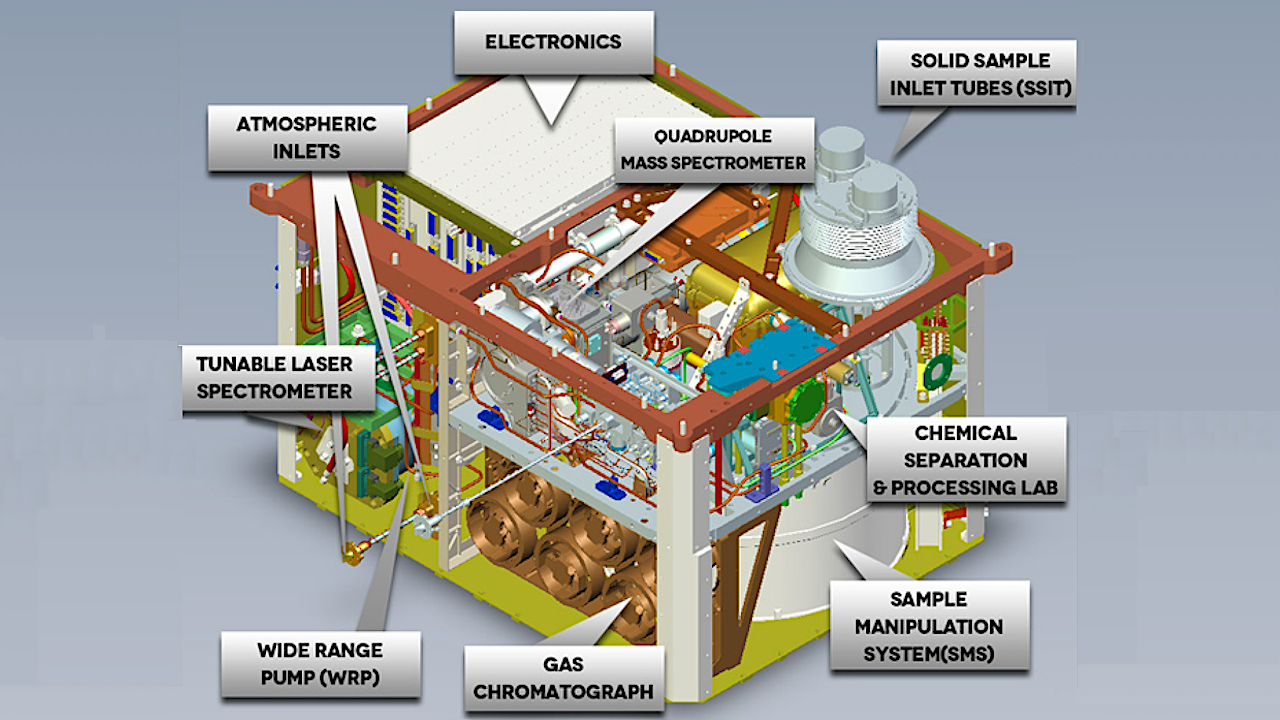
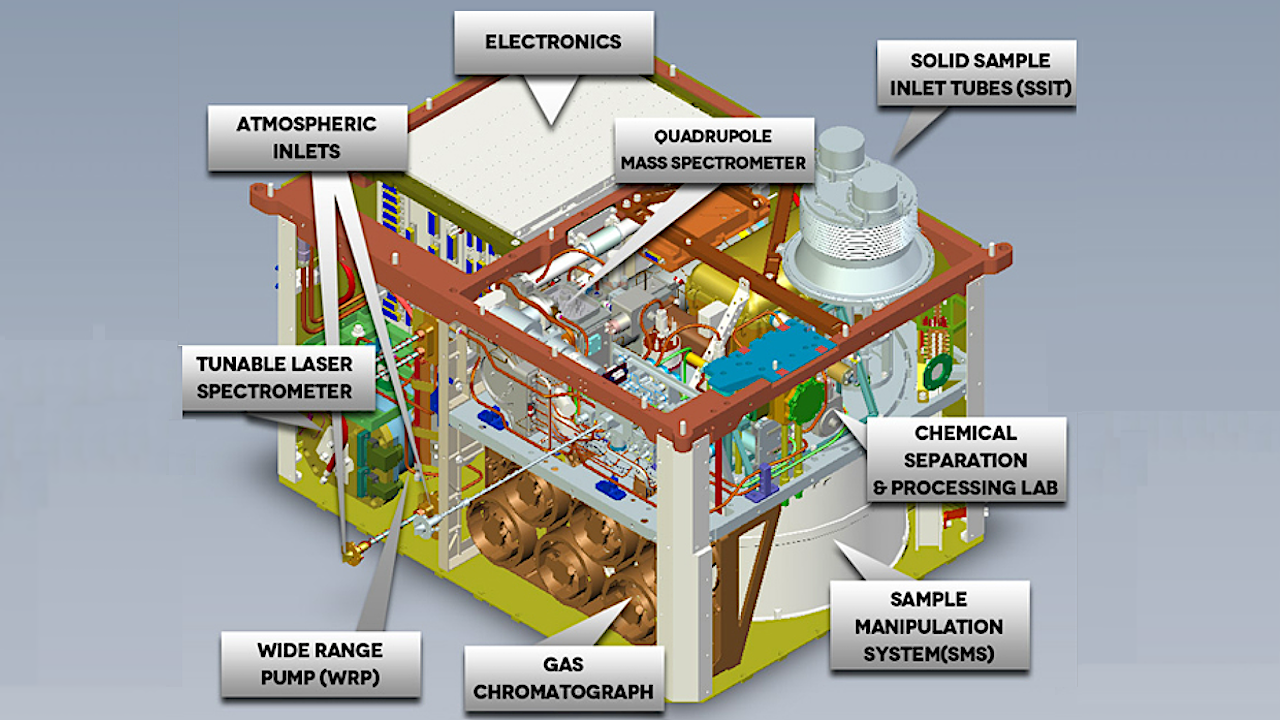
SAM is the most complex instrument ever sent on a planetary mission. Principal Investigator Paul Mahaffy leads the project from Goddard in collaboration with 51 co-investigators and 28 institutions including the University of Paris and The French Centre National de la Recherche Scientifique that provided the Gas Chromatograph. Credit GSFC.
The search for organic matter on Mars has rapidly evolved in the past decade with simple aromatic, S-heterocycles, and aliphatic organic molecules detected in Gale crater.
We report the in situ detection of >20 organic molecules from clay-bearing sandstones in the ~3.5-billion-year-old Knockfarrill Hill member of Glen Torridon, Gale crater, by the Sample Analysis at Mars instrument suite onboard the Curiosity rover.
These molecules were liberated by the onboard tetramethylammonium hydroxide wet chemistry experiment. Diverse thermochemolysis products, including benzothiophene, methyl benzoate, and single and dicyclic aromatic molecules were released and detected by evolved gas analysis and gas chromatography-mass spectrometry.
Results indicate the experiment successfully released molecules preserved in ancient macromolecular or free organic matter within Martian bedrock despite ~3.5 billion years of diagenesis and radiation exposure.
Astrobiology,










Related Posts
Stay Informed With the Latest & Most Important News


Advertisement
-
 01Two Black Holes Observed Circling Each Other for the First Time
 -
 02From Polymerization-Enabled Folding and Assembly to Chemical Evolution: Key Processes for Emergence of Functional Polymers in the Origin of Life
 -
 03Astronomy 101: From the Sun and Moon to Wormholes and Warp Drive, Key Theories, Discoveries, and Facts about the Universe (The Adams 101 Series)
 -
 04True Anomaly hires former York Space executive as chief operating officer
 -
 05Φsat-2 begins science phase for AI Earth images
 -
 06Hurricane forecasters are losing 3 key satellites ahead of peak storm season − a meteorologist explains why it matters
 -
 07Binary star systems are complex astronomical objects − a new AI approach could pin down their properties quickly