
Now Reading: FCC clears AST SpaceMobile constellation as launch setback clouds ramp-up
-
01
FCC clears AST SpaceMobile constellation as launch setback clouds ramp-up


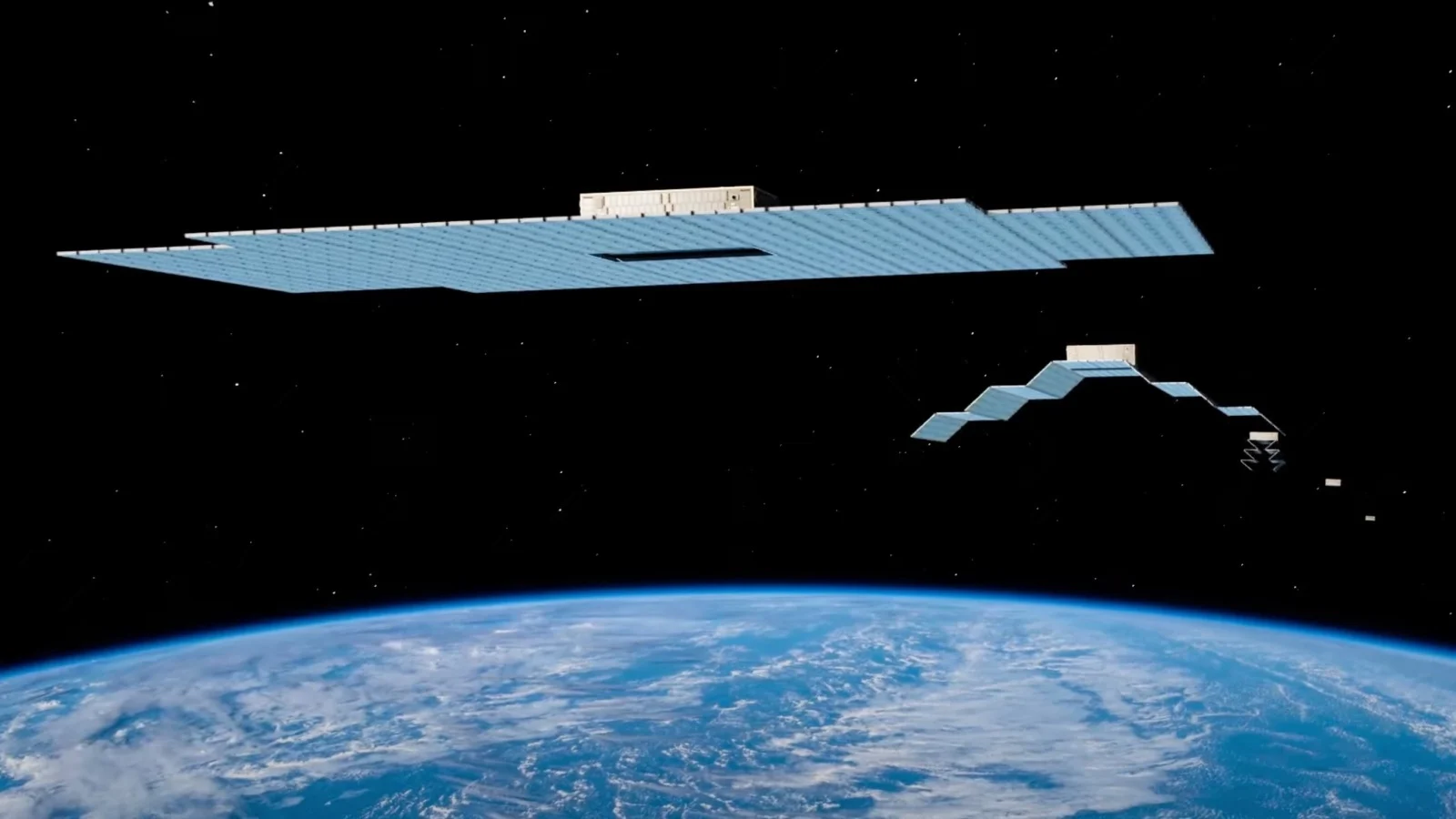

TAMPA, Fla. — AST SpaceMobile received permission to provide direct-to-smartphone broadband services in the United States with up to 248 satellites, days after a botched launch complicated plans to ramp up deployments this year.
The Federal Communications Commission approved the Texas-based company’s full constellation April 21, subject to conditions ranging from interference safeguards to astronomy and orbital-debris mitigation obligations.
The move paves the way for services in the United States in partnership with AT&T and Verizon, which are providing the cellular frequencies the satellites would use to keep mobile subscribers connected outside terrestrial coverage.
The order also covers AST SpaceMobile’s arrangement to use the public-safety spectrum AT&T operates under the government-backed FirstNet program to connect first responders in the United States.
“Today marks an important step as we continue scaling our network and moving closer to commercial service,” AST SpaceMobile founder, chairman and CEO Abel Avellan said in a statement.
“We are accelerating deployment of our constellation, advancing integration with leading mobile network operators, and preparing to deliver seamless, space-based cellular broadband directly to everyday smartphones, bringing us closer to connecting people everywhere.”
Regulatory progress
The FCC authorized 223 additional satellites beyond the five cleared in 2024, when it stopped short of allowing commercial service. The regulator also approved direct-to-device (D2D) services outside the United States, though they remain subject to local approvals.
T-Mobile and SpaceX, which teamed up to launch Starlink Mobile D2D services across the United States in 2025, had raised concerns about potential interference and satellite collision risks. The amateur radio community also warned about possible interference with their frequencies.
However, the FCC said AST SpaceMobile’s narrow beamforming and other technologies, along with regulatory safeguards such as limits on where it can operate and signal-strength caps, would protect other spectrum users.
The operations “will expand connectivity across the country, advance the leadership of the United States in space-based technologies, and promote the efficient use of spectrum resource,” the FCC said.
AST SpaceMobile must also continue working through astronomy concerns. In the 2024 order, the FCC required the company to make a good-faith effort to reduce optical brightness.
In the 2026 order, the FCC said AST SpaceMobile has reached a preliminary coordination agreement with the National Science Foundation, continues to meet with NASA on light-pollution concerns and is working with the National Radio Astronomy Observatory on data-transfer protocols.
Launch ramp-up
AST SpaceMobile says 45 to 60 of its BlueBird satellites are needed for continuous coverage in the United States and other key markets.
BlueBird-6 launched in December on an Indian LVM3 rocket and is the first of the company’s larger Block 2 spacecraft, which, once deployed, has the biggest commercial communications array in low Earth orbit (LEO) at about 223 square meters. Block 2 BlueBirds are about 3.5 times larger than BlueBirds 1-5, which launched together on a SpaceX Falcon 9 in 2024.
The 6,100-kilogram Block 2 spacecraft’s massive antenna is designed to support peak data rates of up to 120 megabits per second directly to standard smartphones, enabling voice, video and other 5G services.
BlueBird-7 launched April 19 on the third flight of Blue Origin’s New Glenn, but was placed into an off-nominal orbit that was too low for recovery using the spacecraft’s onboard propulsion.
Early data suggests one of the upper stage’s BE-3U engines did not generate enough thrust during the second burn to reach the target orbit, Blue Origin CEO Dave Limp said in an April 20 update.
“Blue Origin is leading the anomaly investigation with FAA oversight to learn from the data and implement the improvements needed to quickly return to flight operations,” he said.
Despite the failure, AST SpaceMobile said it still expects a launch every one to two months on average in 2026 to reach about 45 satellites in LEO before the end of the year, citing agreements with multiple launch providers.
According to AST SpaceMobile, which builds the vast majority of its satellites in-house, it is currently in production through BlueBird-32, with BlueBirds 8-10 set to be ready to ship in about 30 days.
The company has previously outlined a launch roster that also includes SpaceX’s Falcon 9, though it has said New Glenn would play a key role in the ramp-up because of its ability to deploy eight BlueBirds at a time.
AST SpaceMobile did not respond to requests for comment.
Global competition
The United Kingdom recently approved a license modification for AST SpaceMobile’s British partner VodafoneThree, along with a proposal to amend the country’s D2D exemption rules to enable the service.
Vodafone’s British rival Virgin Media O2 launched services in February with Starlink Mobile, marking the first commercial deployment of SpaceX’s D2D offering in Europe.
Dubai-headquartered VEON also announced an agreement April 22 to provide Starlink Mobile in Bangladesh, pending regulatory approvals, joining a growing list of telcos that have partnered with SpaceX across six continents.
An Ookla report published April 21 pointed to rising D2D activity globally, although it appears to have recently softened in the United States and Canada.
SpaceX and AST SpaceMobile are also pursuing ancillary spectrum to improve their D2D capabilities as Amazon moves to buy satellite operator Globalstar to leapfrog into the emerging market.










Related Posts

Stay Informed With the Latest & Most Important News
Previous Post
Next Post
Advertisement
-
 01Two Black Holes Observed Circling Each Other for the First Time
 -
 02From Polymerization-Enabled Folding and Assembly to Chemical Evolution: Key Processes for Emergence of Functional Polymers in the Origin of Life
 -
 03Astronomy 101: From the Sun and Moon to Wormholes and Warp Drive, Key Theories, Discoveries, and Facts about the Universe (The Adams 101 Series)
 -
 04True Anomaly hires former York Space executive as chief operating officer
 -
 05Φsat-2 begins science phase for AI Earth images
 -
 06Hurricane forecasters are losing 3 key satellites ahead of peak storm season − a meteorologist explains why it matters
 -
 07Binary star systems are complex astronomical objects − a new AI approach could pin down their properties quickly